Mark Zuckerberg quizzed on kids’ Instagram use in social media trial
Feb 18, 2026, 3:14 PM
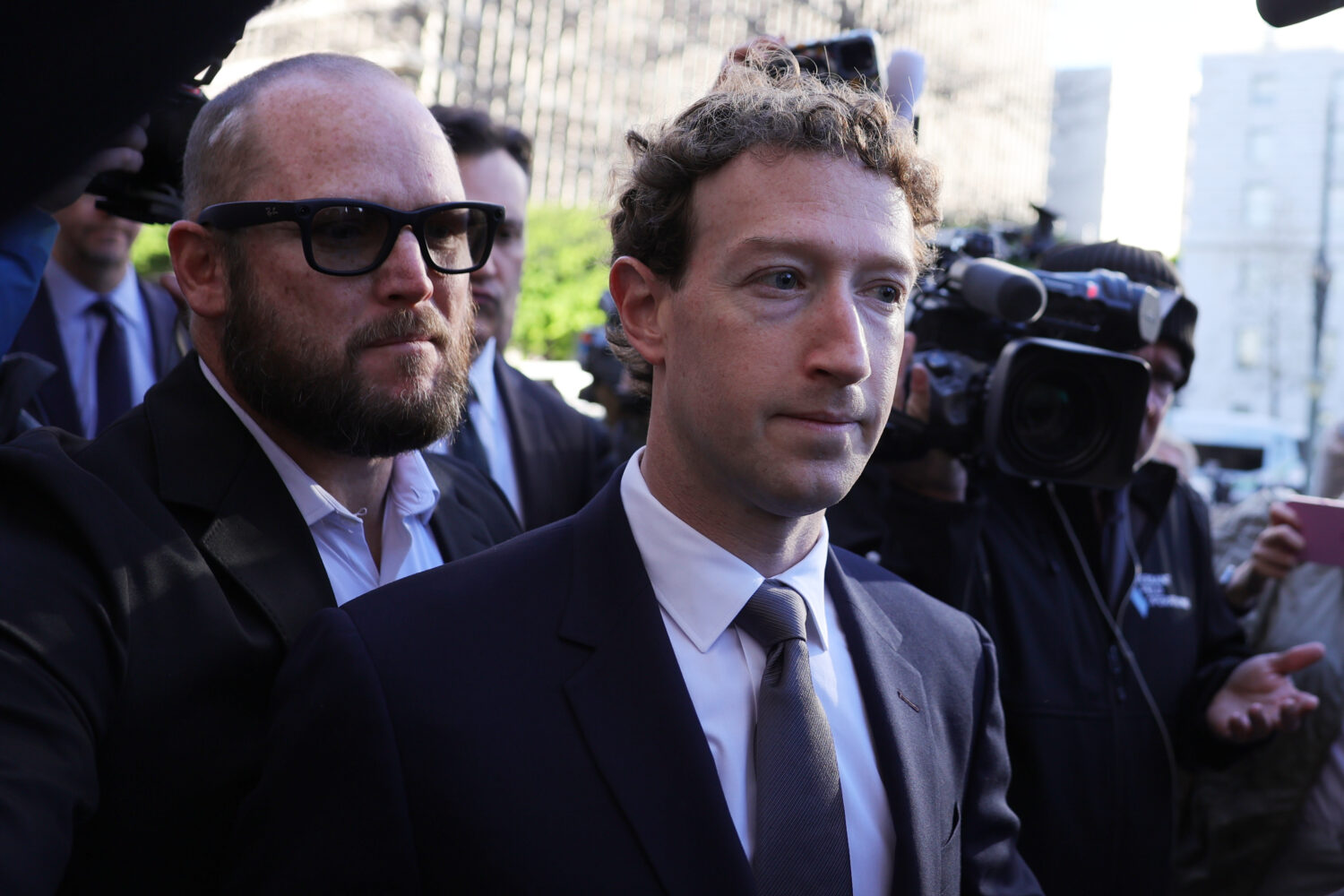
Meta CEO Mark Zuckerberg arrives for a landmark trial over whether social media platforms deliberately addict and harm children, Wednesday, Feb. 18, 2026, in Los Angeles. (AP Photo/Ryan Sun)
Credit: ASSOCIATED PRESS
(AP Photo/Ryan Sun)
LOS ANGELES (AP) — Mark Zuckerberg and opposing lawyers dueled in a Los Angeles courtroom on Wednesday, where the Meta CEO answered questions about young people’s use of Instagram, his congressional testimony and internal advice he’s received about being “authentic” and not “robotic.”
Zuckerberg’s testimony is part of an unprecedented social media trial that questions whether Meta’s platforms deliberately addict and harm children.
As of early afternoon, Zuckerberg has not directly answered the central question of the case: whether Instagram is addictive. The plaintiff’s attorney, Mark Lanier, asked if people tend to use something more if it’s addictive.
“I’m not sure what to say to that,” Zuckerberg said. “I don’t think that applies here.”
Attorneys representing the plaintiff, a now 20-year-old woman identified by the initials KGM, claim her early use of social media addicted her to the technology and exacerbated depression and suicidal thoughts. Meta Platforms and Google’s YouTube are the two remaining defendants in the case, which TikTok and Snap have settled.
Beginning his questioning, Lanier laid out three options of what people can do regarding vulnerable people: help them, ignore them, or “prey upon them and use them for our own ends.” Zuckerberg said he agrees the last option is not what a reasonable company should do, saying, “I think a reasonable company should try to help the people that use its services.”
When he was asked about his compensation, Zuckerberg said he has pledged to give “almost all” of his money to charity, focusing on scientific research. Lanier asked him how much money he has pledged to victims impacted by social media, to which Zuckerberg replied, “I disagree with the characterization of your question.”
Lanier questioned the Meta CEO extensively about a comment he made during a past congressional hearing, where he said Instagram employees are not given goals to increase amount of time people spent on the platform.
Lanier presented internal documents that seemed to contradict that statement. Zuckerberg replied that they previously had goals associated with time, but said he and the company made the conscious decision to move away from those goals, focusing instead on utility. He said he believes in the “basic assumption” that “if something is valuable, people will use it more because it’s useful to them.”
Lanier also asked Zuckerberg about what he characterized as extensive media training, including for testimonies like the one he was giving in court. Lanier pointed to an internal document about feedback on Zuckerberg’s tone of voice on his own social media, imploring him to come off as “authentic, direct, human, insightful and real,” and instructing him to “not try hard, fake, robotic, corporate or cheesy” in his communication.
Zuckerberg pushed back against the idea that he’s been coached on how to respond to questions or present himself, saying those offering the advice were “just giving feedback.”
Regarding his media appearances and public speaking, Zuckerberg said, “I think I’m actually well known to be sort of bad at this.”
The Meta CEO has long been mocked online for appearing robotic and, when he was younger, nervous when speaking publicly. In 2010, during an interview with renowned tech journalists Kara Swisher and Walt Mossberg, he was sweating so profusely that Swisher asked him if he wanted to “take off the hoodie” that was his uniform at the time.
Lanier spent a considerable stretch of his limited time with Zuckerberg asking about the company’s age verification policies.
“I don’t see why this is so complicated,” Zuckerberg said after a lengthy back-and-forth, reiterating that the company’s policy restricts users under the age of 13 and that they work to detect users who have lied about their ages to bypass restrictions.
Zuckerberg mostly stuck to his talking points, referencing his goal of building a platform that is valuable to users and, on multiple occasions, saying he disagreed with Lanier’s “characterization” of his questions or of Zuckerberg’s own comments.
Zuckerberg has testified in other trials and answered questions from Congress about youth safety on Meta’s platforms. During his 2024 congressional testimony, he apologized to families whose lives had been upended by tragedies they believed were caused by social media. But while he told parents he was “sorry for everything you have all been through,” he stopped short of taking direct responsibility for it. This trial marks the first time Zuckerberg stands before a jury. Once again, bereaved parents are sitting in the courtroom audience.
The case, along with two others, has been selected as a bellwether trial, meaning its outcome could impact how thousands of similar lawsuits against social media companies are likely to play out.
A Meta spokesperson said the company strongly disagrees with the allegations in the lawsuit and said they are “confident the evidence will show our longstanding commitment to supporting young people.”
One of Meta’s attorneys, Paul Schmidt, said in his opening statement that the company is not disputing that KGM experienced mental health struggles, but rather disputing that Instagram played a substantial factor in those struggles. He pointed to medical records that showed a turbulent home life, and both he and an attorney representing YouTube argue she turned to their platforms as a coping mechanism or a means of escaping her mental health struggles.
Zuckerberg’s testimony comes a week after that of Adam Mosseri, the head of Meta’s Instagram, who said in the courtroom that he disagrees with the idea that people can be clinically addicted to social media platforms. Mosseri maintained that Instagram works hard to protect young people using the service, and said it’s “not good for the company, over the long run, to make decisions that profit for us but are poor for people’s well-being.”
Much of Mosseri’s questioning from the plaintiff’s lawyer centered on cosmetic filters on Instagram that changed people’s appearance — a topic that Lanier is sure to revisit with Zuckerberg. He is also expected to face questions about Instagram’s algorithm, the infinite nature of Meta’s feeds and other features the plaintiffs argue are designed to get users hooked.
Meta is also facing a separate trial in New Mexico that began last week.