A Utah competitor, Marvin Melville, remembers 1956 Cortina Winter Games
Jan 19, 2026, 5:42 PM | Updated: Jan 20, 2026, 4:22 pm

Marvin Melville is pictured. (Don Brinkerhoff, KSL)
(Don Brinkerhoff, KSL)

SALT LAKE CITY — Marvin Melville was just 20 years old when he was part of Team USA in the Downhill skiing event in Cortina, Italy in 1956.
“I was 20 years old when I went to Italy and turned 21 at the games,” Melville said. “So, now I’m 90, and in a couple of weeks, I’ll turn 91, 70 years later.”
He said the downhill competition was especially difficult that year.
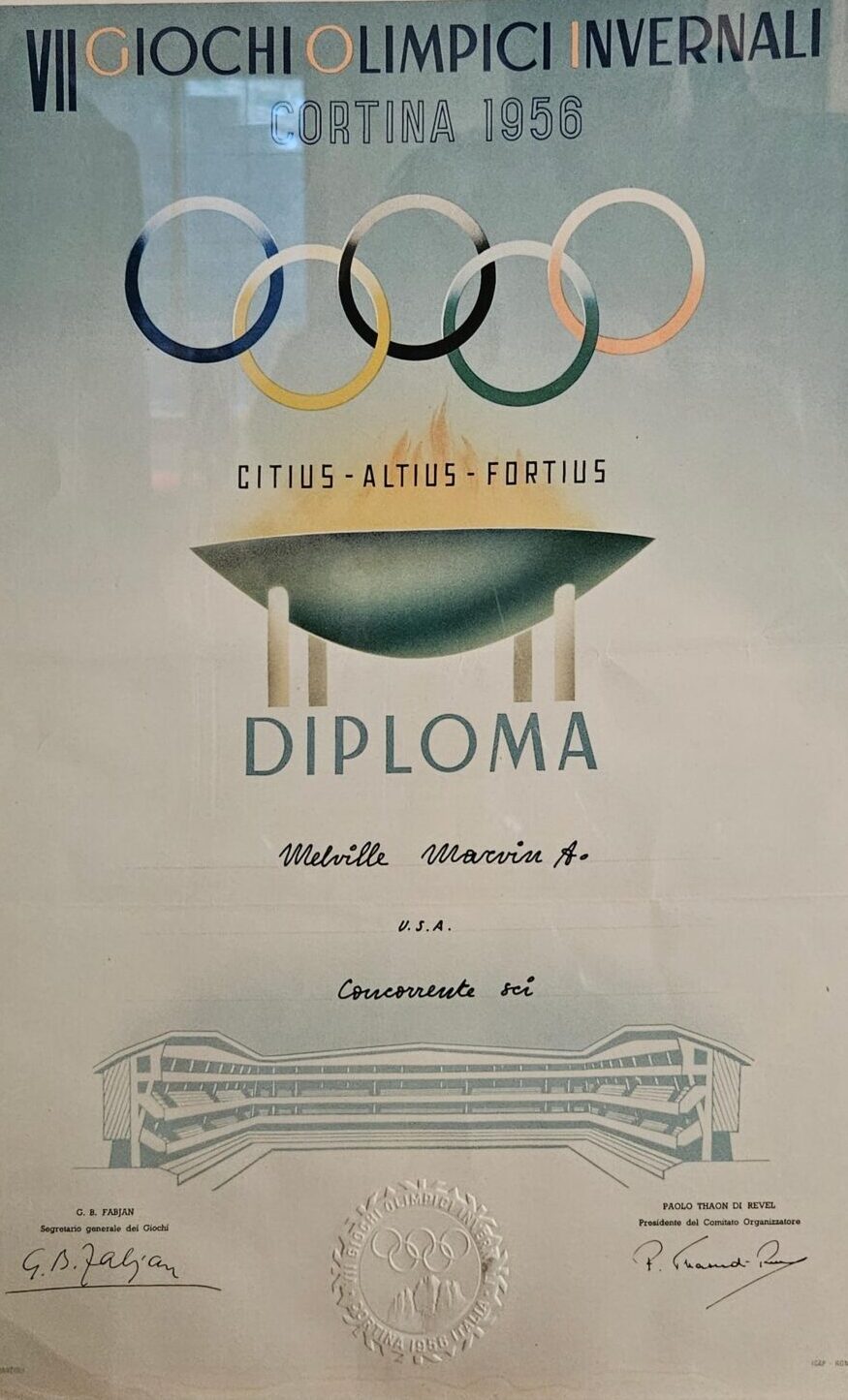
Melville’s Cortina certificate. (Don Brinkerhoff, KSL)
“Back in the day, they didn’t have grooming, they didn’t have snow cats. It was just the army (that would) side-step the course,” Melville said. “They didn’t have enough snow, so … the Italian Army was shoveling snow and pine needles out of the forest to cover the track. And so it was a little bit tough, and it was very bumpy.”
Only about half of the skiers who started the race crossed the finish line, and Melville wasn’t one of them.
“I started the downhill and got about halfway down the mountain and hit a road and blew up and broke my skis and pulled my bindings out, and that was the end of that,” he said.
One of those who did finish was a friend of Melville’s.
“Bud Warner actually fell down in the race, got up and finished 11th,” he said.
‘Just like everybody else’
One of the things Melville enjoyed most was meeting the athletes from all over the world.
“We intermingled with the bobsledders, and the ice skaters and the cross-country skiers, and it was a very exciting time for me,” he said. “We were watching a hockey game and … for the athletes, they only had standing room. You didn’t have a seat, but they had an area where you could go and stand and watch the event.”
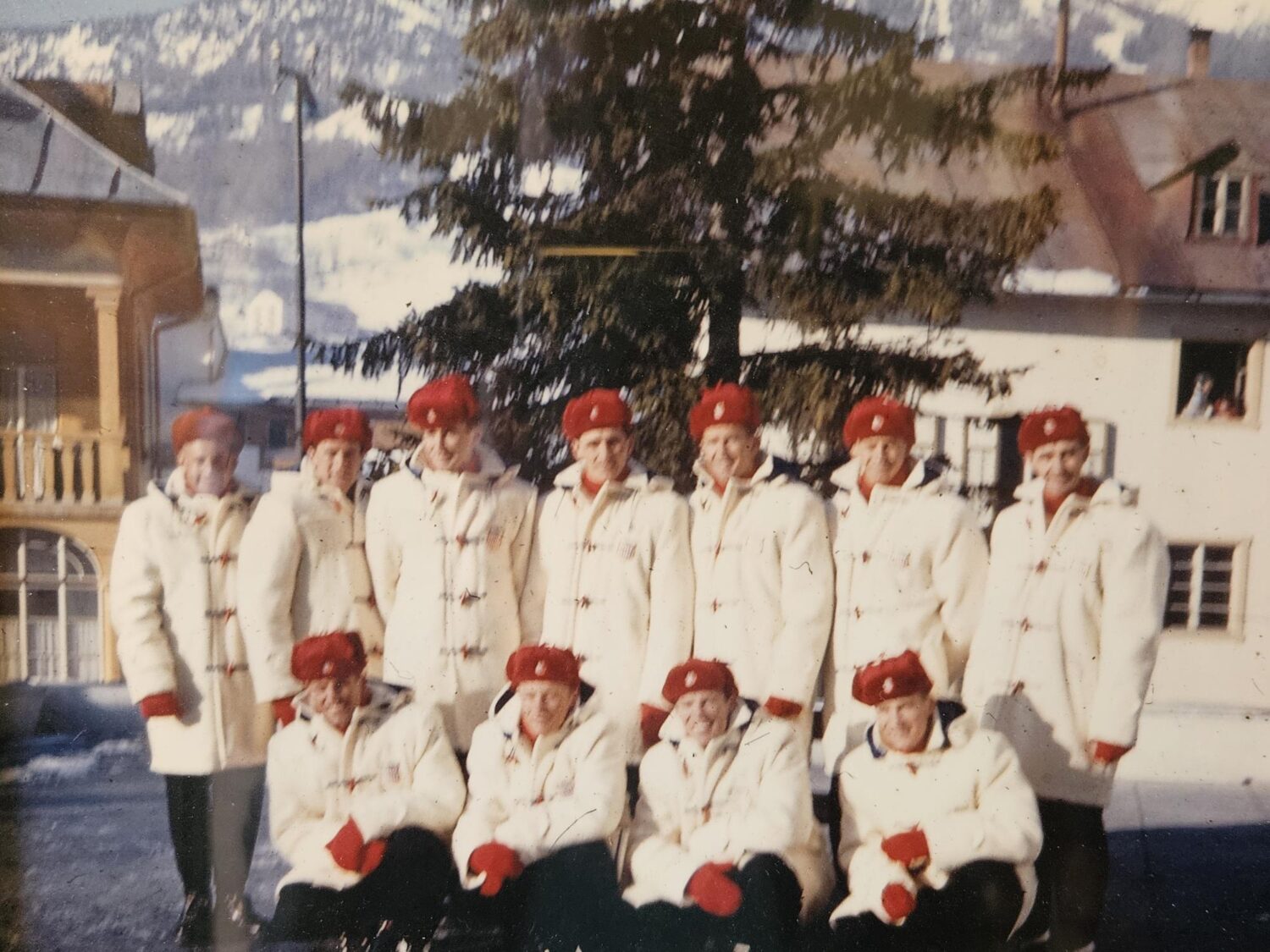
A picture of the 1956 U.S. Ski Team that Melville keeps on his wall. (Don Brinkerhoff, KSL)
While watching this hockey game, Melville said he realized he was standing next to a female cross-country skier from Russia.
“The Russians scored a goal, and she reached over and slammed me in the shoulder to celebrate their goal,” he said. “At that point, I realized that Russians were normal people like the rest of us. Up to that time, I thought they were the enemy, but now the athletes are, you know, basically all the same. And the Russians were great people just like everybody else.”
Reflecting on modern-day skiing
Melville said he still keeps a close eye on the Alpine events, and not just at the Olympics.
“I subscribe to a service that shows the World Cup events,” he said. “It’s interesting to me that exactly the same tracks, in Wengen [Switzerland] and in Kitsfield [Austria], are the ones I raced on. I think there’s there’s a downhill race in Wengen, which is the longest downhill race in the World Cup Circuit. They’re running that downhill about 2 minutes and a half, we were running it in 3 minutes and a half. So they’re running a minute faster, which is beyond understanding to me.”
He said much of that can be credited to improvements in the equipment modern skiers are using.
“The skis were wooden skis as opposed to the combinations of laminates they have now. They were wooden skis and I broke several pair in the process, but so did everybody else, that was just the way it was. They didn’t hold up as well,” Melville said. “When I first started, skiing skis didn’t even have metal edges on them. So, It’s come a long ways and they’re so … technically put together, so nice, and they flex them according to your body weight and your condition and everything else.”
Melville also said ski clothing has changed since his days on the slopes.
“I mean, back then the clothing was cold. Nowadays, they have all these fancy clothes, and we didn’t use race suits back then,” he said. “We [would] take a piece of tape and tie it around the fluffy pants, and that would be our aerodynamics.”
He described the leather helmets he and other skiers used as having “some sponge in them.”
“I mean, they would have done nothing, and by 1960, they had a hard shell. Didn’t fit very well but they had a hard shell,” Melville said.
A mishap during the Olympic opening ceremonies in 1956
One of the things he remembers from the 1956 games was the opening ceremonies.
“In the opening ceremonies in Cortina, the torch was brought in by an ice skater and he tripped over an electrical cord, and fell down with the the torch,” Melville said.
He said the torch didn’t go out, and the skater was able to get up and go on to light the caldron.
Melville said one of the things he’s looking forward to the most is getting to watch skiers on some of the same slopes he was racing on seven decades before.
Related reading: Utah unveils official name, new logo for 2034 Winter Olympics