Nearly 1 in 4 college-educated workers in Utah came from somewhere else
Aug 11, 2026, 6:00 AM

The Stewart Bell Tower and “W” on the mountainside are pictured on the campus of Weber State University in Ogden on Tuesday, Oct. 1, 2025. A new report finds 22% of the college-educated workforce in Utah came here from out of state to attend college. (Isaac Hale, Deseret News)
(Isaac Hale, Deseret News)
SALT LAKE CITY — Utah retained more of its college-educated workers who came here for school than the national average, according to a report released this month.
The report, “Talent in Motion: Interstate Migration of College-Educated Workers,” was produced by the Strada Institute for the Future of Work in collaboration with the W.E. Upjohn Institute for Employment Research.
Nationwide, the research found that most states wind up with a college-educated workforce that is largely made up of homegrown workers.
“This really struck us,” said Peter Bahr, Strada’s vice president of employer engagement and managing research director of the Future of Work, in an interview with the KSL News Daily podcast. “Sixty-seven percent, two-thirds across the country, two-thirds of college-educated workers live in the state where they attended high school,” Bahr said. “And 55%, over half, attended both high school and college in the state where they’re now working.”
Utah attracts students who stick around
Utah sits right in the average for that metric, according to the research. Fifty-four percent of Utah’s college-educated workforce comes from Utah originally.
But Utah stands out above the national average for the number of college-educated workers who came to Utah to attend post-secondary school.
Related: To help students and to save money, Utah’s public colleges, universities now in regional groups
“What struck us about Utah is that it has a larger share of its college-educated workers sourced from individuals who came to study, came for college, and then stayed to continue working there. So, whereas on average, it’s less than one in 10 college-educated workers across the country, it’s almost one in four, 22% in Utah,” Bahr said.
Bahr couldn’t yet say whether the number of ou
t-of-state students who choose to come to Utah to attend Brigham Young University played a part in those numbers.
“We have the data,” Bahr said, “but we have not dug into the findings for each individual state at that level of detail. … actually, we’re continuing the investigation to try to understand that.”
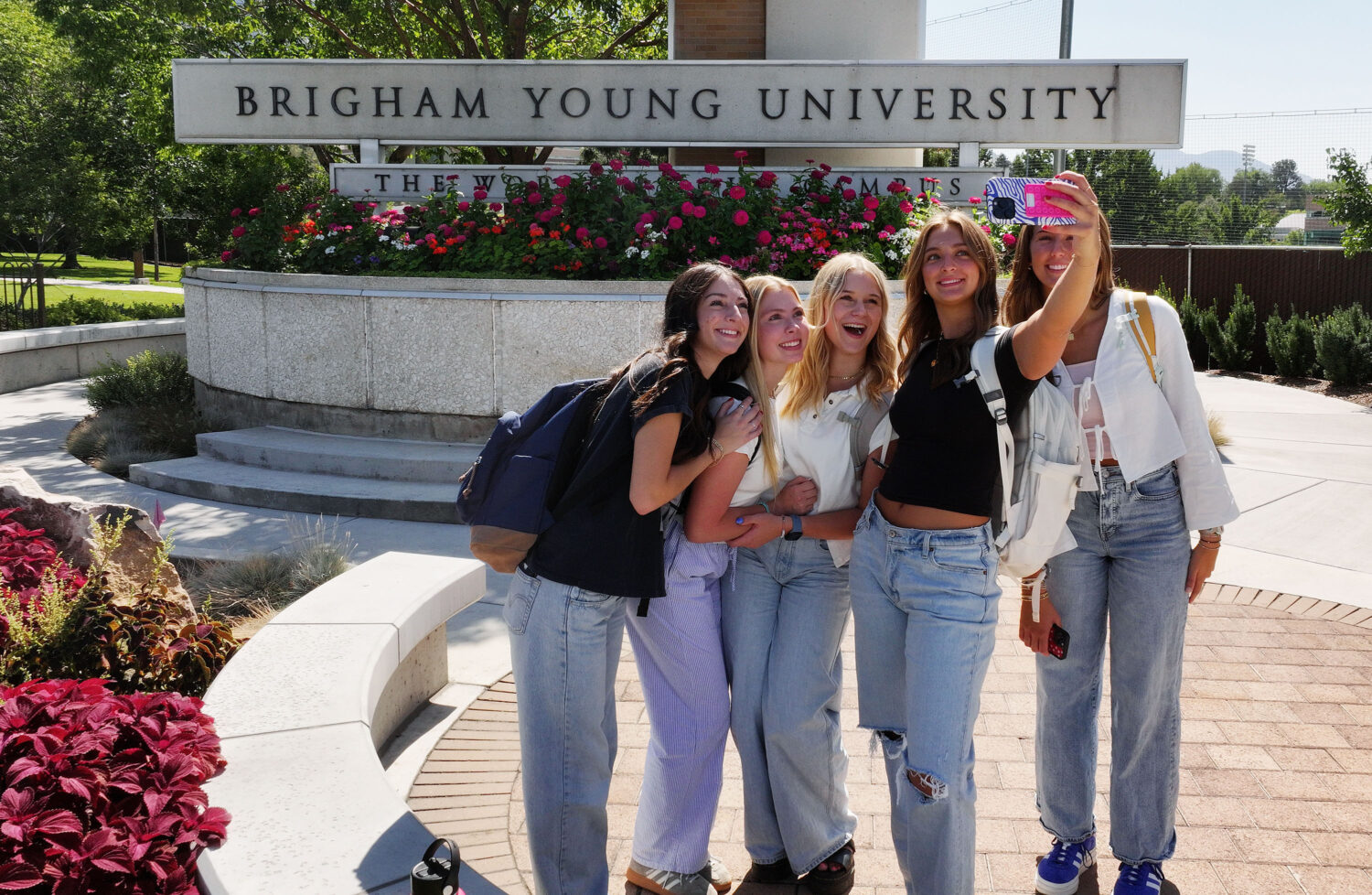
Students take a selfie at Brigham Young University in Provo on Wednesday, Sept. 4, 2024. (Jeffrey D. Allred, Deseret News)
According to Bahr, in most of the rest of the country, private universities may be less of a contributor to the “homegrown talent base,” but studying the data in more detail should help zero in on whether Utah is truly bucking that trend.
“We do know that nationally there’s less interstate migration than there once was. There’s less movement of workers across state lines. And that’s true even among college-educated workers who historically have been the most likely to migrate across state lines,” he said.
“But it’s definitely something that we plan to dig into in the future.”
Regional schools help boost college-educated workforce, too
Regional four-year institutions, schools like Weber State University and Southern Utah University, also play a key role in retaining homegrown students after they graduate.
“[That] was one of the surprises for us, was just what a strong contribution those regional publics, the broad access public (universities) play in the talent backbone for states. So we’re trying to understand more about why that is,” Bahr said.
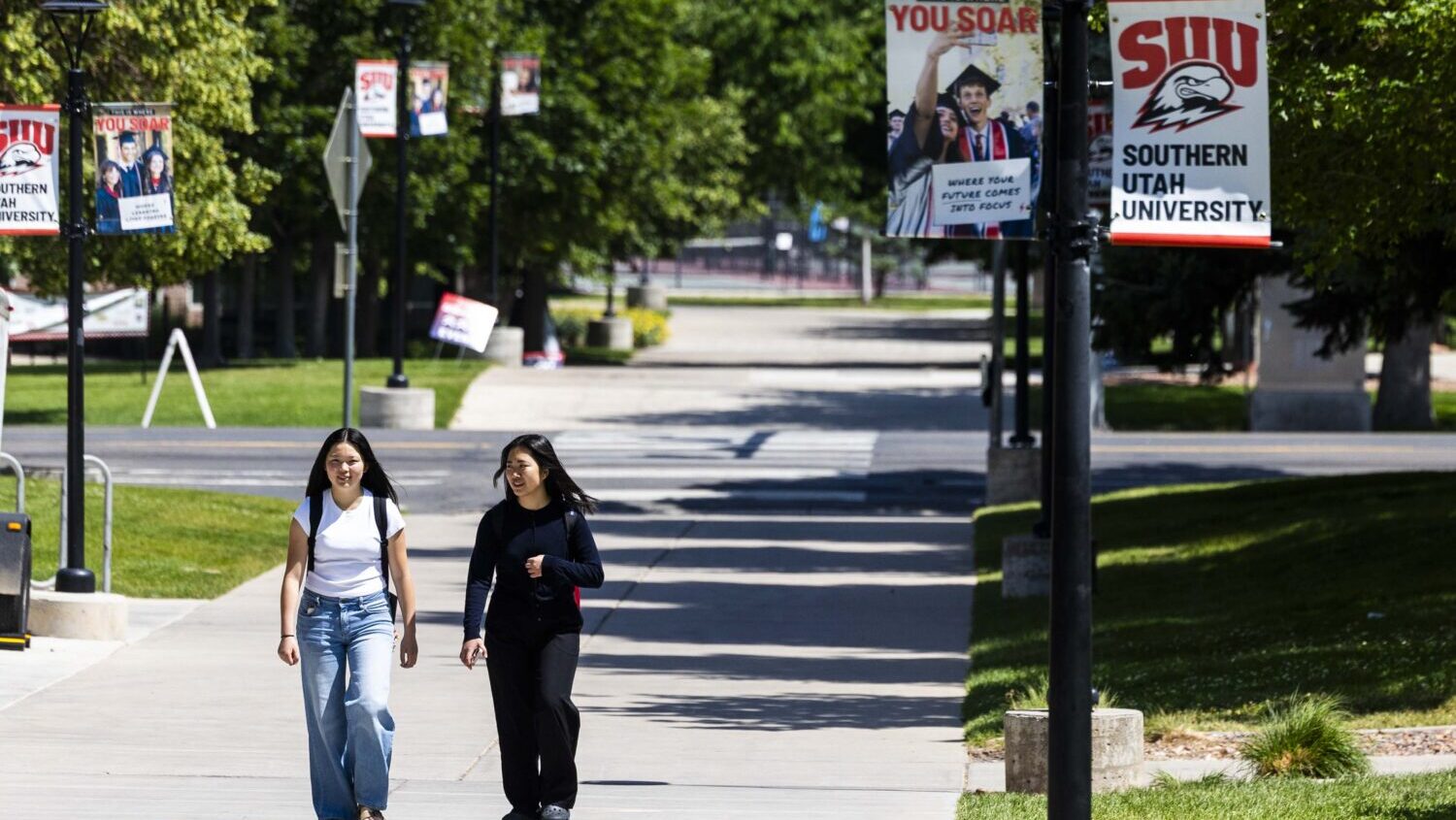
People walk on the campus of Southern Utah University in Cedar City on Friday, June 20, 2025. (Brice Tucker, Deseret News)
The study also found some interesting demographic breakdowns.
“We found that Hispanic college graduates are more likely to be homegrown than any other racial or ethnic group that we looked at,” Bahr said. “We are continuing to investigate the state-level correlates so we can get a better sense of, ‘What are the most important factors in strengthening the in-state retention rate?’ And then we’re expanding it to consider our community colleges as well.”
Takeaways for each state
Bahr said individual states can now take this data to learn something about their workforces and then strengthen them.
“Like, folks did not know that 22% of the college-educated workforce in Utah are, you know, part of the ‘study and stay’ group coming for college and then staying for work. And that certainly has to be a part of the picture as the policymakers there consider how to continue to reinforce that talent base in the state.
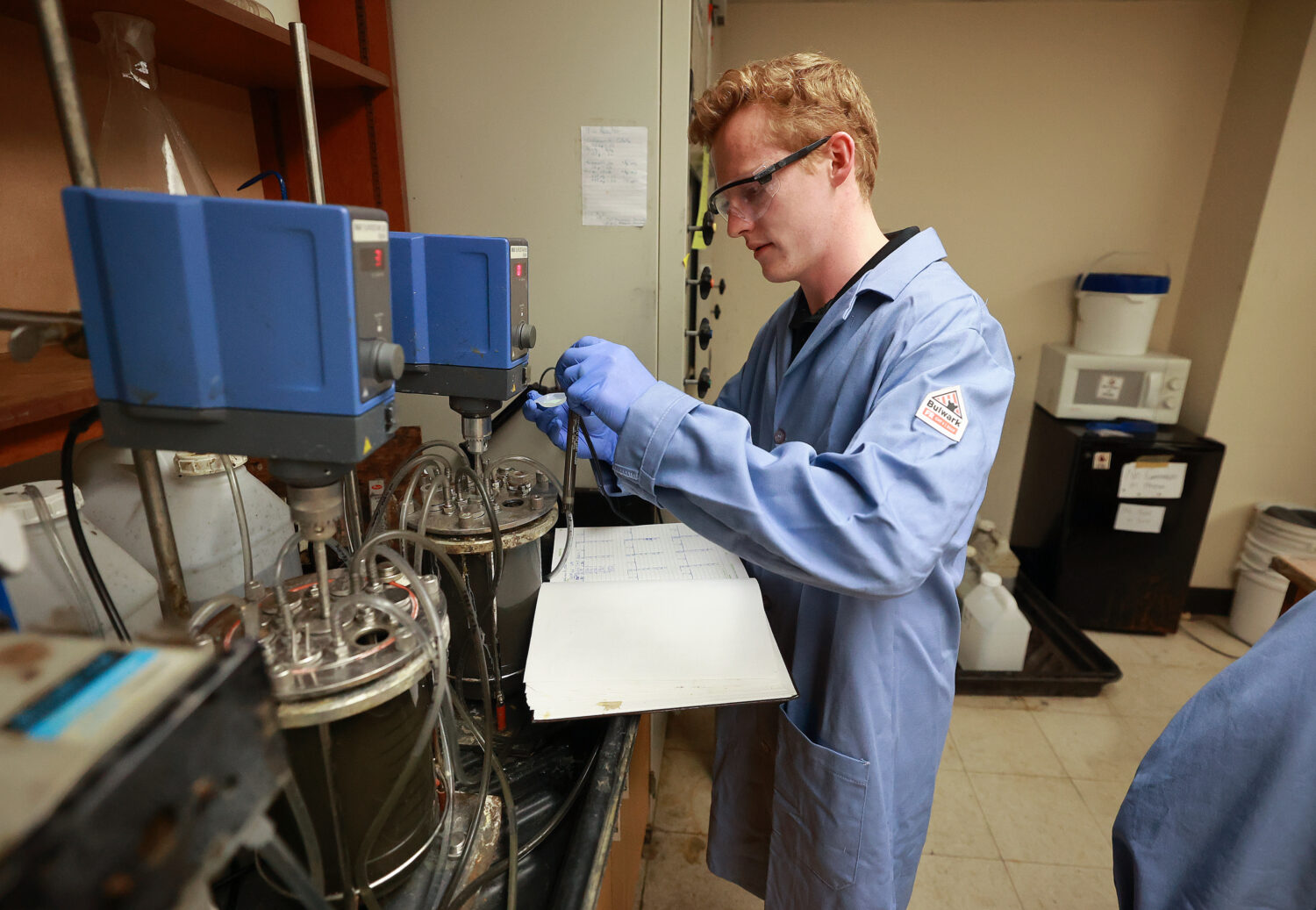
Hyrum Johnson, University of Utah graduate researcher, checks the health and performance of bacteria that consume pyrite minerals in the Bioreactor Lab at the University of Utah in Salt Lake City on Thursday, July 23, 2026. The bacteria can be used to leach metals out of minerals.
“From the standpoint of the colleges and universities, they’ve got to make sure that their programs are connected to real opportunities in the work place. And then they need to reinforce those bridges to quality jobs by engaging the local employers in work-based learning opportunities for their students. These are well-established ways to make sure that graduates are able to find jobs locally, and then you have a better chance of keeping them in state,” Bahr added.
The full report can be read on Strada’s website. You can also hear our full conversation with Bahr on the KSL News Daily podcast.