Venturing into the mountains this summer? Abide by these mountain lion safety tips to avoid conflict
May 13, 2025, 9:41 PM

A mountain lion is seen stalking Kyle Burgess in cellphone video after he came upon it and a couple of cubs on a trail in Slate Canyon near Provo on Saturday, Oct. 10, 2020. As summer arrives, the Utah Division of Wildlife Resources is reminding people about mountain lion safety. (Kyle Burgess)
(Kyle Burgess)

SALT LAKE CITY — As hiking and trail running season sets in, the Utah Division of Wildlife Resources is providing important mountain lion safety tips.
Although they’re elusive, mountain lions can be found across Utah. Often, they’re sighted in foothill and canyon areas, but may also venture into valleys.
Mountain lions, which are also called cougars or pumas, mainly eat deer. However, they will also consume elk, pronghorn, small mammals and occasionally, birds.
Related: Mountain lion sighting reported in Lehi
Mountain lion safety tips
After killing their prey, the large cats often stash the carcasses, covering them with dirt, leaves or snow to eat later.
If you find an animal carcass, the DWR advises leaving the area.
Do not hike or jog alone. Maintain awareness by avoiding the use of noise-canceling headphones, and keep your group together — that includes dogs. As you recreate, make noise to alert any animals in the area to your presence.
Wildlife, including cougars, often prefer to avoid human encounters. Animals will likely vacate the area if they become aware of human presence.
According to Darren DeBloois, the DWR game mammals coordinator, mountain lions are most likely to be encountered near dawn and dusk. That’s when they typically hunt.
If you live in an area in proximity to deer habitats, bring your pets and livestock inside at night. Supervise your children when they’re outside, too.
Animals that can’t be brought inside can be secured in a barn or kennel, per the DWR.
Ensure your yard doesn’t attract mountain lions by installing motion sensitive lighting on your property. The DWR also recommended trimming vegetation and eliminating elements, such as wood piles, where wildlife could hide.
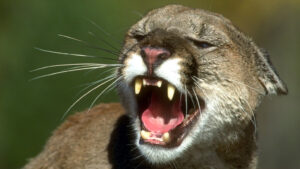
FILE – A mountain lion shows signs of aggression in an undated file photo. (AP Photo/California Dept of Fish and Game)
What to do if a mountain lion attacks
Although encountering a mountain lion is rare, the DWR’s mountain lion safety advice instructions for how you should handle an encounter.
“Typically, a cougar that is trying to prey on something will sneak up and ambush them,” DeBloois said. “When a cougar lunges or bluffs a charge at someone, they are typically just trying to drive them out of the area because they have kittens or a kill nearby that they are trying to protect.”
Do not run from the animal — doing so could trigger the animal’s instinct to chase. Remain calm and maintain eye contact.
If you’re with small children or pets, pick them up. If they’re too heavy, keep them close to your body.
Remain upright, and raise your arms or jacket above your head. Making yourself bigger can deter an attack. As you back away, move slowly and speak in a loud, firm voice.
By appearing large and acting assertively, you’re likely to deter the mountain lion.
If the encounter turns violent, the DWR said to fight back. Use special care to protect your head and neck.
Should I report a mountain lion sighting?
Although there has been an increase in residential sightings over the past few years, the DWR attributed it to the rise in security camera installations. If your cameras capture one, or you witness one from a distance, you don’t need to report it.
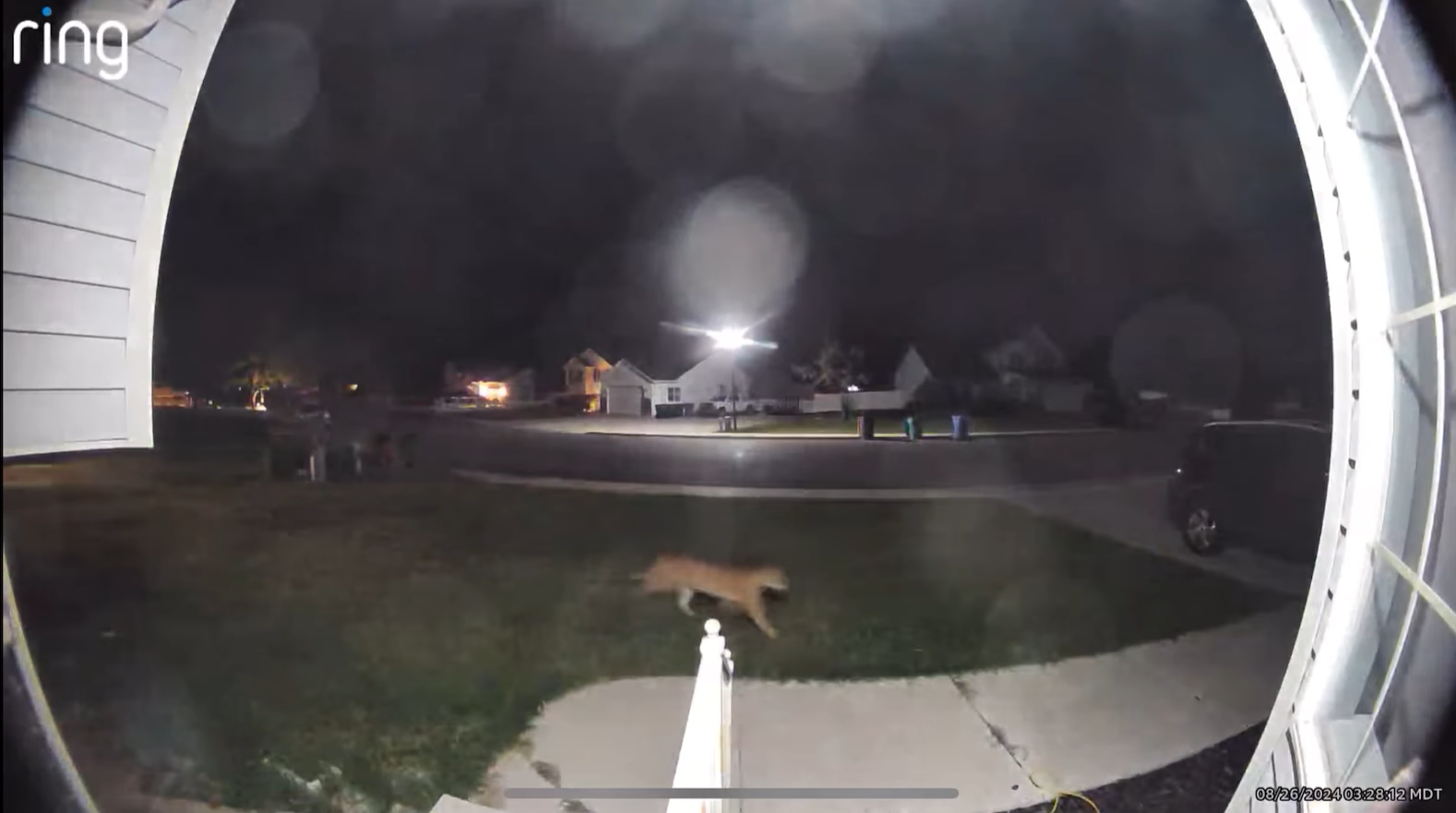
A mountain lion was spotted on a Ring camera outside of a home on Woods Drive in Lehi, Utah. (Lehi City Police Department)
However, the DWR would like to know about a mountain lion sighting if:
- it has killed something within your neighborhood
- it is acting aggressively
- the animal appears several times
Make a report by contacting the DWR. If you’re struggling to determine if you should report an animal, the division website includes a helpful quiz.
Related to mountain lion safety: Taking your dog hiking this summer? Consider enrolling them in rattlesnake aversion training