
Judge resigns, says workload for Utah courts is ‘not sustainable’
Jul 28, 2026, 3:11 PM | Updated: Jul 29, 2026, 5:49 pm
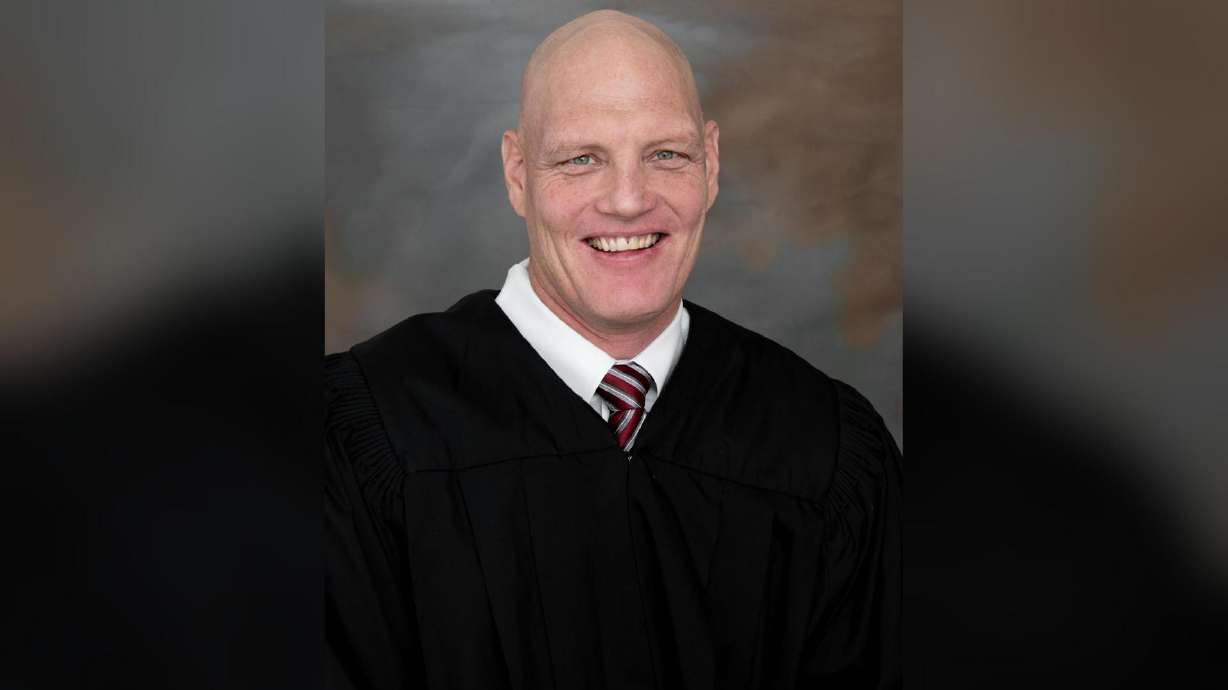
After less than two years on the job, Utah 4th District Judge Kasey Wright announced he's stepping down, citing a heavy workload on the bench that he says is "not sustainable" and "should concern every citizen." (Utah State Courts)
(Utah State Courts)
SALT LAKE CITY — A Utah judge announced he’s stepping down after less than two years on the job, citing a heavy workload on the bench that he says is “not sustainable” and “should concern every citizen.”
Fourth District Judge Kasey Wright, who was appointed in October 2024, submitted his resignation letter earlier this month. In the letter obtained by KSL, Wright notes the “deep personal” impact each case has on a judge — and the amount of time it takes to review them and ensure justice is served.
“The problem is that it takes time to properly perform each of these tasks, and it is time that too many judges are lacking,” Wright wrote. “With many judges carrying a caseload of well over a thousand cases, too often judges must choose between giving a case the full attention it deserves and sacrificing their personal time and family life to ensure a case is given the time it requires.”
As a result, Wright continued, judges are working 50 to 60 hours a week to get everything done.
“This is not sustainable!” he wrote. “Judges will burn out quickly, and the quality of judicial applicants will decline. Accomplished and talented attorneys will be reluctant to seek judicial positions at the expense of their personal well-being. Whether it be from burnout or dilution of judicial applicants, justice suffers.”
The issue is only likely to get worse, according to Wright, who said Utah’s population growth has outpaced the resources given to the courts. Higher caseloads mean “judges face increasing pressure to decide more cases with less time,” he wrote. “That should concern every citizen.”
Earlier this year, the Utah State Courts asked lawmakers for money to hire an additional eight district court judges and one or two more appellate court justices. Ultimately, the Republican-controlled Legislature added two seats on the Court of Appeals and three in the district courts while also expanding the state Supreme Court by two seats, a move that was met with criticism.
Tensions between the Legislature and the courts have been high recently, thanks in part to several rulings on redistricting and abortion that have rankled the GOP majority. Lawmakers have proposed a suite of judicial reforms in each of the past several legislative sessions, culminating with the expansion of the state’s high court.
Still, Sen. Todd Weiler, R-Woods Cross, who chairs the Senate Judicial Confirmation Committee, told KSL that the Legislature did more last session for the judiciary than the previous two decades.
“That doesn’t mean we won’t fund more judges next year,” Weiler added, “and I hope we do.”
In fact, Weiler said, Wright’s resignation letter is being circulated among legislative leadership, and he expects it will have an impact.
“I think it might, and I actually hope it might because I think the letter is a sincere attempt to identify a problem,” Weiler said. “I’m kind of glad he wrote the letter, and it’ll certainly result in some, I think, investigation, which is necessary.”
Nancy Sylvester, an attorney and former counsel for the courts and the Utah State Bar, said several factors have led to an increased workload for judges and attorneys, including the rise of artificial intelligence technology, pressure from social media and historically understaffed courts.
AI in particular has led to an explosion of court filings as people representing themselves can quickly generate documents.
“These documents are oftentimes not only rife with errors, but also voluminous and inappropriate,” Sylvester told KSL in an email. “I’ve seen my attorney colleagues burn out from responding to these already. I have also heard from my judge and court staff friends that this is becoming a huge issue on the bench.”
Social media presents further risks of threats and doxxing for judges and lawyers, she said, adding that “the burnout of our legal system is all but inevitable.” Utah should invest more resources in the courts and add guardrails on new technologies, Sylvester added.
Even though Weiler said he’s grateful to Wright for raising concerns about judges’ workload, he found it “ironic” that he first read the resignation letter during a hearing to confirm a new judge to serve in Provo, where Wright is based.
“Literally, I was reading that as help was on the way,” the senator said, “and yet his resignation will actually exacerbate the problem, not improve it.”
Wright’s resignation from the bench is effective Dec. 31.