Judge signs execution warrant for Utah inmate Ralph Menzies
Jul 9, 2025, 1:21 PM | Updated: 6:37 pm

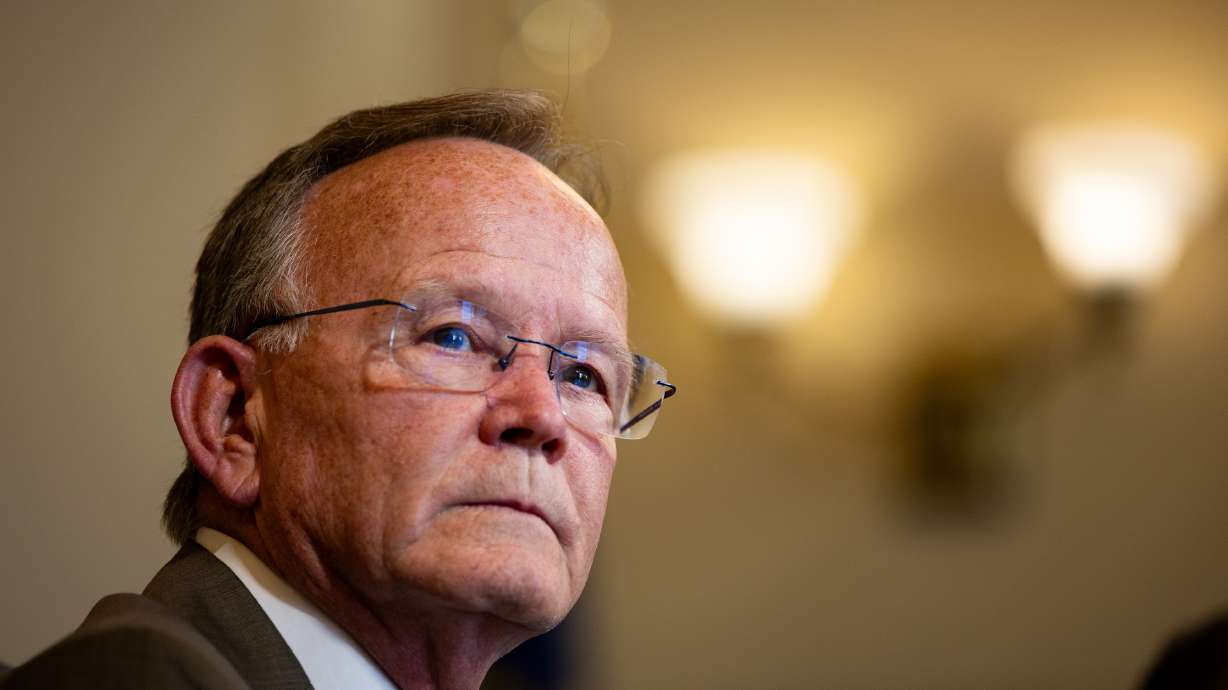
Death row inmate Ralph Menzies appears in 3rd District Court on Wednesday, July 9, 2025. Menzies, 67, is scheduled to be executed by firing squad on Sept. 5. He was convicted of robbing, kidnapping and brutally killing Maurine Hunsaker, a 26-year-old mother of three, in 1986.(Francisco Kjolseth | The Salt Lake Tribune)
(Francisco Kjolseth | The Salt Lake Tribune)

WEST JORDAN — After well over three decades on death row and years of appeals, a 3rd District Court judge signed Ralph Menzies’ execution warrant on Wednesday and potentially paved the way for the first firing squad execution in Utah since 2010.
As of Wednesday’s hearing, Menzies, 67, was scheduled to be executed on Sept. 5 by firing squad.
Menzies was sentenced to die after the kidnapping and murder of 26-year-old Maurine Hunsaker in 1986. Hunsaker, a mother of three, was working at a Kearns gas station when Menzies abducted her. She called to tell her husband she had been kidnapped, but believed Menzies would let her go. Two days later, Hunsaker’s body was found in Big Cottonwood Canyon.
The signature by Judge Matthew Bates came after Menzies was found competent to be executed on June 6.
The defense argued Menzies had developed vascular dementia, which made him ineligible for execution by law. By June, Menzies had been through 16 months of evaluations.
His attorneys then filed another petition asking the court to evaluate his competency, arguing his health had declined even further. A hearing on that petition was scheduled for July 23, but discussion about Menzies’ condition still took center stage Wednesday.
“He no longer meets the awareness standard, and it’s not just our experts saying this, but it’s based on, you know, undeniable, medically documented evidence of a severe hypoxic event,” said defense attorney Eric Zuckerman in court. “That’s basically like his brain going into shock because of a lack of oxygen and requiring him to have an oxygen tank. I mean, this is not like … we’re not just throwing something against the wall to see if it sticks here.”
State seeks warrant for execution by firing squad after Ralph Menzies ruled competent
Bates ultimately signed the death warrant anyway after roughly an hour of arguments over the defense’s motion to stay the execution.
“The issuance of this warrant does nothing to change the reality that Ralph Menzies is a severely brain-damaged 67-year-old man with worsening dementia,” said Lindsey Layer, Menzies’ defense attorney. “He is dependent on oxygen, unable to walk without assistance, and exhibits the unmistakable signs of dementia familiar to anyone who has cared for a loved one with this devastating disease.”
Hunsaker’s son, Matt, appeared at the hearing on Wednesday. He addressed the court at one point, saying he would repeat the words he had said three times before. Ultimately, he urged Bates to sign the warrant.
“(If) you issue the warrant today, you start a process for our family. … It puts everybody on the clock,” he said. “We’ve now introduced another generation of my mom, and we still don’t have justice served.”
After his 1988 sentencing, Menzies was allowed to choose the execution method he would face, to which he opted for a firing squad — an option that is no longer legal under Utah law.
“We remain hopeful that the courts or the clemency board will recognize the profound inhumanity of executing a man who is experiencing steep cognitive decline and significant memory loss,” Layer said. “Taking the life of someone with a terminal illness who is no longer a threat to anyone and whose mind and identity have been overtaken by dementia serves neither justice nor human decency.”
After the hearing, Hunsaker characterized the execution as a comparatively humane outcome.
“His life will be over in mere seconds,” Hunsaker said. “My mom—we don’t know how long she stood there and suffered in that grove, how long she bled to death, and how much she felt.”
This is a breaking news story. It may be updated.
Contributing: Emily Ashcraft, KSL.com