Menzies back in court Wednesday as deadline to respond to commutation request nears
Jul 22, 2025, 4:00 PM
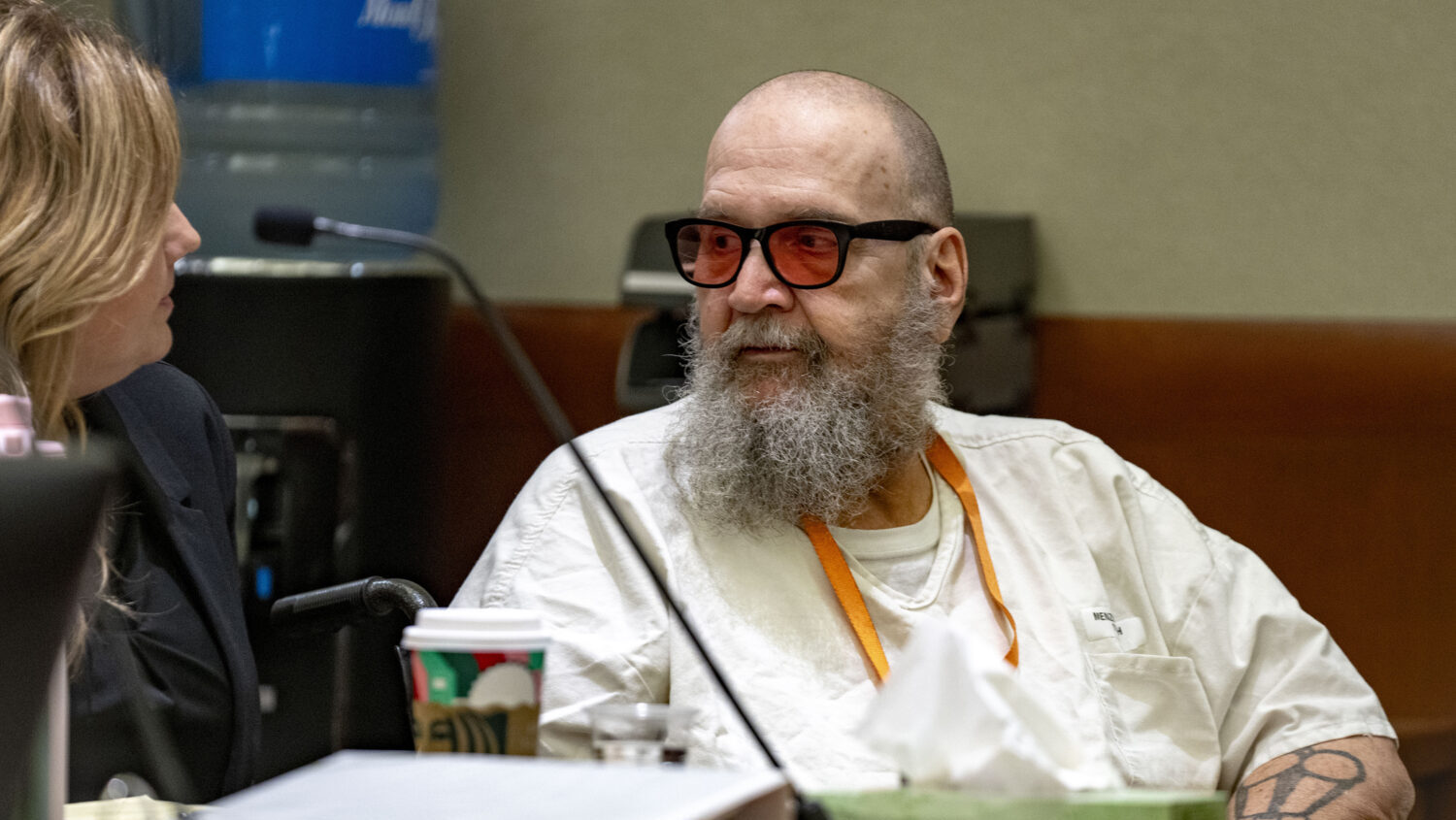
FILE - Jasmine North, federal public defender mitigation investigator, speaks with Ralph Leroy Menzies during his competency hearing in Third District Court in West Jordan, Utah, Nov. 18, 2024. (Rick Egan/The Salt Lake Tribune via AP, Pool, File)
Credit: ASSOCIATED PRESS
(Rick Egan/The Salt Lake Tribune via AP, Pool, File)
MURRAY, Utah — Prosecutors have until the end of the workday Wednesday to file their response to death row inmate Ralph Leroy Menzies’s request for a commutation hearing.
Menzies, 67, is scheduled to be executed by firing squad on Sept. 5. He was convicted of killing Maurine Hunsaker, a 26-year-old mother of three who worked at a gas station in Kearns, in 1986.
Last week, attorneys for Menzies filed a petition with the Utah Board of Pardons and Parole requesting a commutation. The board has the power to change Menzies’ death sentence to life in prison without the possibility of parole.
On Tuesday, Board Administrator Jennifer Yim outlined the steps of the commutation process. Much of the process will be similar to last year’s commutation hearing that was granted to Taberon Dave Honie before he was executed.
After Menzies’ death warrant was signed, his attorneys had seven days to file a petition for a commutation hearing, which they did last week. The state then has seven days to respond. That deadline is Wednesday at 5 p.m.
Once the petition and response are filed, the pardons board will determine whether to grant a hearing.
Yim noted Tuesday that there is one key difference between the decision-making process for Menzies versus the decision process for Honie. In 1992, state lawmakers changed the statute on what the board may consider when deciding a commutation case.
“Because Mr Menzies was sentenced in 1988, those newer statutes will not apply. Essentially, what that means is the board will have very broad latitude in determining whether or not to grant a hearing in this case because those statutes do not affect Mr. Menzies,” she said.
Under the new rules, board members cannot consider constitutional issues previously raised by the court, issues that should have been raised by the court, or issues subject to judicial review. Those rules will not apply to Menzies when deciding whether to grant a commutation hearing before the full five-member board of pardons.
Honie was granted a commutation hearing last year, as was Ronnie Lee Gardner in 2010. The board ultimately rejected their arguments, however, and both executions proceeded as scheduled. Gardner was the last Utah inmate put to death by firing squad.
“The board exists in a situation where it has the right to issue pardons and parole; that’s part of its constitutional duty. Commutation is one of those main duties. What we are not, are courts. So the board will stay within its own lane in order to promote the best functioning of government and will not attempt to relitigate anything that has been litigated in the past,” Yim said.
“What we will consider is what is raised in the petition filed by the petitioner and the state’s response.”
Related: Who are Utah’s other death-row prisoners awaiting execution?