Why was there pink water in Bear Lake? It was in the name of science
Jun 10, 2025, 9:15 PM

Pink water in Bear Lake? The rosy hues spotted on June 9 were the result of research work being done to understand how herbicides spread through the water in the fight against eurasian watermilfoil, an invasive species. (Utah Division of Forestry, Fire and State Lands)
(Utah Division of Forestry, Fire and State Lands)

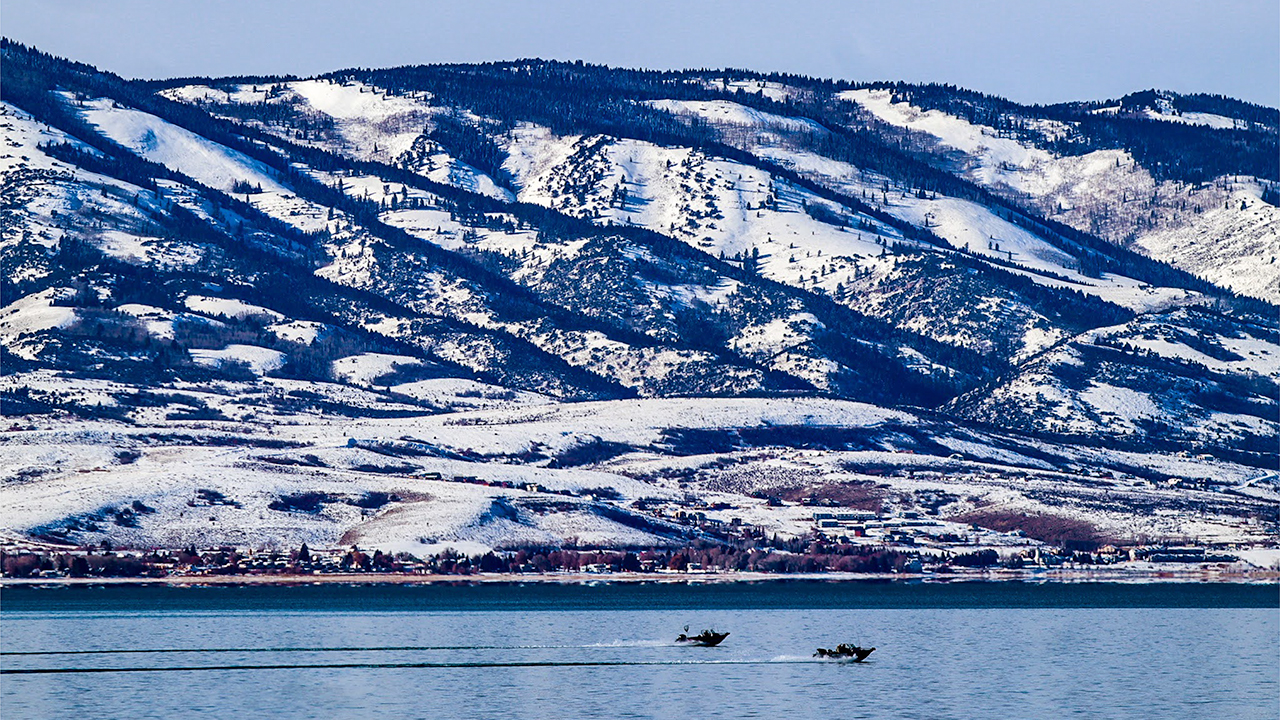
BEAR LAKE — Utah State University researchers are to blame for pink water in Bear Lake on Monday. According to the Utah Division of Natural Resources, they were using a nontoxic dye to examine water exchange rates.
The DNR explained the water’s bright hue in a recent post to the Division of Forestry, Fire and State Lands’ Facebook profile, writing “researchers are placing small amounts of pink dye in the lake to see how it dissipates.”
According to Jessie Danninger, the sovereign lands program manager for the DNR’s Bear River area, researchers were using the dye to better understand how herbicides meant to kill eurasian watermilfoil spread through the lake.
Eurasian watermilfoil is an invasive plant that has green, feathery needles that resemble a pine tree’s branches.

Eurasian watermilfoil is characterized by feathery green needles, and a stem with a reddish hue. (Utah Division of Forestry, Fire and State Lands)
“When we spray the herbicide into the water column, we don’t really know exactly how it’s dispersing,” Danninger said. “The dye was to keep track of … what’s happening as it’s moving through the water.”
The dye in question was Rhodamine Water Tracer dye, a nontoxic, fluorescent colorant often used by researchers.
“[The dye] doesn’t hurt the fish. It doesn’t hurt the plants. It won’t hurt your kids while they’re swimming,” Danninger said.
After it was put in the lake, researchers used a fluorometer to monitor the dye’s presence in the water, enabling them to track it’s dispersal.
Is there still pink water in Bear Lake?
Danninger explained that Bear Lake’s water wasn’t pink for long. In some areas, the hue disappeared in a mere hour. In others, it took a few hours.
“By the end of yesterday, all of the dye had been dispersed and you can’t see it anymore.”
Currently, researchers don’t have results from their study. Since questions still remain, they’re planning to complete a second round of testing with the dye.
“In a couple places it dispersed significantly faster than we thought it would,” Danninger said. “The herbicide should be a lot more effective than it has been in the past and we were wondering if that’s because it’s moving in the water when we spray.”
Preventing the spread of invasive species
After an invasive species, like eurasian watermilfoil, has been introduced into an ecosystem, it is very difficult to get rid of it. The National Wildlife Federation explained that invasive species can outcompete and harm native species and introduce new diseases to an ecosystem, among other things.
Danninger said it’s important for those recreating on bodies of water to practice the U.S. Fish and Wildlife Service’s Clean, Drain, Dry protocols diligently.
After removing a vessel, whether it’s a canoe, speedboat or anything in between, clean off any visible traces from the environment, such as mud and plants. Utilizing hot, high pressure water that is at least 120 degrees is ideal.
If hot water is unavailable, the Fish and Wildlife Service said you can also use tap water.
Then, drain any parts of the vessel that can hold water before you leave the water’s access points. Some species, such as zebra mussel larvae, may enter areas that contain water.
Finally, allow at least five days for your equipment to dry, or wipe it thoroughly with a towel to ensure all species have been removed.
In addition to practicing Clean, Drain, Dry, the Fish and Wildlife Service website instructs anglers to dispose of unwanted fishing supplies, such as bait, and fish remnants in the trash. Do not dump animals from one body of water into another.
The United States Geological Survey has a form to report possible invasive species sightings. If you think you see one, note its location and take a photo.