UDOT exploring ways to improve travel around downtown Salt Lake City, including walkability
Mar 28, 2025, 2:00 PM

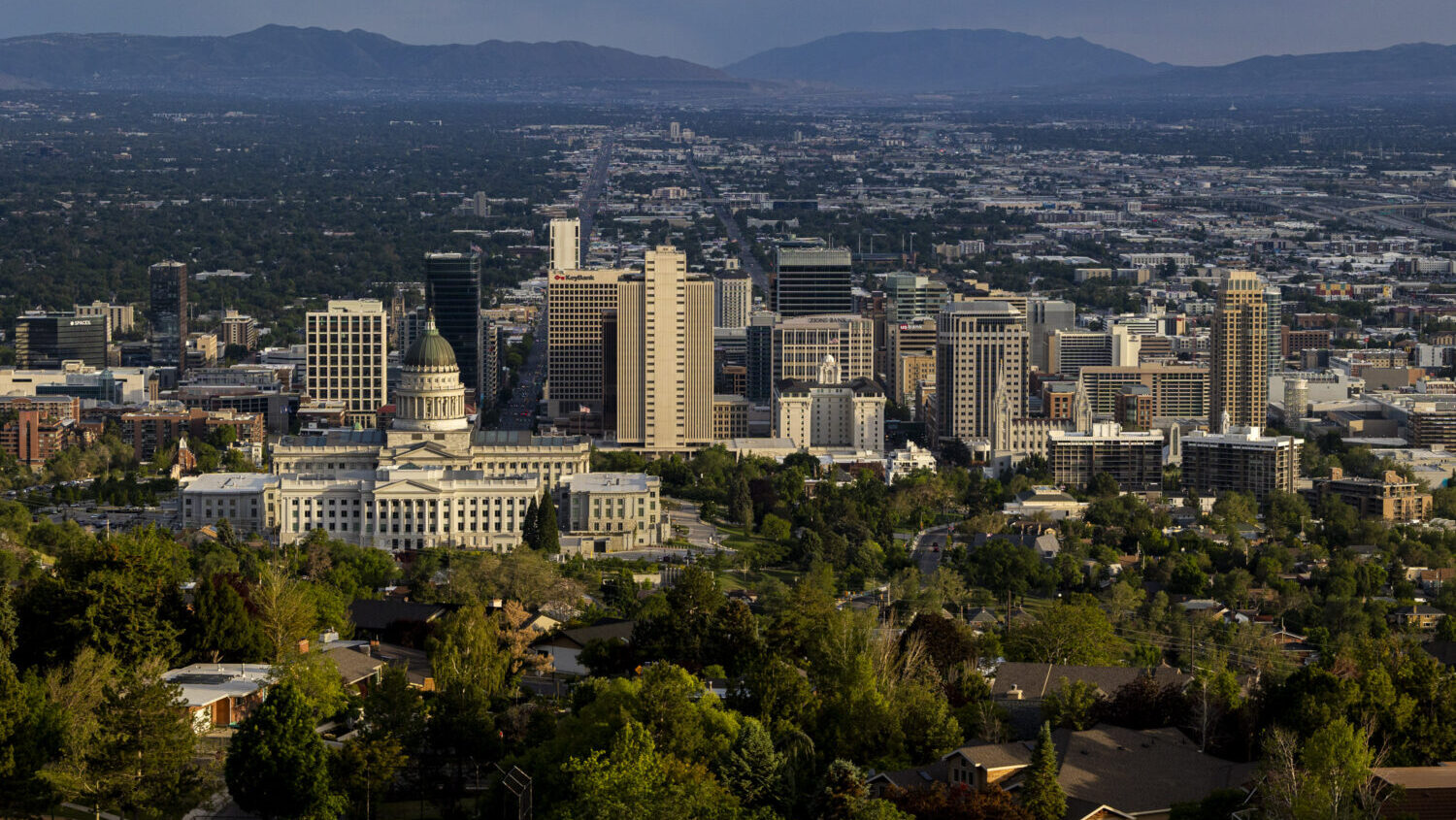
Salt Lake City’s downtown skyline on Tuesday, Jan. 30, 2024. (Jeffery D. Allred, Deseret News)
(Jeffery D. Allred, Deseret News)
SALT LAKE CITY — The Utah Department of Transportation is conducting a study on how it can improve mobility for drivers, bicyclists and pedestrians around northeastern Salt Lake City.
The study area runs from 600 South to the Davis County line east of I-15 all the way up to the University of Utah.
UDOT Region 2 Planning Manager Geoff Dupaix told KSL NewsRadio that because of how developed the area is, it’s unlikely they’ll try to do something major like widen a road. Rather, they’ll look to make more subtle changes where they can.
“It’s more surgical in its approach,” Dupaix said. “It’s really taking a look at … more of those subtle changes that can happen at specific intersections.”
For example, Dupaix said they could look to adjust signal timing in some spots to make crossing major roads safer.
He also said there have been people asking for better bike connections on Victory Road from Beck Street to the state Capitol.
The study is also looking at overall ways to improve access to biking, walking and public transit.
At this point in the study, there aren’t a lot of concrete proposals or plans. Rather, the department is looking at several ideas and strategies.
The department is taking public comments on the study until May, and they will hold an open house at the Salt Lake City Library’s Marmalade Branch on April 22 from 5:30 to 7:30 p.m.
You can find more information on the study’s website.
How SB195 could impact this study
Dupaix also addressed how this study could be impacted by a new bill passed by the state Legislature and signed into law by Utah Gov. Spencer Cox.
SB195 seeks to temporarily pause road construction projects in Salt Lake City that hinder traffic flow.
Dupaix told KSL NewsRadio they are aware of the new law, but are trying to understand the language in it.
He said none of their proposed solutions to this point are expected to hinder the flow of traffic, but the bill could potentially affect how any of those solutions are implemented in the future.
The study was funded and started well before the new law was signed, and Dupaix said it will not force them to pause the study or force them not to take public comments.