South Jordan woman’s annual ofrenda serves to remember and honor dead loved ones
Nov 1, 2024, 1:00 PM
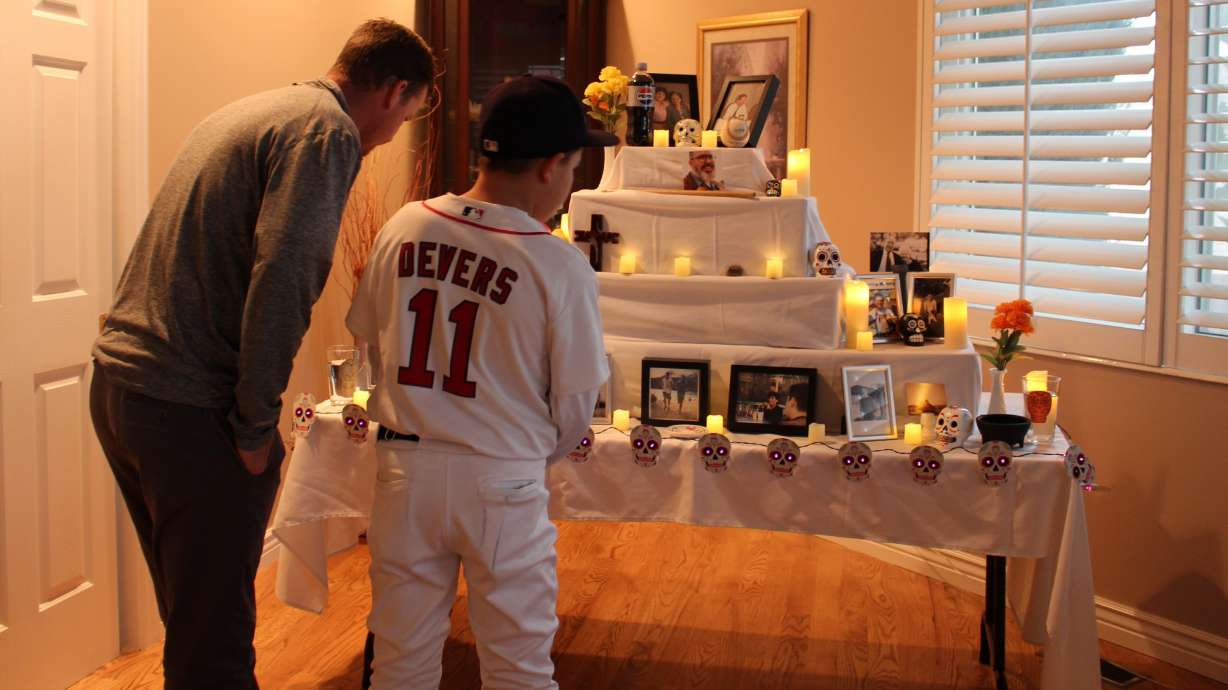
Areli Olsen's husband John Olsen and their son Lucas inspect the ofrenda at their South Jordan home on Thursday. Areli Olsen started the tradition of installing an ofrenda in the family's home to mark Día de los Muertos each year. (Areli Olsen)
(Areli Olsen)
SOUTH JORDAN, Utah — Areli Olsen always feels a certain connection to her mother, who died 10 years ago, and other loved ones who have passed away. When Día de los Muertos comes around each year, though, the ofrenda she installs in her home heightens the sentiments.
“I always feel them close by, regardless of whether it’s Día de los Muertos or not,” she said. But with the ofrenda, displays featuring marigolds, photos of dead loved ones and food and drink offerings, she feels even closer and senses “that they know that we are remembering them and honoring them.”
Dia de los Muertos, or Day of the Dead — actually observed over two days, Nov. 1 and 2 — is a celebration with roots in the Indigenous communities of pre-Hispanic Mexico to honor and remember the dead. It’s widely commemorated across Mexico and an increasing focus of public events and activities across Utah and the United States. In Mexico, it’s also marked by some with installation of home ofrendas, and Olsen, whose parents are from Mexico, counts among those who have carried the tradition into their households.
“It has grown. I feel like 10 years ago, there weren’t very many people that were doing it,” she said.
In fact, the tradition seems more and more common among her friends and family, who are increasingly making their own ofrendas, she said. Likewise, seeing the growth of public Día de los Muertos events — several are to be held Friday and Saturday in Utah — is inspiring. “My heavens, I’m absolutely so excited. … It’s so wonderful to share this part of our culture with our communities,” she said.
Read the full story from KSL.com.