Keep an eye out for rattlesnakes, says the Division of Wildlife Resources
May 12, 2025, 6:00 AM
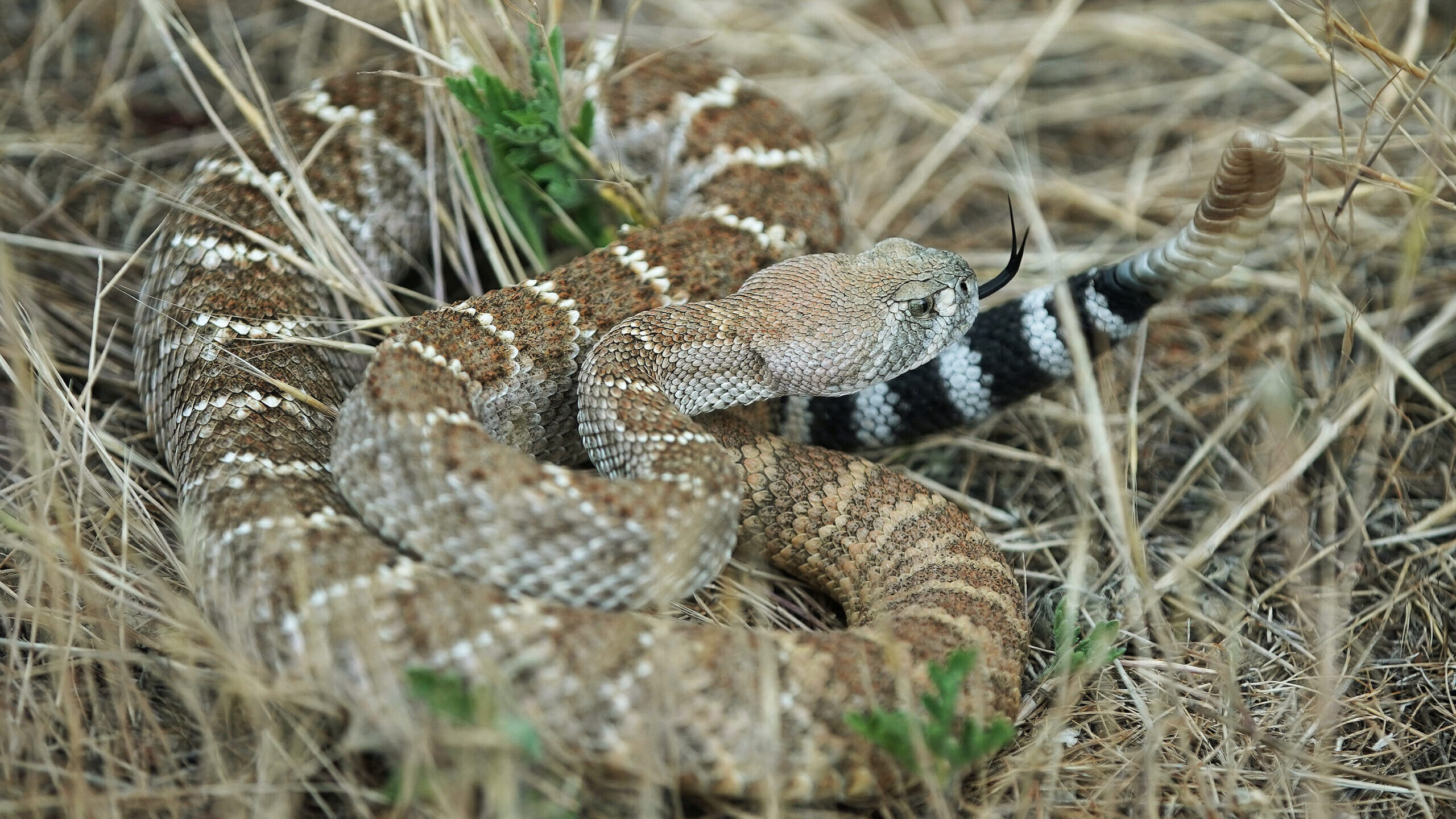
A western diamondback rattlesnake used by Haley Bechard, of Utah Rattlesnake Avoidance, is pictured in Salt Lake City on Thursday, June 24, 2021. (Jeffrey D. Allred/Deseret News)
(Jeffrey D. Allred/Deseret News)

SALT LAKE CITY — With temperatures getting warmer overnight, people may start seeing rattlesnakes coming out to warm themselves in the sun.
Alyssa Hoekstra, a native herpetology coordinator with the Utah Division of Wildlife Resources, said rattlesnakes start coming out of their dens when overnight temperatures are consistently above 50 degrees Fahrenheit.
“Usually, we’ll find them moving more often during dawn and dusk time. And then in the summertime they usually—it’s called estivation, where they kind of hunker down into an area … to escape those extreme temperatures.”
Because rattlesnake physiology differs from human physiology, they rely on their environment to regulate their body temperature.
“They have to kind of find a place where it’s in the shade, where it can bring down their body temperature if it’s becoming too hot or make it more stable. Or, if it’s too cold, they need to find an area to bask in the sun, whereas we can throw on a jacket,” Hoekstra said.
What to do if you see or hear a rattlesnake
Hoekstra said that while it is possible to encounter a rattlesnake while out hiking, we’re much more likely to encounter them near rock and wood piles.
If you hear that distinctive rattle, she said you should first look around, then move away slowly.
“The last thing you want to do is step right on it if you were to back away … reacting to the noise. So it’s best to stay still and locate where the sound is coming from. If you’re pretty close to it, less than 10 feet, then back into a safe distance, 10 feet away,” Hoekstra said.
According to Hoekstra, young men are most commonly bitten by rattlesnakes, and the hand is the most common bite location.
“That kind of tells you maybe they accidentally picked up a snake without realizing it’s a rattlesnake, or they were interested in handling one and they actually (got bitten).”
If you like to go hiking with your dog, make sure to keep it on a leash, especially if you’re walking around areas where you might encounter rattlesnakes.
“(Dogs) sense things through their smell, and so they’ll go trail and find stuff that they probably shouldn’t necessarily be sticking their nose in,” Hoekstra said. “… There are dog aversion trainings to have them be trained to avoid rattlesnakes because they’ll recognize their smell, and then they won’t go after that scent.”
What if you get bitten?
Hoekstra said that for the most part, if you don’t bother a rattlesnake, then it won’t bother you.
However, if you do get bitten, she said it’s important to try to remain calm and get yourself to the hospital.
“You shouldn’t put a tourniquet on it; you shouldn’t put a heat pack on it or a cold pack. Just get yourself to the hospital in the safest way possible.”