Following expedited environmental review, BLM approves oil facility upgrades
Jul 8, 2025, 8:00 PM

A transport truck pulls into a storage facility near Roosevelt Utah, in Duchesne County on Sunday, March 13, 2022. The Bureau of Land Management approved upgrades to a Helper oil facility in July 2025. (Scott G. Winterton/Deseret News)
(Scott G. Winterton/Deseret News)

SALT LAKE CITY — After an expedited environmental assessment, the U.S. Bureau of Land Management approved the proposed reformatting of a Helper oil facility.
The Wildcat Loadout Facility is used to transfer Uinta Basin crude oil off of tanker trucks and onto rail cars. According to a press release from the BLM, new loading systems and facilities will be added to the 270-acre area to help increase output.

A screenshot from Google Maps shows the 270-acre Wildcat Loadout Facility in Helper, Utah.
Although the BLM is referring to it as an expansion, the Wildcat Loadout Facility’s land area will not increase.
Coal Energy Group 2, LLC is the organization behind the proposal. Modifications could enable transfer of up to an additional 80,000 barrels of crude oil daily.
Currently, the Helper oil facility can send out as many as 42,000 barrels every day, according to Wildcat Midstream, a company that operates a terminal at the facility.
BLM Green River District Manager Elijah Waters said the project “reflects [the BLM’s] commitment to advancing critical infrastructure while ensuring careful stewardship of Utah’s public lands.”
“Responsible energy development plays a key role in supporting local communities and national priorities,” said Waters.
In contrast, a joint press release from the Center for Biological Diversity and Southern Utah Wilderness Alliance said the project could create more risk to the delicate ecosystems in the Colorado River Basin — increasing oil shipments through the area would increase the risk of environmental disaster, such as an oil spill.
“Any derailment and oil spill would have a devastating impact on the Colorado River and the communities and ecosystems that rely upon it,” Landon Newell, a staff attorney for Southern Utah Wilderness Alliance said.
The Colorado River is already facing challenges related to drought and climate change. An environmental disaster could exacerbate them.
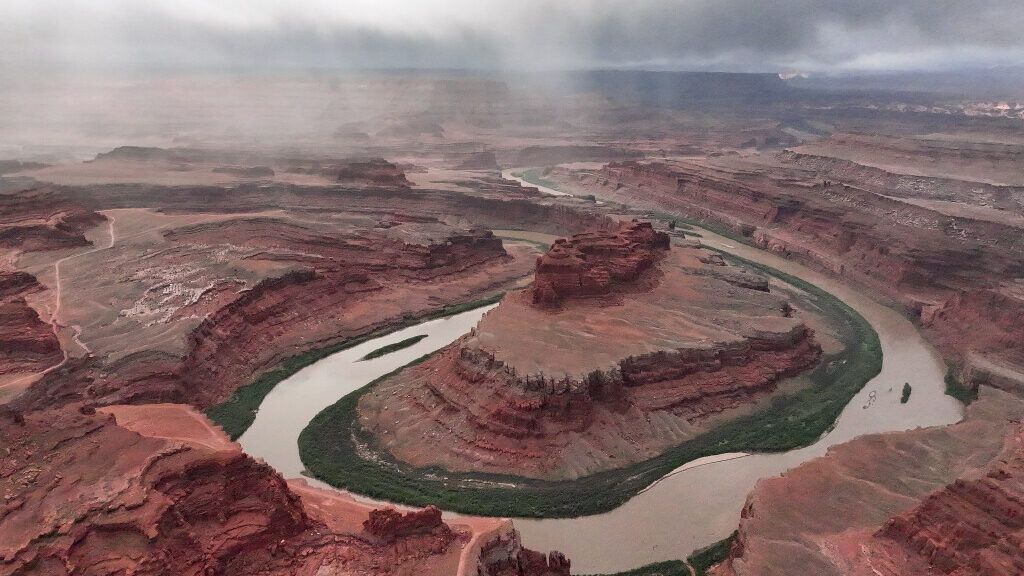
The Colorado River is pictured near Dead Horse Point State Park in Grand County on Friday, April 26, 2024. (Kristin Murphy/Deseret News)
Quick review of Helper oil facility changes prompted by Trump declaration
According to the BLM, the expedited 14-day environmental review of the Helper oil facility upgrades was ordered in the energy emergency declared by President Donald Trump on Jan. 20, 2025.
The declaration ordered federal agencies to speed up the completion of projects related to energy and national resources infrastructure. However, it did not mandate shorter review periods or override existing laws. According to the declaration’s text:
“To facilitate the Nation’s energy supply, agencies shall identify and use all relevant lawful emergency and other authorities available to them to expedite the completion of all authorized and appropriated infrastructure, energy, environmental, and natural resources projects that are within the identified authority of each of the Secretaries to perform or to advance. “
Environmental impact assessments are required for several types of projects under the National Environmental Protection Act, which was instated in 1970. The policy also mandates public comment periods and exploration of alternatives for certain projects.
The Center for Biological Diversity and Southern Utah Wilderness Alliance challenged Trump’s claim that an energy emergency exists.
“There is no energy emergency, plain and simple,” Newell said. “Hidden behind a shroud of secrecy, the BLM has rushed through its approval of this massive oil shipping expansion project.”
According to Newell, the decision to approve changes to the Helper oil facility was “thinly analyzed.”
What did the environmental assessment of the Helper oil facility say?
According to the environmental assessment, the BLM did not identify any “significant” impacts to the “human environment” outside the Wildcat Loadout Facility area.
As stated in a right of way amendment issued by the BLM, proposed changes would merely reconfigure the area, adding new infrastructure to transfer oil from tankers to train cars.
BLM Right-of-Way authorizations are necessary for projects taking place on public lands, or those that could cause disruption to the area.
Since the 14-day assessment did not yield any impact to the quality of the human environment the BLM wrote that an environmental impact statement would not be required for the project to move forward.
“The addition of facilities to the ROW would be conducted on up to 30 acres of the existing 270-acre ROW in areas that are already disturbed,” wrote the BLM. “No new surface disturbance would occur.”