Yevgeny Prigozhin would be latest in line of Putin critics who met an early death
Aug 25, 2023, 7:00 AM
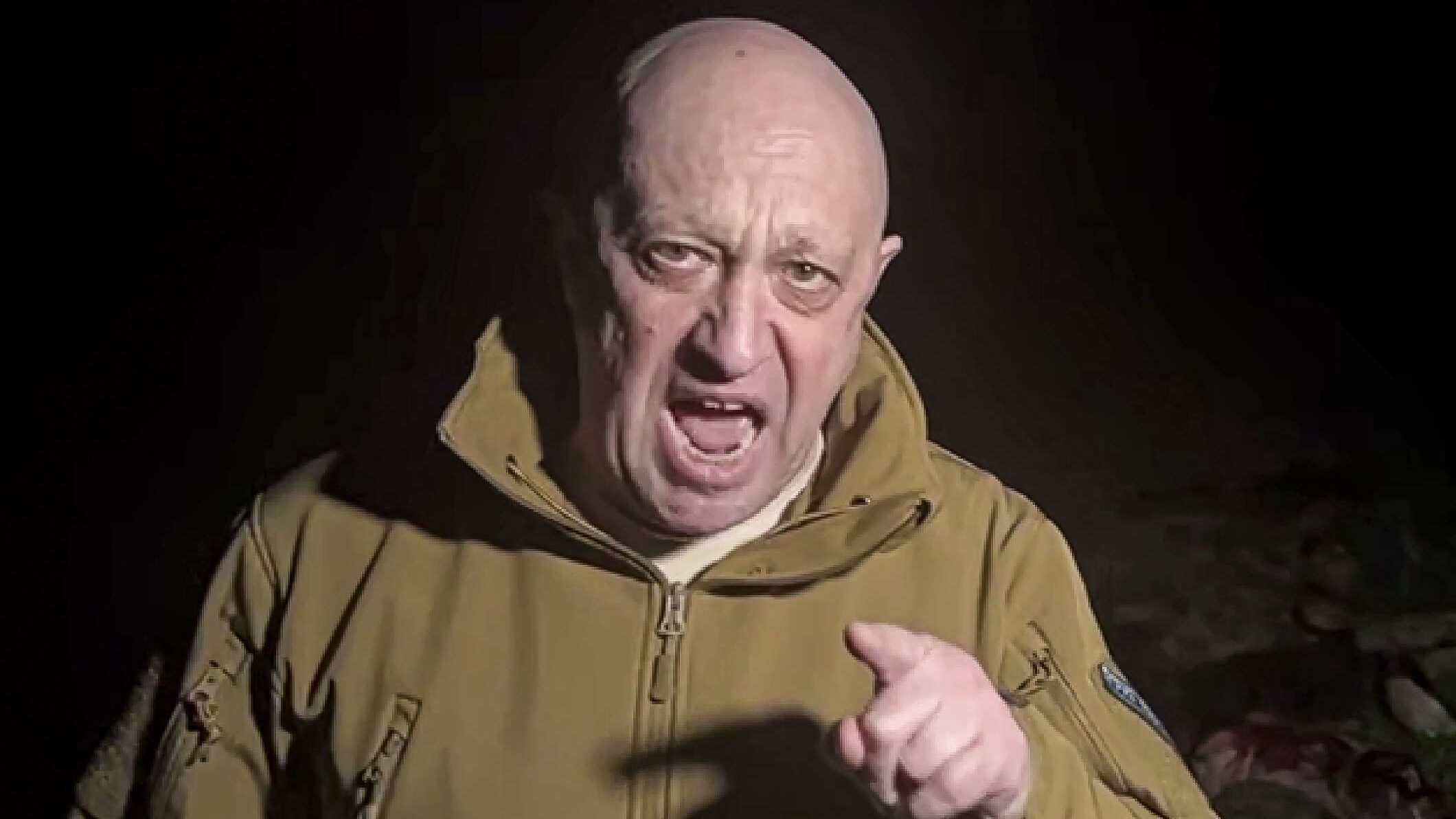
Speculation about Yevgeny Prigozhin’s eventual fate began soon after his march on Russia two months ago. (Associated Press)
(Associated Press)
(CNN) — The warnings were there. Speculation about Yevgeny Prigozhin’s eventual fate began soon after his march on Russia two months ago.
The Wagner chief may have initially survived the aftermath of his failed insurrection, but many had expressed doubts over his future. That remains unclear on Thursday, a day after the mercenary leader’s plane fell out of the sky.
No evidence has been presented that points to the involvement of the Kremlin or Russian security services in the crash. The cause of the crash is unknown and Russian authorities have launched a criminal investigation.
What is known is that the bombastic mercenary boss – once one of the country’s most powerful oligarchs and a member of Putin’s trusted inner circle – appears to have joined an ever-growing list of high-profile Russians who have fallen from the president’s good graces and died in mysterious circumstances.
Bill Browder, a Putin critic and the largest foreign investor in Russia before he was expelled from the country in 2005, said in a post on X, formerly known as Twitter, that “Putin never forgives and never forgets.”
From accidental falls from windows to hangings, poisonings and health issues, the fates of some of those who dared to challenge the Kremlin are myriad.
Boris Nemtsov
Boris Nemtsov, a vocal Kremlin critic who was a deputy prime minister in the late 1990s under President Boris Yeltsin, was shot dead in February 2015 as he walked with his girlfriend in central Moscow.
A top official with the Republican Party of Russia/Party of People’s Freedom, a liberal opposition group, he had been arrested several times for speaking against Putin’s government.
After his death, opposition leader Ilya Yashin said his friend had been working on a report about Russian troops and their involvement in Ukraine.
In an interview with Newsweek magazine just hours before his death, Nemtsov said Russia was “drowning” under Putin’s leadership and was swiftly becoming a fascist state. “Due to the policy of Vladimir Putin, a country with unparalleled potential is sinking, an economy which accumulated untold currency reserves is collapsing,” he said.
Nemtsov’s death came two days before he was set to lead an opposition rally in the Russian capital. His killing took place within sight of the Kremlin. In 2017, five Chechen men were handed lengthy prison terms over his death. Many Nemtsov supporters suspected Putin’s administration of involvement.
Boris Berezovsky
Boris Berezovsky was a colorful character and once powerful Russian businessman who fell out with the Kremlin and fled to England.
He had accumulated his wealth following the collapse of the Soviet Union, ditching his earlier career as a Moscow math professor and systems analyst for more lucrative enterprises. While a large chunk of his fortune came from the sale of luxury cars, his wealth and political influence skyrocketed when he bought into Russian media.
After losing favor with his government, he relocated to Britain where he began agitating against Putin, and even called for a coup to oust the Russian president.
Berezovsky was convicted of fraud and tax evasion in absentia by a Russian court in 2007. He also accused Russia of trying to assassinate him.
Berezovsky was found dead on the bathroom floor of his UK home in 2013 with a noose around his neck. British police said at the time that there were no signs of struggle and suggested the oligarch had taken his own life.
Alexander Perepilichnyy
Alexander Perepilichnyy was a financier who provided evidence of alleged fraud against Russian tax officials. He died suddenly in 2012 aged 44 while jogging back to his home in Surrey, southwest of London.
It first appeared that the whistle-blower had died of natural causes.
But in 2015, plant toxicology experts from the Royal Botanic Gardens in Kew told a coroner’s court that traces of a rare plant poison – gelsemium – were found in his stomach. Two years later, there were suggestions that poison might have been slipped into sorrel soup, a popular Russian dish he had eaten shortly before his death.
However, police said later that they found no evidence that he was poisoned.
At the time of his death, Perepilichnyy was assisting in a case to uncover a multimillion dollar Russian money-laundering operation.
Sergei Magnitsky
Russian lawyer Sergei Magnitsky died in a Russian prison in 2009.
He worked for Hermitage Capital, an investment firm run by American-born financier Bill Browder, and helped uncover a $230 million tax fraud and evidence that Russian government officials were involved in carrying it out, and then covering it up.
Soon after he made those revelations public in 2008, Magnitsky was arrested on separate tax fraud charges. He died a year later, while still in pre-trial detention. His family said crucial medical care was withheld, while a Russian presidential human rights commission report found evidence he had been beaten on the very day he died. The Russian government has always maintained that Magnitsky died of heart failure.
In the US, Browder launched a public campaign for justice, calling on Congress to introduce a law sanctioning individuals in Russia suspected of involvement in Magnitsky’s death and other human rights violations. The Magnitsky Act was passed by lawmakers in 2012.
Two weeks after the Magnitsky Act was passed, Moscow banned American adoptions of Russian children in apparent retaliation. Both measures are still in place.
Alexander Litvinenko
A British inquiry determined Alexander Litvinenko, a former Russian agent turned Kremlin critic, had been poisoned at a London hotel bar in 2006 by two Russian agents who spiked his green tea with the highly radioactive polonium-210.
Litvinenko – who died a slow and painful death in the weeks following his poisoning – always asserted that Putin and the Kremlin were responsible for what had happened to him.
“You may succeed in silencing one man, but the howl of protest from around the world will reverberate, Mr. Putin, in your ears for the rest of your life,” he said in a deathbed statement.
The inquiry, led by judge Robert Owen, said that Putin “probably approved” the ex-spy’s killing.
The Kremlin has always denied the accusation and has refused to extradite the two agents accused of the poisoning to Britain.
Litvinenko had worked for the FSB, Russia’s successor agency to the KGB, the former Soviet secret police and intelligence agency. He specialized in tackling organized crime and his last job at the agency, after the collapse of the Soviet Union, was heading up its anti-corruption department – a position that made him many enemies.
After leaving the FSB, Litvinenko accused his former employers of orchestrating a series of apartment bombings in Russia in 1999 that left hundreds dead and led to Russia’s invasion of Chechnya later that year.
According to his widow, Marina Litvinenko, he had started working for Britain’s security services after he went to Britain as a whistleblower in 2000.
Anna Politkovskaya
A vocal critic of Russia’s war in Chechnya, she was gunned down in the entrance of her Moscow apartment in October 2006. In 2014, a Moscow court sentenced five men to prison for the killing.
Authorities alleged that an unidentified man asked Lom-Ali Gaitukayev, whom the jury found was a mastermind of the slaying, to kill Politkovskaya in exchange for $150,000 because of her reports of human rights violations and other issues, the Moscow city court said.
The New York-based Committee to Protect Journalists said her work chronicling human rights abuses in Chechnya led to threats against her and angered Russian authorities.
Shortly after her death, Putin denied any Kremlin involvement in her killing, saying that Politkovskaya’s “death in itself is more damaging to the current authorities both in Russia and the Chechen Republic … than her activities.”
Drownings, suicides and other unusual deaths
The list of deceased detractors who may have potentially fallen foul of the Kremlin could fill a book. On the same day Prigozhin was presumed to have been killed, RIA Novosti also reported the recent death of a former Russian security services general.
Gen. Gennady Lopyrev – who supposedly had knowledge of the construction of Putin’s Black Sea residence – was convicted of bribery offenses in 2017 and had been serving a sentence of 9 years and 8 months. According to RIA Novosti, while in custody he recently “suddenly fell ill” and subsequently died in hospital on August 16. Lopyrev had always maintained his innocence of all charges.
Washington-based think tank Institute for the Study of War labeled Lopyrev’s death “suspicious” and said that its “insider source claimed Lopyrev was “the keeper of secrets” related to the construction of Putin’s residence in Gelendzhik, often referred to as “Putin’s Palace.”
In May, Russia’s Deputy Minister of Science and Higher Education, Pyotr Kucherenko, 46, died while returning from a trip to Cuba, according to the ministry.
At least 13 high-profile Russian businessmen have reportedly died by suicide or in mysterious circumstances over the past year, six of them tied to Russia’s two largest energy companies, Gazprom and Lukoil. The latter took the rare public position last year of denouncing Russia’s war in Ukraine, and calling for the end of the conflict.
Russian sausage magnate-turned-lawmaker Pavel Antov died in India in December after falling from the third floor of his hotel, according to the Indian police. His friend and travel companion Vladimir Budanov died of a heart attack two days earlier, on Antov’s 65th birthday, according to the police. Budanov was 61 years old and had a preexisting heart condition, the police said, adding that they believed Antov’s death was a suicide.
Alexander Buzakov, the head of a major Russian shipyard that specializes in building non-nuclear submarines, died suddenly in December, Reuters news agency reported, with no cause of death given by the authorities.
Anatoly Gerashchenko, the former rector to the Moscow Aviation Institute, died in an unspecified accident in September, according to a statement from the institute.
Lukoil chairman Ravil Maganov also died last September after falling out of the window of a Moscow hospital, according to TASS. An initial statement from Lukoil had said Maganov “passed away following a severe illness.”
Alive but neutralized
Not all those who cross the Kremlin meet with an untimely end. But many are ultimately rendered unable to cause further problems for Putin and his government.
Most prominent of these is jailed Russian opposition leader Alexey Navalny. The most prominent voice of dissent in Putin’s Russia, the lawyer, politician and corruption activist for years orchestrated massive street protests. He also famously branded Putin’s United Russia party “the party of crooks and thieves.”
He rose to prominence in 2008, when he began blogging about alleged corruption within Russian state-run companies. In 2011, he emerged as one of the leaders of mass protests over allegations of parliamentary election fraud.
Navalny has been arrested numerous times over the years. In 2019 he suggested he might have been poisoned while in police custody after being hospitalized with an acute allergic reaction. But it was August 2020 when he nearly died after he was poisoned with a toxic chemical nerve agent, Novichok. He was airlifted to a German hospital for treatment.
The Kremlin has repeatedly denied any involvement, with Putin even saying in December of that year that if Russian security services had wanted to kill Navalny they would have “finished” the job. A CNN-Bellingcat investigation implicated Russia’s federal security service in the poisoning plot.
He was jailed again on his return to Russia in January 2021, where he has languished ever since.
Another Kremlin opponent who served time in prison was Mikhail Khodorkovsky. He was released in 2013 after Putin signed a decree pardoning the former oil magnate, who had been convicted of tax evasion and fraud.
Former Russian spy Sergei Skripal paid a heavy price for turning against the Kremlin. Skripal was convicted in Russia of spying for Britain before he was granted refuge in the UK after a high-profile spy swap in 2010 between the United States and Russia.
In 2018, he and his daughter Yulia were left in critical condition after being exposed to Novichok near their home in southern England.
They survived after a long stint in hospital, with Yulia revealing in the weeks after that their rehabilitation had been “slow and extremely painful.”