Scientists sounded the alarm about the Great Salt Lake. Are lawmakers listening?
Jan 18, 2023, 8:00 AM
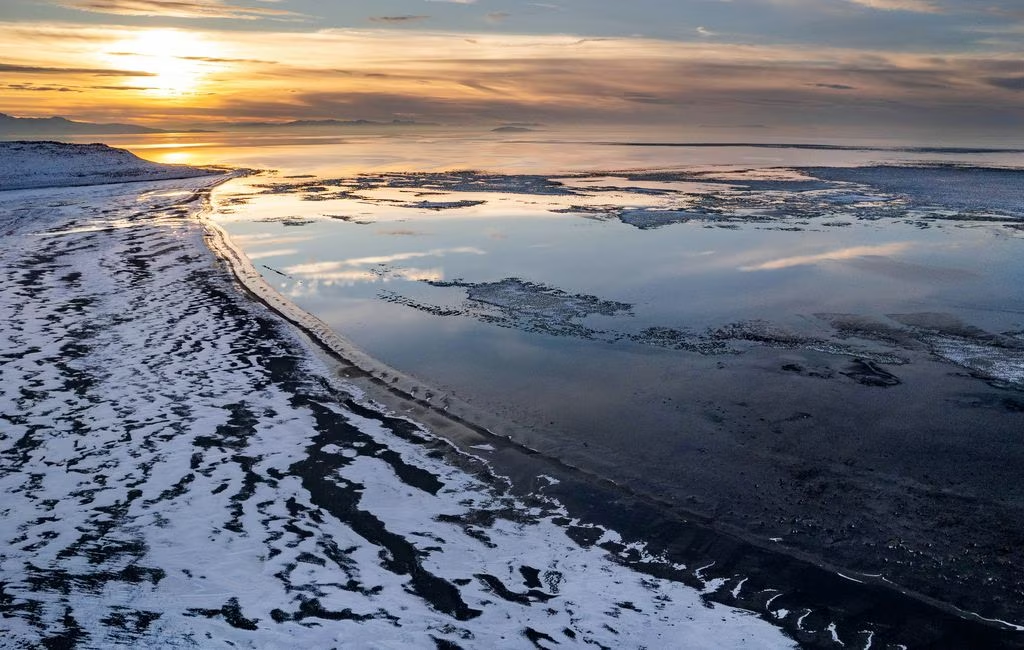
Dropping lake levels on the Great Salt Lake, along the north side of Antelope Island, continue to expose more reef-like structures called microbialites on Wednesday, Jan. 4, 2023. (Francisco Kjolseth, The Salt Lake Tribune)
(Francisco Kjolseth, The Salt Lake Tribune)
This article is published through The Great Salt Lake Collaborative: A Solutions Journalism Initiative, a partnership of news, education and media organizations that aims to inform readers about the Great Salt Lake.
SALT LAKE CITY — Utah leaders gear up to spend big on solutions for the shrinking lake, but will it be enough?
This year’s legislative session will be critical in bringing the Great Salt Lake back from the brink, and state leaders say they are ready to get to work.
More than two dozen scientists and conservationists issued a dire warning that made waves last week, grabbing national headlines in The Washington Post, The Guardian, USA Today and on CNN. Their report called on Utah Gov. Spencer Cox and state lawmakers to take urgent and immediate action before the lake completely collapses, crossing a threshold that will take decades to recover from. At stake are millions of migrating birds, multimillion dollar lake-based industries, along with a toxic dust problem for the millions of people living near the lake’s shores.
“We’re not at a time we can take another five or 10 years to understand the problem,” said Ben Abbott, a professor of Aquatic Ecology at Brigham Young University and lead author of the report. “We’ve got to act now.”
So, are lawmakers listening?
Abbott says the response so far has been encouraging. Since the emergency briefing report went public, he has received emails from legislators from both sides of the aisle, and from the governor’s office as well.
“Each of these messages,” Abbott said, “has expressed wholehearted commitment to the lake.”
The State of Utah did take issue with one of the big attention-grabbing warnings from the report: That the Great Salt Lake could dry up in as little as five years if current trends are not reversed. The Department of Natural Resources posted a tweet refuting that claim.
(🧵1/3) Great Salt Lake “disappearing in 5 years?” 🧐 Not likely! Active water management, inflow to the lake and structural modifications (like dikes along the shoreline) make a complete disappearance impossible. pic.twitter.com/NH2B1I9AFd
— Utah Department of Natural Resources (@UtahDNR) January 6, 2023
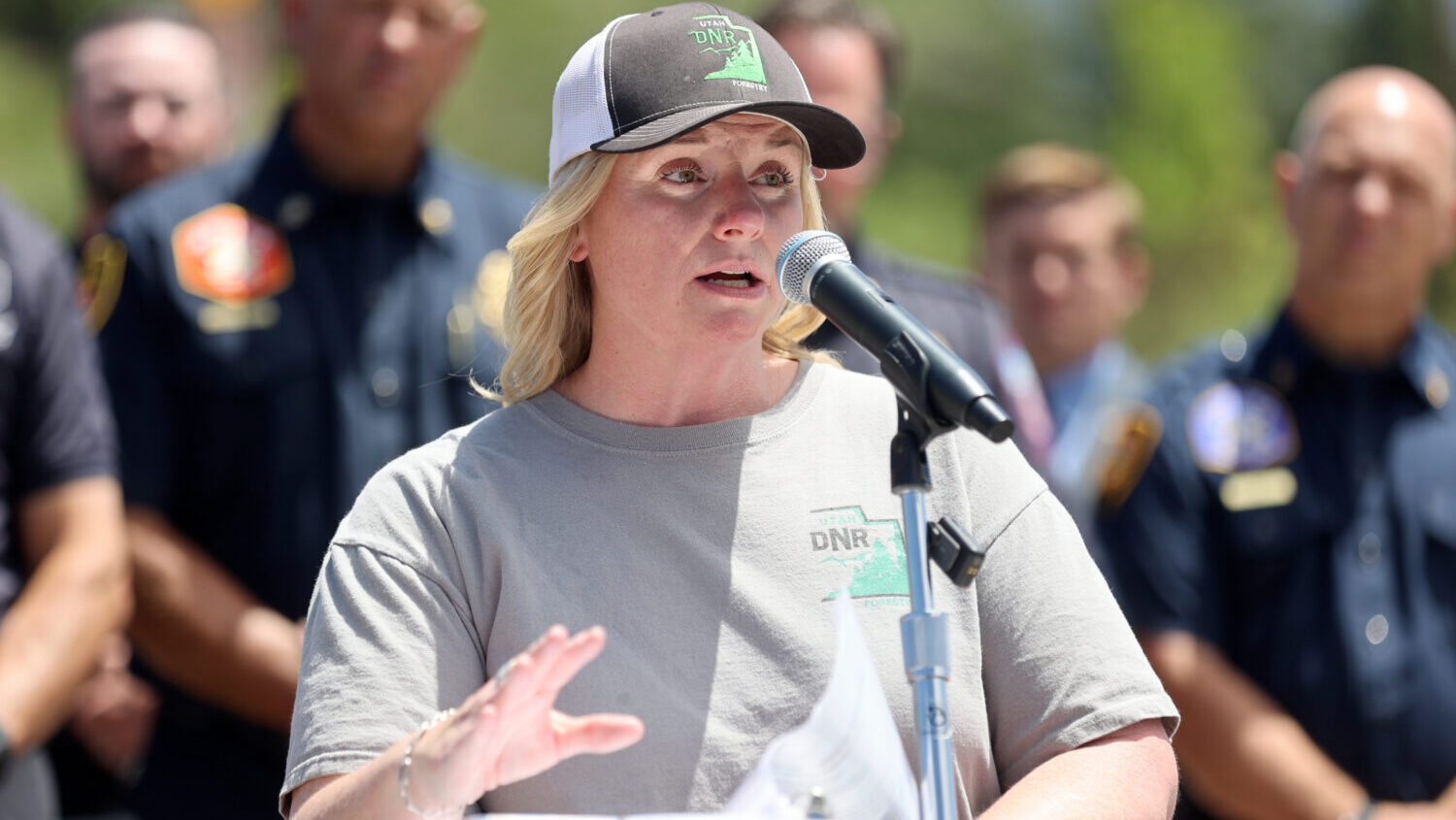
“All the modeling we’ve done suggest it won’t go completely dry,” said Candice Hasenyager, director of the department’s Division of Water Resources.
Still, she acknowledged the lake as we know it today could change dramatically in that amount of time. The brine flies that waterfowl depend on for a food source have already all but vanished due to rising salinity. The lake’s brine shrimp are set to do the same if conditions don’t improve. Minerals extraction companies are struggling to reach the lake’s receding water. And most of the lake’s marinas sit empty and dry.
“This problem didn’t happen overnight,” Hasenyager said, “and we’re not going to get out of it overnight. We do know there needs to be a long-term investment from the state, from the Legislature.”
Are state leaders prepared to take emergency action?
The briefing on the lake, however, calls for robust action, like an “emergency rescue” by the governor to deliver 2.5 million acre-feet to the lake until it reaches a sustainable elevation, even if it proves politically unpopular.
“This isn’t saying, ‘let’s give people good information and eventually they’ll conserve on their own,’” Abbott said. “We need an emergency response.”
Asked for comment on the report’s recommendations, a spokesperson for the governor issued a statement.
“Gov. Cox is committed to doing everything possible to protect the Great Salt Lake,” the spokesperson said, “including increasing water conservation, improving water infrastructure, evaluating water rights, providing incentives to farmers, funding research and more.”
Brad Wilson, R-Kaysville, holds a powerful position as House Speaker and has made the lake one of his top priorities. His spokesperson also issued a statement after an interview request.
“Lawmakers, researchers and Utahns are united in their concern [over] a shrinking Great Salt Lake,” the statement said. “Protecting the lake will be a marathon, not a sprint and we take the threat very seriously and understand the implications.”
Other lawmakers who responded to interview requests emphasized bipartisan support for taking major action this session as they try to prevent the lake from becoming a dust bowl.
“I anticipate a lot of helpful legislation will come out of this session,” said Rep. Doug Owens, D-Millcreek. “The most significant thing that’s going to happen is the emergency water leasing by the administration to make sure water gets into the lake this spring and summer.”
The Legislature has spent the last few years retooling Utah’s pioneer-era water law so water right holders, especially farmers, can bank and lease their water for environmental benefits, like boosting the Great Salt Lake.
So far, however, the farming community appears skeptical about participating. They worry about fields going fallow, financial repercussions and uncertainties in the current law.
“Those concerns, absolutely, have to be addressed,” Owens said.
He added that it’s not likely lawmakers will take the kind of heavy-handed action needed to deliver 2.5 million acre-feet annually to the lake as the emergency briefing proposes.
“We can get a lot of bang for our buck with less water than that,” Owens said.
Still, he acknowledged the issues presented by the lake’s desiccation are both daunting and complex.
“We’ve still got the dust issue,” Owens said, “even if we avoid ecological collapse.”
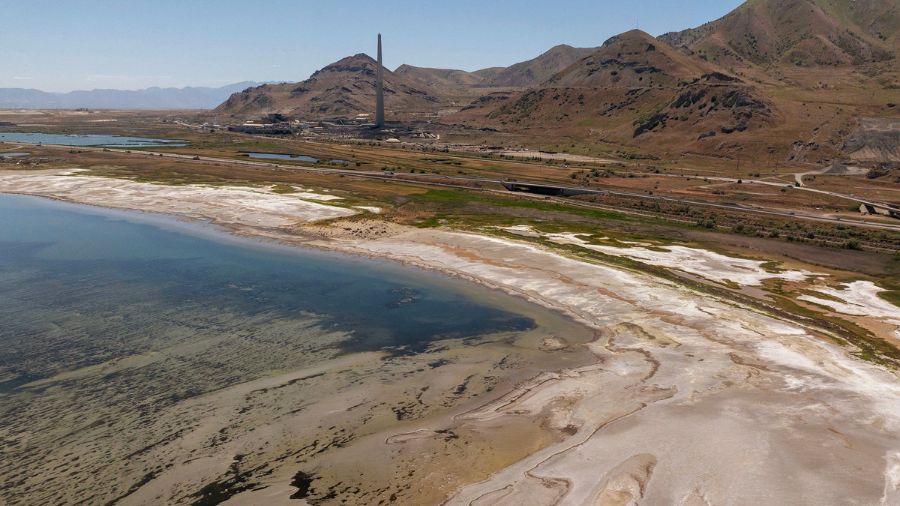
More than 800 square miles of lakebed sit exposed, drying by the day into a dangerous source of dust laden with arsenic and other materials.
As the water wanes and concentrates its salts, Utah’s resources managers are using a railroad causeway that bisects the Great Salt Lake to keep brine from the saltier north arm from further spiking salinity in the south arm.
The emergency briefing raises concerns about using the causeway to essentially create two lakes, one dead and one living. It puts one of the largest North American colonies of pelicans at risk, which nest on the north arm’s Gunnison Island to avoid predators. As the water vanished, land bridges emerged and put those birds at risk.
Owens said he would consider running a bill to protect Gunnison Island’s birds.
“These are human-caused problems,” he said, “and they’re going to have human solutions.”
Meanwhile, the north arm has a vast area of lakebed exposed, which also needs water coverage before its salt crust erodes away and becomes a major source of dust.
Nate Blouin, the newly elected Democratic senator representing parts of Salt Lake County, said he is encouraged by the healthy budget Utah has this year. The surplus could be used to create incentives to benefit the lake, he said, instead of lawmakers adopting “regulations and moratoriums” that tend to be unpopular in the state.
“Money talks,” Blouin said. “Let’s see how strongly it can talk.”
Cox’s latest budget proposal calls for $132.9 million to help the lake. He also is requesting millions to bolster the state’s cloud seeding program to the tune of around $2.2 million each year. The state currently spends about $350,000 annually on its cloud seeding program, which is typically matched by water suppliers or counties.
Cloud seeding added around 5-7% to northern Utah’s snowpack last year, according to a report prepared for the state by a consultant. The method shoots silver iodide into storm clouds to get them to create more snow. Last week’s emergency report called it “experimental and unproven,” and cautioned it’s no silver bullet to save the Great Salt Lake.
“I don’t necessarily consider that to be the [only] solution,” Rep. Jeff Stenquist, R-Draper, said of cloud seeding. “But I think it can be [a] viable part of the solution.”
Stenquist was also wary of any emergency mandates or requirements that water reaches the lake.
“I don’t know that we’d be looking at something that dramatic immediately,” he said. “Yes, the Great Salt Lake is in dire situation, but there is time to reverse that process.”
While lawmakers don’t appear to be completely on board with the report’s proposed emergency actions, Abbott said he is not disheartened.
“It’s not like our report is the definitive word on all these things,” Abbott said. “We tried to provide a frank interpretation.”
He said the worst-case scenario would be something akin to the pandemic, when the governor declared a state of emergency, the Legislature responded by gutting his authority, and leaders statewide quarreled over mandates while the situation worsened.
“We don’t have that luxury,” Abbott said. “That would be devastating and such a tragedy for us to miss this opportunity to reverse the lake’s decline because of political bickering.”
Unlike politicians, hydrology doesn’t negotiate, he added. There is no convincing the Great Salt Lake to function with less water than it needs.
Related:
- How much will it take to save the Great Salt Lake?
- Senate passes Romney-sponsored bill to fund Great Salt Lake study