Great Salt Lake hits lowest level in more than 3 years, but managers say conservation is paying off
Jul 21, 2026, 3:31 PM
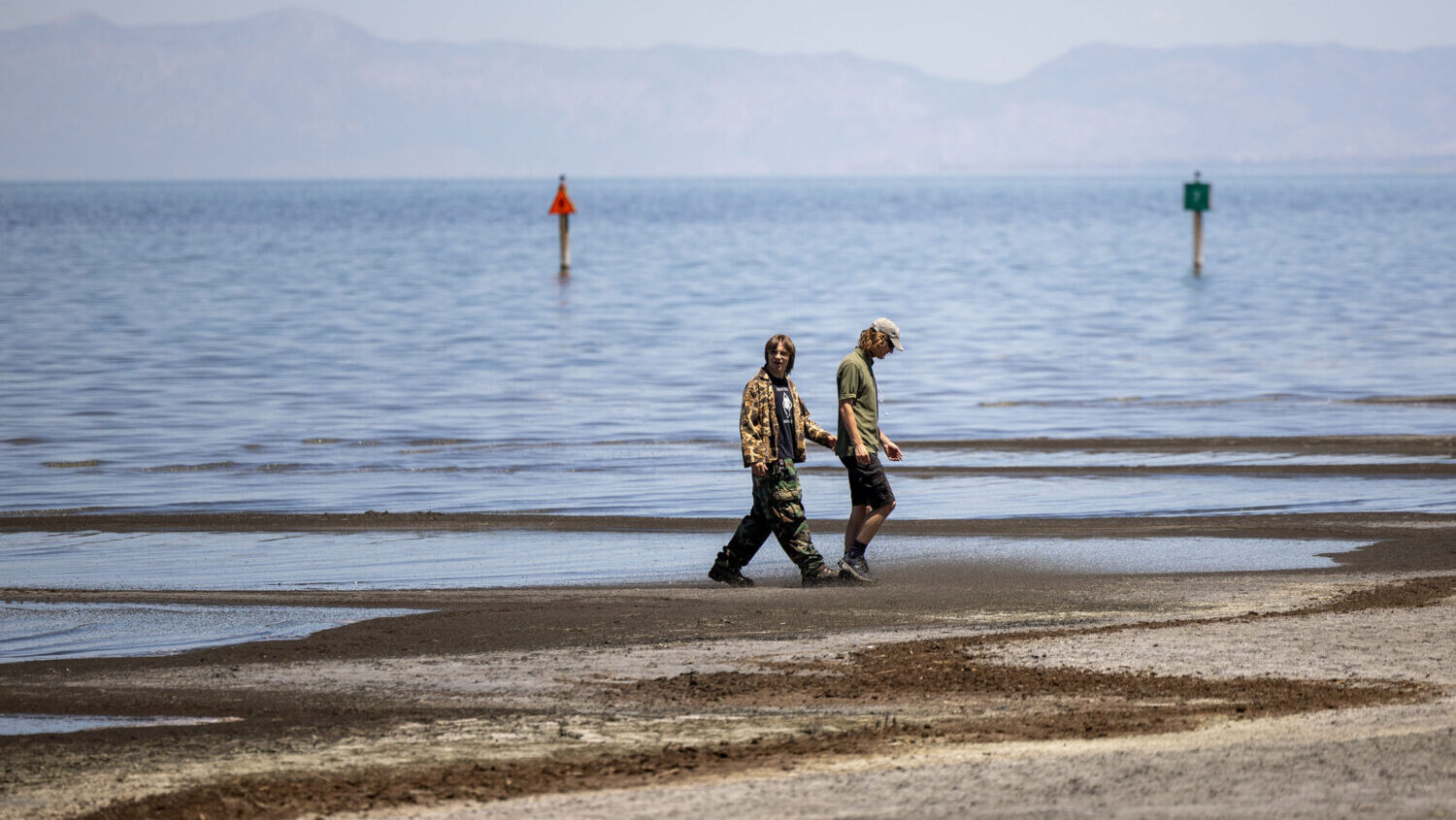
Asay Martinis and Ben Floyd walk at the Great Salt Lake in Salt Lake City on Thursday, June 4, 2026. (Laura Seitz, Deseret News)
(Laura Seitz, Deseret News)
SALT LAKE CITY — Utah’s Great Salt Lake is now sitting at it’s lowest level in more than 3 years.
As of Tuesday, the south arm of Great Salt Lake, which is considered the main body of the lake, sat at 4,190.9 feet above sea level. That’s less than a foot above the lake’s low point in 2021 and more than 2 feet above the lake’s all-time record low of 4,188.5 feet recorded in November 2022.
Other news: Combined acre-feet of Lake Powell, Lake Mead at record low. Here’s what that means for the Colorado River Basin
The last time Great Salt Lake’s south arm sat at 4,190.9 feet was in early 2023, as a record winter was breathing new life into the lake after hitting that all-time record low just a few months earlier.
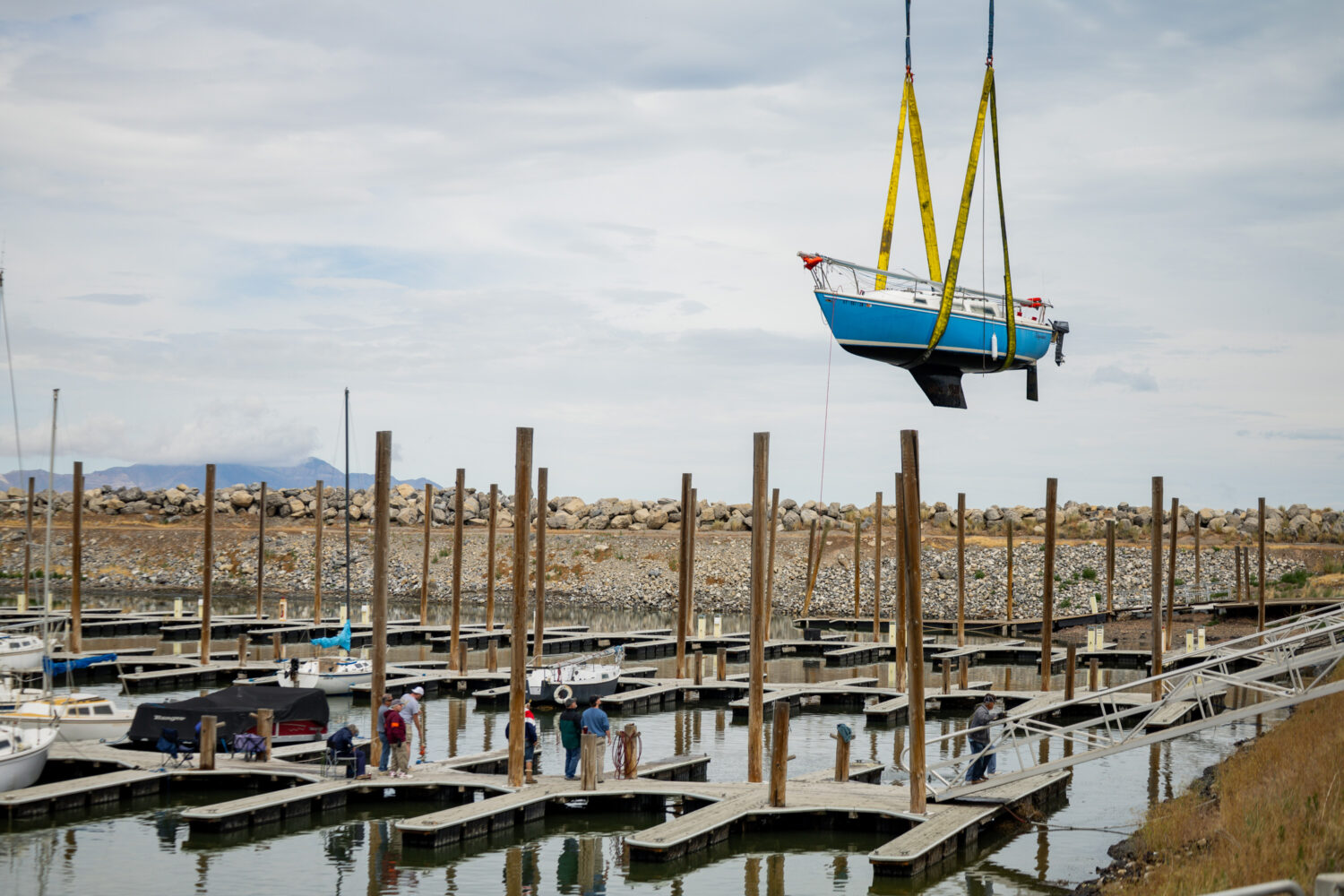
The Great Salt Lake State Park removes 1 of 23 boats from the Great Salt Lake Marina, due to critically low lake levels that make sailing difficult at the Great Salt Lake State Park and Marina in Magna on Saturday, May 30, 2026. Known informally as “Crane Day,” the operation involves cranes lifting sailboats with deep keels out of the marina and placing them into dry storage because water levels are too low for safe navigation. Similar crane operations were required during periods of low water in 2015 and 2021. (Tess Crowley, Deseret News)
Today, as it normally does in the summertime, Great Salt Lake’s water levels continue to fall as summer heat evaporates more of its water. The current decline comes on the heels of Utah’s driest winter on record, which did the lake no favors ahead of the long summer evaporation period.
Could have been worse
Though one lake manager said the situation today could be a lot worse if it not for the work Utahns have done to help the lake.
Aspen Johnston, strategic planner with the Great Salt Lake Commissioner’s Office, told KSL that, today, the lake could be closer to the low point it reached in 2022 if state leaders and everyday Utahns hadn’t done so much over the last four years to conserve water and eliminate waste.
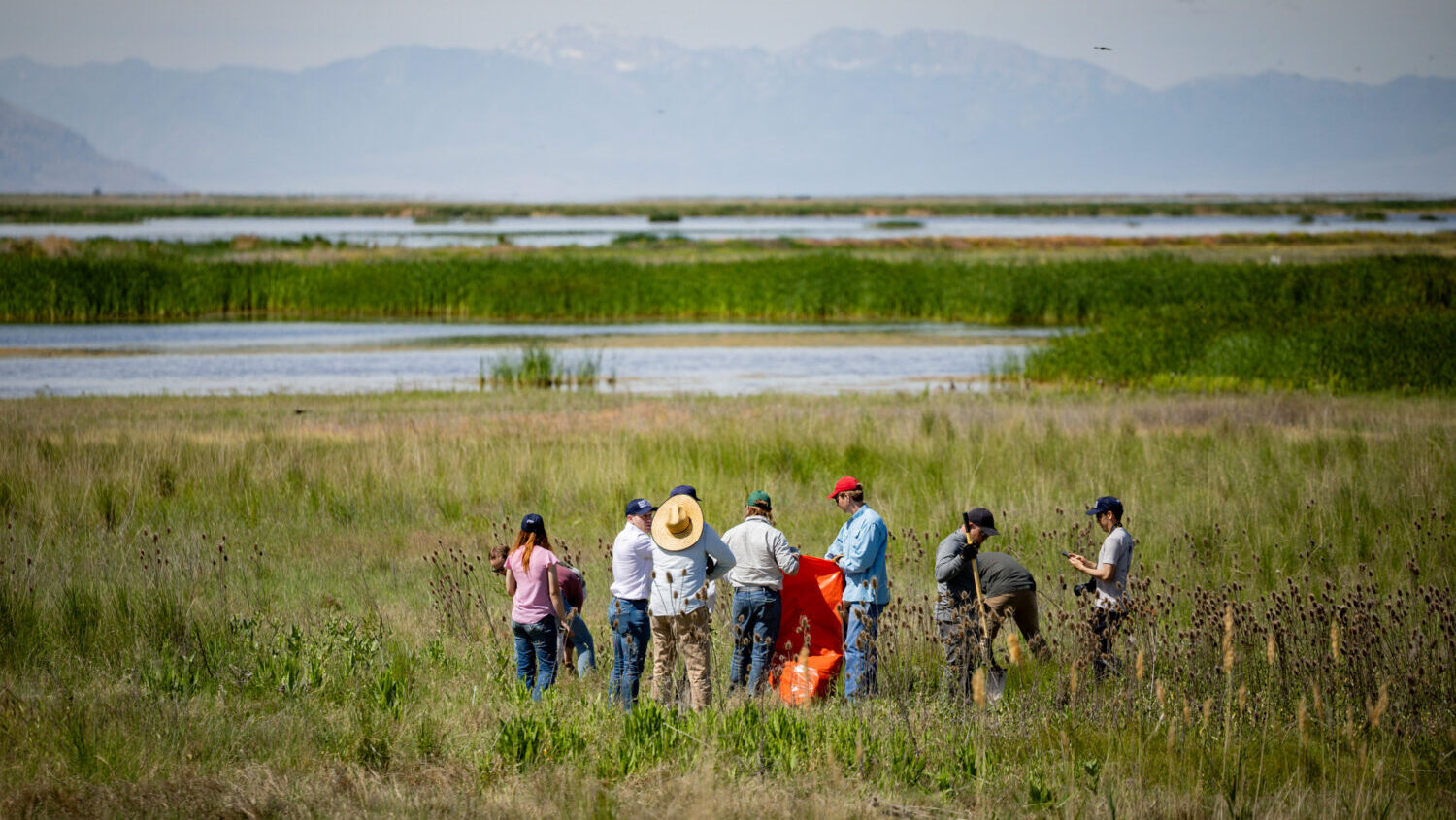
Volunteers remove invasive weed species during a Great Salt Lake Service Project hosted by the American Conservation Coalition (ACC), in collaboration with Gov. Spencer Cox and the Utah Division of Wildlife Resources at the George S. and Delores Dore Eccles Wildlife Education Center at the Farmington Bay Waterfowl Management Area in Farmington on Friday, May 29, 2026. (Tess Crowley, Deseret News)
“The current condition of Great Salt Lake is actually somewhat of a testament to the work that we’ve put in to helping [the lake] over the last few years,” Johnston said. “Without that action, we may not have seen an elevation higher than [it was] in 2022.”
Johnston said the work to save Great Salt Lake is still far from over, and that conservation needs to remain the focus for Utahns as climate change and other factors continue to make the situation more dire.
State officials are hoping for a better winter this year, Johnston said, to provide the lake some relief. But that, alone, will not fix the problem. Johnston said that conservation must continue to go hand-in-hand.