Homeless Outreach Court: Meeting the community where they are
Mar 5, 2025, 1:01 PM

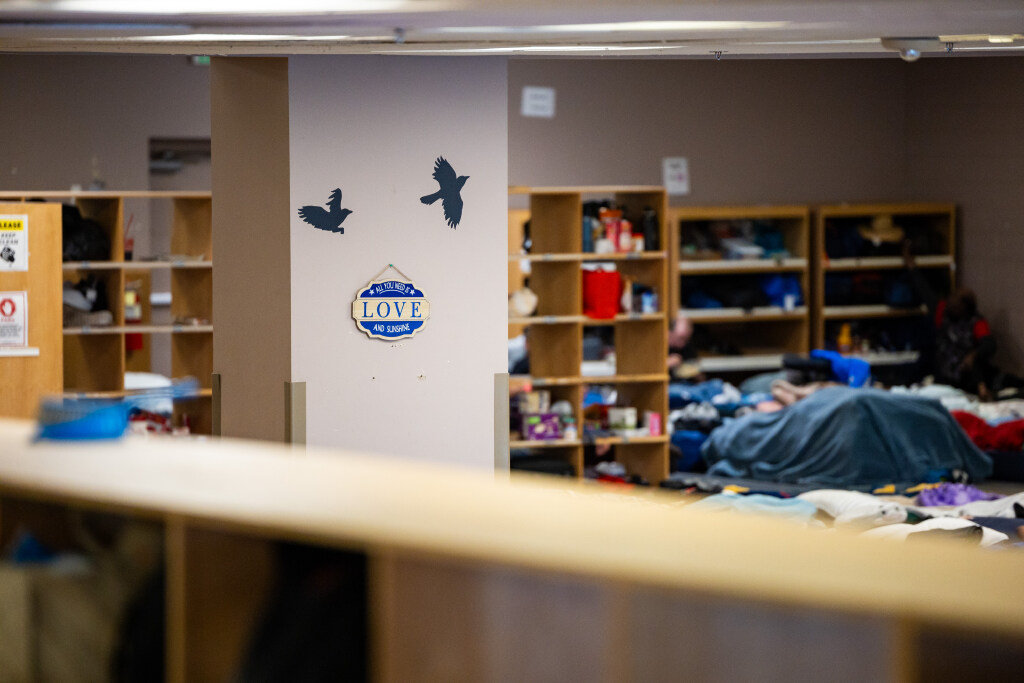
Outreach Court in Salt Lake City. (Kate Fairchild)
(Kate Fairchild)

SALT LAKE CITY — Homeless Outreach Court members are taking out kayaks, meeting in tents and soon going out in vans around the city to help the homeless community resolve open cases against them.
Community Engagement Coordinator at the Housing Stability Division, Rebekkah Allen, said the homeless can accrue many unavoidable charges that she calls “crimes of survival,” like trespassing or loitering. These charges can keep them from applying for jobs or getting housing.
Related: New high-capacity homeless shelter will have pros and cons, state homeless coordinator says
Additionally, Allen said many people struggle to find transportation to the court and may have fears surrounding the judicial system.
“People are scared that they will be … arrested or they’ll be fined … monies that they don’t have,” she said. According to Allen, no one is arrested or fined in their Outreach Court program.
Outreach Court removes barriers
To address transportation issues, the court has an out-of-the-box solution — take the court to them.
Called the “Kayak Court,” judges, attorneys and case workers meet people where they are by holding court in tents, shelters and boating down the Jordan River in kayaks. Allen said there are no formal robes for judges, everyone is in plain clothes.
For Salt Lake City Public Court Administrator Kate Fairchild, the goal is to bring the court to the community.
“The goal of all of this,” Fairchild said, “is just to make sure that the court is a point of access for people rather than a roadblock, offering opportunities for people to just move forward.”
The Outreach Court not only resolves victimless cases, but they have a caseworker who asses basic needs like mental health support, food or housing.
“It’s about removing barriers and creating opportunities,” Fairchild said.
In addition to the kayaks, the Outreach Court was approved to purchase a van, a move Fairchild said allows them to reach more people.
“With this mobile court, we’ll be able to set up in places like resource centers (and) parks,” Fairchild said. “We can set up along the Jordan River and really just meet people where they are.”
The van won’t arrive for another six months. They plan to outfit it with electronic equipment, and an awning with space heaters.
“Which is great so that if we do go out to a park or a resource center or wherever we’re located, we can actually bring down the awning, put a couple of heaters out there, so that folks are warmer while they’re waiting for their case to be called,” Fairchild said.
Building trust
Based on the numbers, their efforts are paying off. In 2021, the group organized ten events and addressed 59 cases. Last year, they expanded significantly, holding 26 events and handling over 1,239 cases.
Fairchild thinks this is due to the amount of trust the organization has built.
“By connecting with people where they are,” Fairchild said, “by really being face-to-face and having those warm handoffs — I think we’ve built a lot of trust with our community in Salt Lake City. And I think that is so incredible and also vital to what we do.”
According to Allen, case workers and everyone involved try to be trauma-informed, ensuring that individuals don’t feel shuffled from a social worker to an attorney to a judge.
The court operates on a smaller scale, focusing only on the essential participants. It is intentionally simplified, focusing on the essentials to best serve those involved.
Fairchild said it is thanks to the collaboration of so many different groups and agencies that they have been able to do the work.
“I am truly just honored to be a part of the system that is trying to make change in such a positive way,” Fairchild said, “It really is important work that our teams are doing, that our outreach teams are doing, and that the city is doing.”