Political science professor: Recognizing fake news is ‘up to you’
Oct 18, 2020, 7:42 PM | Updated: 8:00 pm
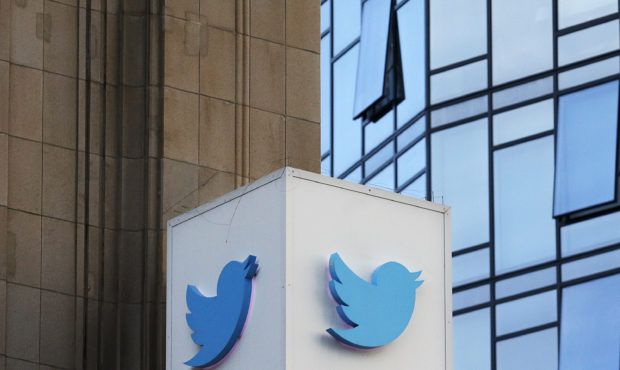
FILE - This Oct. 26, 2016 file photo shows a Twitter sign outside of the company's headquarters in San Francisco. "Fake news" isn't anything new. But it has become more prevalent over the years with the rise of social media. (AP Photo/Jeff Chiu)
(AP Photo/Jeff Chiu)

With just two weeks until Election Day, social media sites are cracking down on posts riddled with misinformation and misleading claims. Several companies have started to label — and occasionally remove — posts spreading false information, commonly referred to as ‘fake news.’
Take Facebook, for example. After years of utilizing a “hands-off approach,” the social media giant has made moves over the last few months to halt the spread of misinformation.
In June, Facebook began labeling posts with unverified information about voting, directing users to local and state officials. This included some posts from President Donald Trump.
Additionally, Twitter announced Oct. 9 it would ban features from its site ahead of the election — making it more difficult for users to mindlessly retweet false information.
But how prevalent is this issue of “fake news” — and how can social media users learn to spot it?
What exactly is fake news?
To put simply, fake news is… well just that. False stories intended to sway an audience.
“Fake news is often sensational with claims that are sweeping or grandiose,” said Sam Rhodes, a political science professor at Utah Valley University. “It’s very rarely nuanced or detailed. It’s almost always this large conspiracy, this groundbreaking email or video or something that you probably haven’t heard of before that moment.”
As humans, we’re often drawn to these stories, Rhodes said. The natural instinct to turn toward a car accident is the same instinct you use when you see a compelling headline on social media.
“Because it’s often sensational and grandiose, it grabs on,” Rhodes said.
But if it seems too crazy to be true, it probably is.
The rise of misinformation on the Internet
“Fake news” isn’t anything new. But it has become more prevalent over the years with the rise of social media.
A 2018 study from MIT found misinformation on Twitter spreads roughly six times faster than real stories. In fact, false stories are 70% more likely to be retweeted than accurate reports.
“We found that falsehood diffuses significantly farther, faster, deeper, and more broadly than the truth, in all categories of information, and in many cases by an order of magnitude,” said Sinan Aral, a professor at the MIT Sloan School of Management and co-author of the study.
That’s because users are more likely to share tweets with information that confirm their biases or beliefs. Once it’s shared, it spreads quickly.
“The vast majority of fake news is absorbed on social media,” said Rhodes, who studies political misinformation. “It does spread more than sort of ‘boring’, ‘old’, ‘regular’ news.”
How to spot fake news
Despite its spread on social media, experts say there are ways to check what you’re reading to ensure its accuracy.
First, consider the source. Is it a reputable and reliable organization?
“If it’s from a website or blog you’ve never heard of or a source you’ve known to be questionable in the past,” Rhodes said. “It’s probably best to avoid or take it with a very large grain of salt.”
If you’re still unsure, run the information through a search engine to see what other news organizations are reporting. From there, you can see if other sites have verified the information or found it to be false.
“It is up to you to be able to look at that story, verify that source, double check it,” Rhodes said. “It might be time consuming, but if you really are concerned what you might be reading is false then you’re probably going to want to take some time to figure it out.”
Experts also recommend to read beyond the headline — especially before sharing. Headlines only capture a few words of each story, so it’s important to go beyond the surface.
“It’s up to you”
At the end of the day, it’s up to the reader to determine whether what they’re reading is real.
“The onus is on the consumer,” Rhodes said.
While he doesn’t recommend seeking out false stories, the political science professor said it’s the responsibility of every voter to be a critical thinker — regardless if it’s an election year.
“I would argue, as a news consumer, you should always be concerned with what you’re reading,” Rhodes said. “Always have your defenses up, always be a critical thinker.”
If you don’t want to see it on your feed, Rhodes said he recommends muting profiles that tend to share unsubstantiated claims.
Often times, this can be a family member or close friend who shares dozens of posts a day. Occasionally false information gets mixed in, according to Rhodes.
“That’s what we know from the research: People that share fake news are sharing a lot of material and then what happens is a piece of garbage just gets thrown in to the mix,” he said. “They’re not really paying attention.”
To take a step further, Rhodes urged consumers to not rely on social media sites for information.
“Don’t use social media as your primary news source, he said. “We know that’s where most of the fake information comes from.”