Another twist in Utah’s most high-profile death penalty case
Oct 16, 2024, 8:30 PM | Updated: Oct 17, 2024, 11:08 am

FILE: Death row inmate Ralph Menzies attends 3rd District Court in West Jordan on Wednesday, Oct. 3. 2007. The state of Utah has canceled a hearing on the application for an execution warrant scheduled for Feb. 23, 2024, so that independent psychological testing can be conducted on Menzies. (Francisco Kjolseth/The Salt Lake Tribune)
(Francisco Kjolseth/The Salt Lake Tribune)

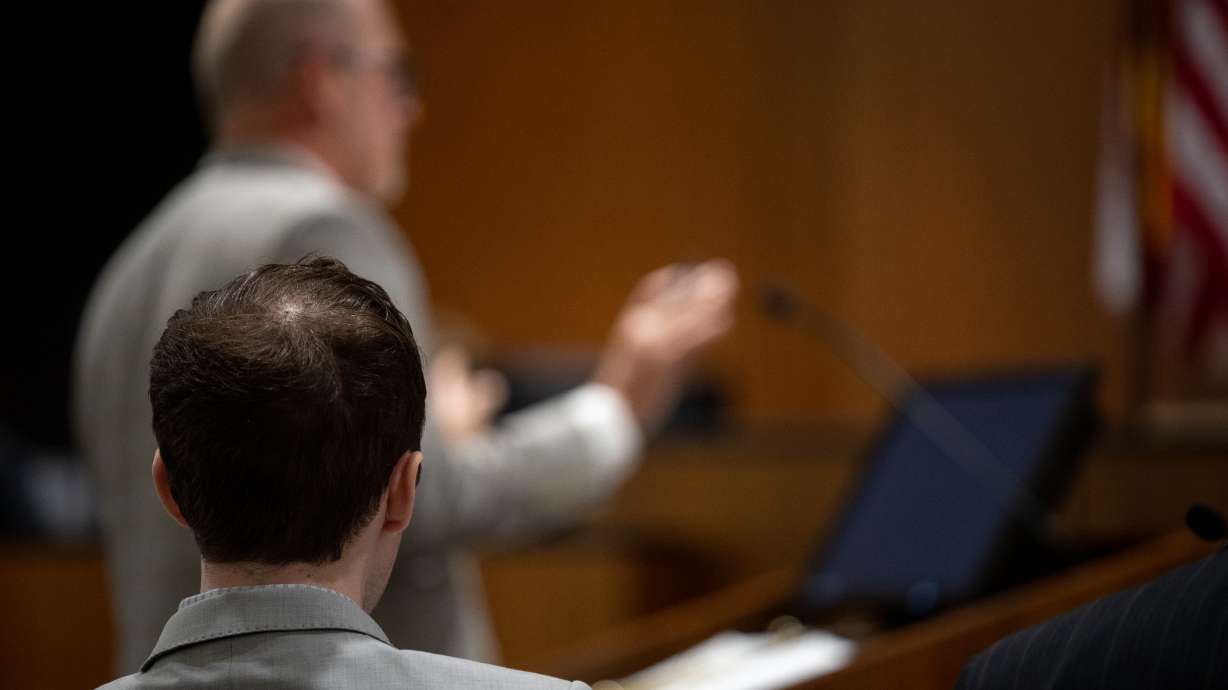
SALT LAKE CITY — The third district court in West Jordan bore witness to a passionate testimony by Ralph Menzies’ attorney Eric Zuckerman, as he argued why the Attorney General’s office cannot continue prosecuting his death penalty case.
“I’m saying that the attorneys that counsel, all of the employees of the Department of Corrections, are working with the prosecution against Mr. Menzies and sharing information that we are not privy to,” Zuckerman told Judge Matthew Bates.
Listen to reporter Hugo Rikard-Bell go in-depth on KSL at Night.
Related: Utah clergy examine the death penalty through a lens of faith
Ralph Menzies has been on death row for 36 years, convicted of killing Maurine Hunsaker in 1988. He abducted the 26-year-old mother of three from a Kearns convenience store where she worked. It was determined she was strangled, and her throat was cut after her body was later found at a Big Cottonwood Canyon picnic area.
He was sentenced to die by firing squad, but as recently as January of this year, his attorneys reported that he has been diagnosed with dementia, which they argue makes it unconstitutional to be executed because he apparently no longer remembers his crime.
After a motion was filed, the state agreed to assess his competency for execution, and agencies, including the Department of Corrections and the Department of Health and Human Services, have dedicated resources in likes of doctors and psychologists to do so.
However, Menzies’ attorneys are arguing that these agencies are not remaining independent to the case after numerous emails apparently have been sent back and forth between the AG’s office and the DHHS and the DOC.
Related: Utah debates whether or not death penalty should remain
Where this becomes complicated is the AG’s office represents state departments like the ones who are assessing Ralph Menzies. Zuckerman said emails being sent about Menzies between the prosecuting AG’s office and the DHHS or DOC was a clear conflict of interest.
“I know that the Council for the Department of Corrections is communicating with the prosecution and sharing information about the case in furtherance of the case, providing guidance or direction or taking guidance and direction. I mean, the link is pretty clear there.”
State Attorney Daniel Boyer rebutted, stating that because the departments are represented by the AG’s office, the emails sent between them are protected by attorney-client privilege. He rejected the notion made by Zuckerman that the AG’s office was attempting to influence Menzies’ assessments.
“There’s no evidence here, and we don’t believe any of these emails will show that we’re somehow curating or orchestrating the evidence and production of evidence to build a case for competency against Menzies, and especially not to influence the DHHS evaluations,” Boyer said.
After approximately two hours the hearing came to an end, and Judge Bates ordered that within 10 days all emails be turned over for review. Whether the AG’s office will be disqualified from the case will be determined in two weeks’ time.
Related: Utah asks for independent report on Menzies’ mental state, temporarily halting further execution proceedings
Hugo Rikard-Bell is a reporter for KSL NewsRadio. He primarily reports on immigration, organized crime and human trafficking. Follow him on X.