ELECTIONS, POLITICS, & GOVERNMENT
Utahns invited to view an evaluation of the six proposed congressional maps
Oct 1, 2025, 1:19 PM | Updated: 3:03 pm

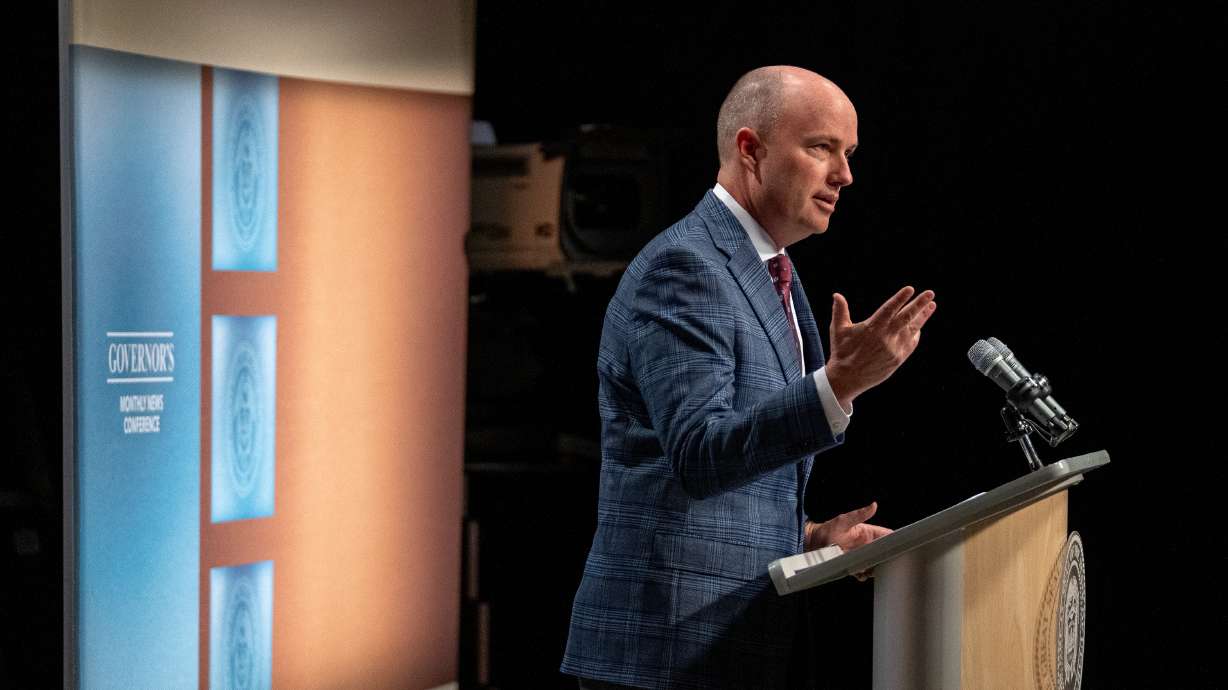
Attorneys for the Utah Legislature and organizations who filed the lawsuit contesting Utah's congressional district discussed the next steps in the court case as the Legislature approves a new map during a hearing on Friday. (Tim Vandenack, KSL.com)
(Tim Vandenack, KSL.com)

SALT LAKE CITY — With just days to go in the public comment and evaluation period before a new congressional map is chosen, the Better Utah Institute has posted evaluations of the five legislative maps.
The organization also put the congressional map proposed by State Senate Minority Leader Luz Escamilla and State Representative Doug Owens on its website.
Better Utah Institute Executive Director Taylor Knuth says they evaluated the maps based on 5 things: How many counties are split, city splits, compactness, competitiveness and proportionality.
Knuth said every congressional map has some splits, but the Escamilla-Owens map has the most at 13 city splits and 6 county splits. But he said that may not be a problem for some people.

Escamilla/Owens proposed map. (Better Utah Institute)
“I really would encourage the people who live in the 13 cities to look at…the Escambia and Owen’s map and ask themselves, ‘Does this keep my community connected?’ And if the answer is no, for residents in those 13 cities, they should absolutely submit a comment on that map specifically,” Knuth said. “But I would say the same thing about the city splits for A through E as well.”
While city and county splits are an important consideration, Knuth said that’s not necessarily the only thing to consider.
“City and county boundaries are often not a fantastic representation of a community at large,” Knuth said. “I live in the heart of Ogden, and I have a very big community that extends into South Ogden. I would contend that as an Ogdenite, I want to be in the same community as my South Ogden city resident neighbors.”
Knuth said that while the number of city splits in the Escamilla-Owens map can be a bit concerning, that’s the only map of the six that has a perfect score for proportionality. He says proportionality “measures how closely the share of seats a party wins matches its overall share of the statewide vote.”
The evaluators define compactness as “how geographically tight and regularly shaped a district is, instead of being stretched or oddly contorted.” And competitiveness is defined as “how likely it is that more than one political party has a real chance of winning in a district.”
Knuth thinks competitiveness is the most important.
“I believe competitiveness is the most important thing in this analysis, because when districts are competitive, politicians have to compete in fair races for the vote on the issues that actually matter to the Utahns that live in that district,” Knuth said. “They don’t pander to the extremes because they have to be winning the majority of Utahns, which are not the extremists on either side.”
In the view of the Better Utah Institute, congressional map B has the highest score for competitiveness at 22 out of 100.

Congressional map B. (Better Utah Institute)
While option B might have been the best proposal for competitiveness, Knuth expressed concern over that category with all the maps:
“Our analysis kind of across the board is the competitive nature of all of the maps was relatively low and represents a weakness, in all of the scenarios given A to E and the Escamilla-Owen’s map.”
Knuth said they don’t rank the congressional maps because they want people to decide for themselves.
“We only analyze these maps because at Better Utah, we believe that people should pick their maps and not politicians. And I think that that certainly extends to advocacy organizations and research institutions alike. Our analysis provides people with kind of a baseline of where to start based off our assessment of the political situation,” Knuth said.
All of the congressional map proposals, and their grades, can be viewed on Better Utah’s website. The public comment period for the new maps ends on Monday, Oct. 6.