Fish and Wildlife Service to take more public comments in effort to designate monarch butterfly as threatened species
Mar 19, 2025, 6:00 AM | Updated: 6:48 am

SALT LAKE CITY — The U.S. Fish and Wildlife Service will reopen a public comment opportunity related to the proposed listing of the monarch butterfly on the Endangered Species Act list.
The new comment period will begin on March 19 and last for 60 days. A previous public comment period lasted until March 12, according to the service’s website.
According to a press release from the Fish and Wildlife Service, listing the monarch butterfly was proposed on Dec. 12, 2024. Listing the species would provide new protections, adding to existing efforts to preserve the orange and black butterflies.
According to the Center for Biological Diversity, the monarch butterfly population west of the Rocky Mountains has declined by 95% in the last two decades. In the 1990s, there were roughly 1.2 million. Nowadays, the population is merely 200,000.
According to the Fish and Wildlife Service, habitat loss, insecticide exposure, and climate change are the species’ largest threats.
Some farmers have voiced concerns about the impact that listing the species could have on their land.
NPR reported that some farmers worry it could impact where they plant, or which insecticides they use to protect crops.
During the first public comment period, Successful Farming magazine published statements from agricultural groups acknowledging the necessity of protecting the species.
What could listing the monarch butterfly do?
The Fish and Wildlife Service explained that listing the butterflies could provide them with “species-specific protections and flexibilities to encourage conservation under section 4(d) of the Endangered Species Act.”
Section 4 of the Endangered Species Act outlines criteria for listing a species as threatened or endangered, developing recovery plans, and designating habitats.
According to the monarch butterfly listing proposal, the Fish and Wildlife Service has determined the species is endangered. By listing it as such, the service would also designate critical habitats.
The Fish and Wildlife Service said those interested in submitting a comment can do so by visiting regulations.gov and searching for “FWS-R3-ES-2024-0137.”
Difference between endangered and threatened
Established in 1973, the Endangered Species Act establishes protections for species that are struggling. Candidates can fall into two categories: threatened or endangered.
Per the Fish and Wildlife Service, the category is determined on the “degree of threat” a species faces.
Endangered species face a more critical situation than those listed as threatened. They must have a high risk of disappearing from all or most of their natural habitats in the near future.
On the other hand, threatened species face a less urgent situation: they are experiencing population decline but aren’t immediately threatened by extinction. However, if interventions aren’t implemented, they are likely to become endangered soon.
According to The Bee & Butterfly Habitat Fund, a nonprofit that focuses on helping pollinator populations, monarch butterflies have a 60% likelihood of extinction in the next 20 years.
What if the monarch butterfly goes extinct?
According to the Utah Division of Wildlife Resources, monarchs work to pollinate plants, maintaining food and shelter supply for other species.
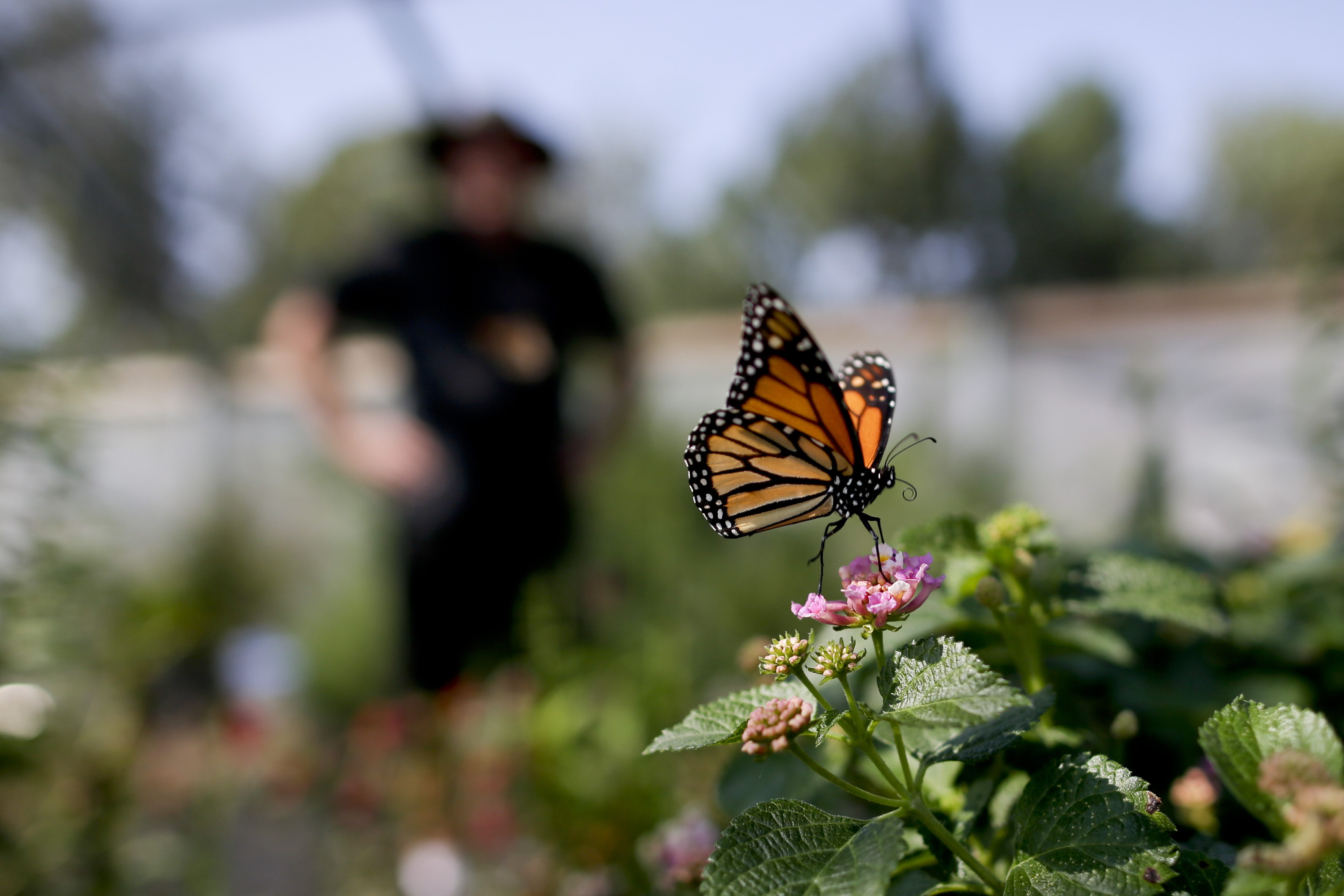
In this Wednesday, Aug. 19, 2015 photo, Tom Merriman stands behind a monarch in his butterfly atrium at his nursery in Vista, Calif. (AP Photo/Gregory Bull)
If they were to go extinct, it could have a negative impact on ecosystem health and diversity. Losing an active pollinator could disrupt relationships between plants and animals, while also creating a significant gap in the food chain. Some birds and small mammals rely on the monarch butterfly as a food source.
Additionally, their disappearance could impact agriculture. Insect pollination helps grow fruits, vegetables, and nuts. Population decline could lead to reliance on artificial pollination methods, which could increase costs to farmers and consumers.
Related: Monarch butterflies wintering in Mexico rebound this year