Many options for helping the Great Salt Lake; the simplest — use less water
Nov 18, 2022, 7:55 AM | Updated: 5:08 pm

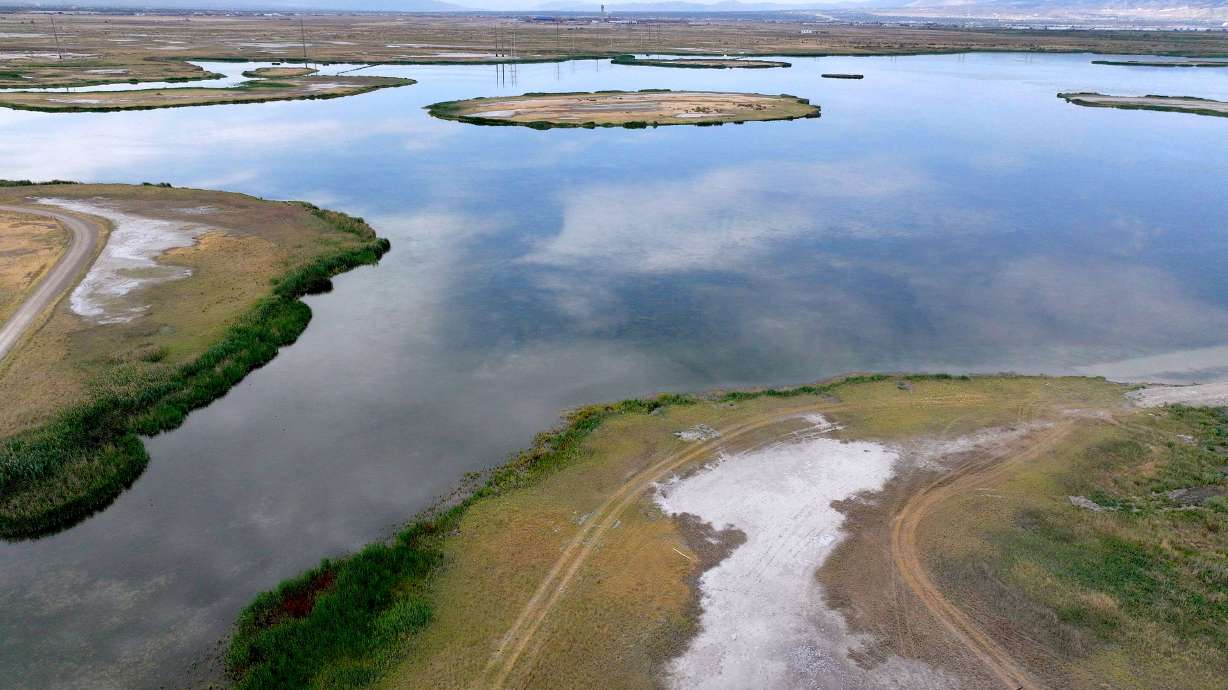
Chad Cranney, Assistant Wildlife Manager for the Utah Division of Wildlife Resources, pilots a fan boat carrying Sen. Mitt Romney, Utah House Speaker Brad Wilson and Utah Rep. Joel Ferry on a tour of the Great Salt Lake in Farmington Bay on Friday, Aug. 19, 2022. (Spenser Heaps, Deseret News)
(Spenser Heaps, Deseret News)
This article is published through the Great Salt Lake Collaborative, a solutions journalism initiative that partners news, education and media organizations to help inform people about the plight of the Great Salt Lake.
LAS VEGAS — Can Salt Lake City measure up to Sin City’s winning water-conservation model?
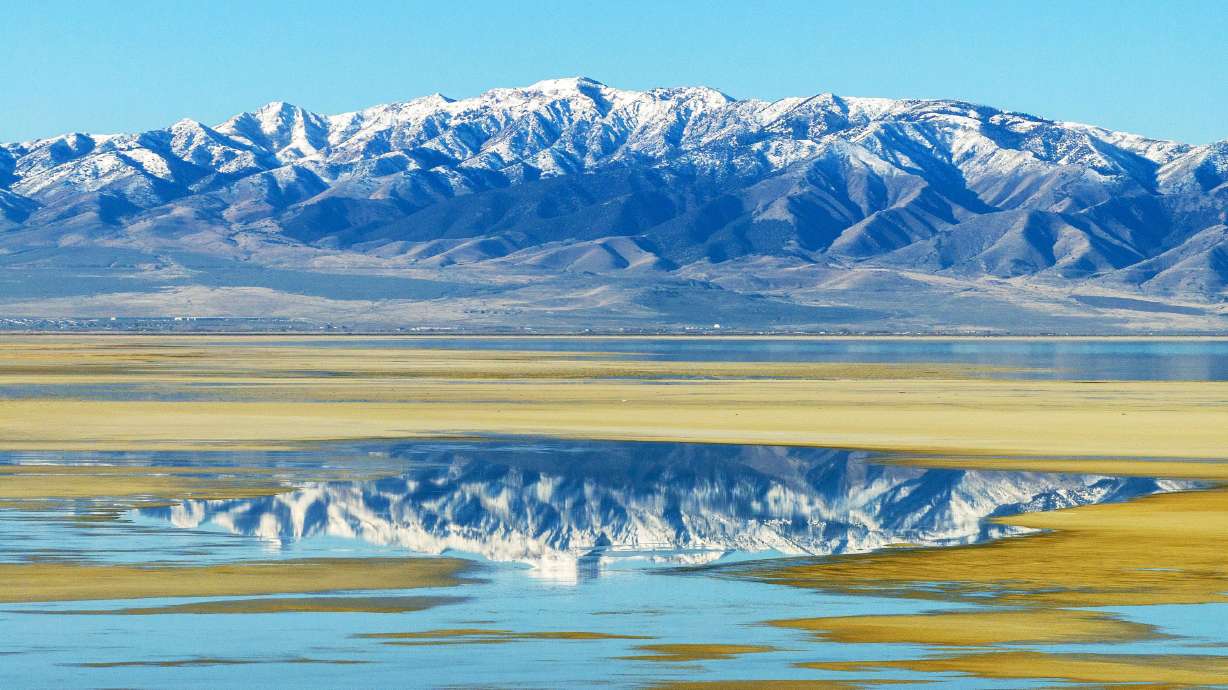
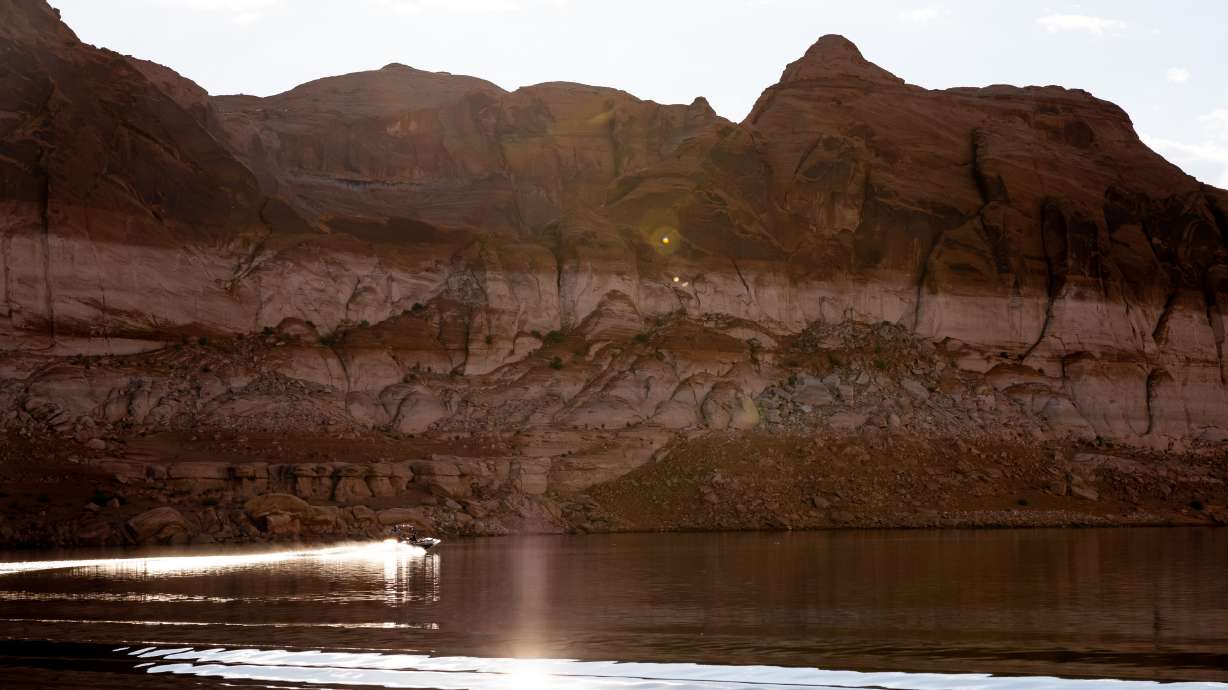
The drought-fueled decline in the southwest’s water supply has set off a cascade of environmental distress signals and for Utahns, Great Salt Lake is ground zero.
At its lowest level in recorded history, it is teetering at the edge of no return to a healthy ecosystem. Utahns are becoming familiar with the long list of repercussions of a dying lake: toxic dust storms, imperiled bird populations, more than $1 billion in economic losses, a shrinking snowpack due to less “lake effect” snow, and the list goes on.
Proposed solutions getting serious yet skeptical attention include a costly pipeline from the Pacific Ocean to the lake, and cloud seeding — a fickle technique. But experts say that the most viable answer may also be the simplest: use less water.
“Conservation has to be our first choice. Across the board. Period,” said Joel Ferry, a former state lawmaker and now the executive director of Utah’s Department of Natural Resources. “Not only our first choice, it’s our most cost-effective choice. So before we get to spending tens of billions of dollars building pipes somewhere, let’s do conservation. Let’s do 100% conservation.”
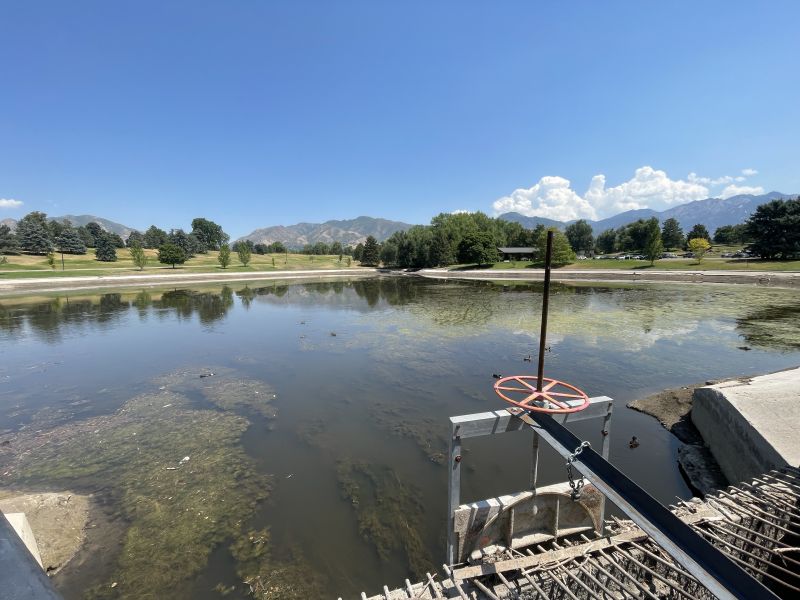
Utahns have stepped in where strict conservation policies have lagged behind. They voluntarily conserved 9 billion gallons of water over this past summer by reducing the amount of outdoor watering, and the Jordan Valley and Weber Basin water conservancy districts agreed to release 30,000 acre-feet to Great Salt Lake by 2023 to help stabilize its increasing salinity levels.
Policymakers are also taking action with more water-saving efforts like the $60 million agriculture optimization program to increase irrigation efficiency and the state is ramping up the installation of secondary water meters, and a flurry of conservation bills are expected at the next Utah legislative session.
House Speaker Brad Wilson, R-Kaysville, plans to seek more resources for the lake and run a bill to create “Utah Water Ways,” a public awareness campaign about water similar to how the state handles clean-air initiatives. Other lawmakers are also drafting legislation.
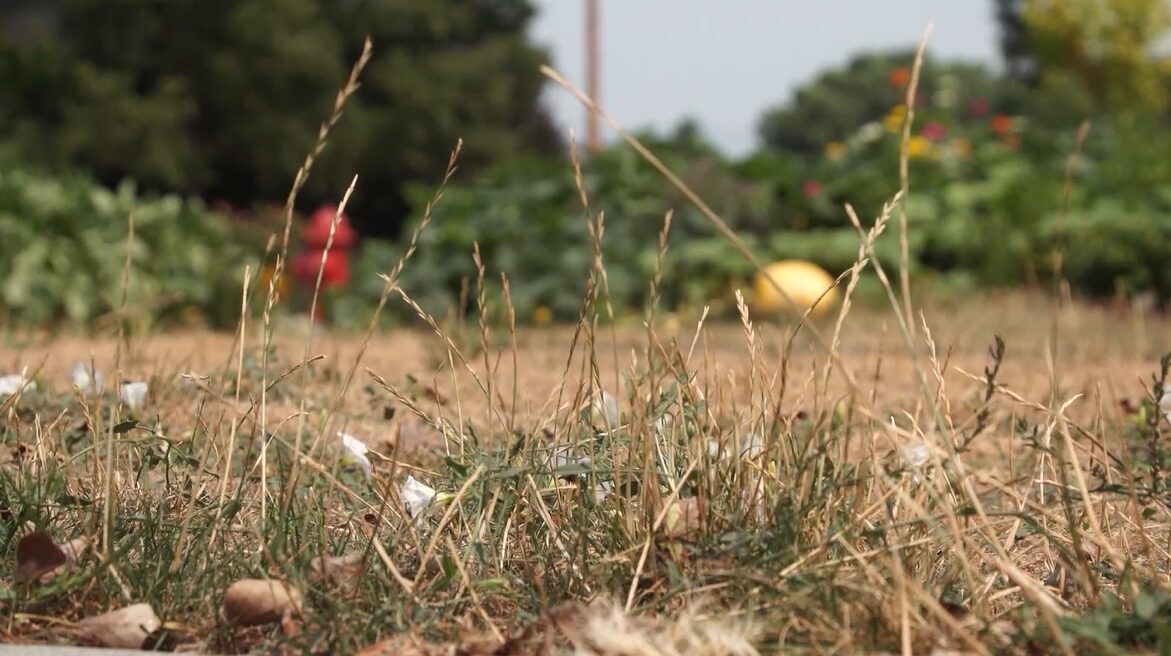
Rep. Doug Owens, D-Millcreek, is proposing something similar to the Las Vegas turf ban. It would eliminate “nonfunctional turf” and increase incentives for homeowners to get rid of their lawns.
“We’ve got to do water-wise landscaping. We’re not going to have nonfunctional turf like medians in highways and stuff,” Rep. Owens said at the second Great Salt Lake Summit. “We can still have trees and shrubs and some turf, homeowners can have some turf, but we need to limit it in construction.”
Kyle Roerink, director of the Great Basin Water Network, said right now, Las Vegas is “light years away” from Utah.
“There has been some progress. Really, it all comes down to how much money is being invested in turf removal. When you look at the urban residential landscape, the Southern Nevada Water Authority has invested hundreds of millions of dollars over the past two decades in this process. In Utah, in the last legislative session, there was a couple million put forward,” he said.
Roerink said Utah has not moved quickly enough and suggested there may come a point where stricter measures are required.
“In Utah, we’ve seen a bit of foot-dragging and I think a lot of that has to do with the way it’s always been done, aesthetical values and as our climate changes we need to adapt. Vegas has seen it first hand,” he said.
So far, Utah’s political leaders have been loath to issue mandates, instead preferring to encourage more of a volunteer spirit in the drought. At a recent forum put on by the Great Salt Lake Collaborative, Speaker Wilson expressed a desire for people to get educated and do the right thing with the best information presented to them. But if Las Vegas’s experience tells us anything, it’s that voluntary conservation may not be enough, and that new policies, restrictions and incentives will be required.
Pat Mulroy, retired CEO for the Southern Nevada Water Authority and the Las Vegas Valley Water District, is currently the president and CEO of her consulting business called Sustainable Strategies. She helped form Colorado River policy and was at the forefront of the Las Vegas water conservation measures. She said the business community led the way by example and like what’s happening in Salt Lake City now, conservation was talked about every single week through some medium.
“We tapped into that human desire to want to be a part of the solution and not part of the problem,” said Mulroy. She further explained that some measures did not sit well.
“Oh my heavens, people went insane at the thought of losing their fountains. So we said OK, if you take out enough grass to equal 50 times the amount of water that that fountain uses, you can have your fountain. We found ways to work with the community’s hotspots, issues they were not willing to let go of.”
Roerink said Las Vegas could be a strong example for Utah communities to follow.
“It would be unwise for communities like St. George, Cedar City and Salt Lake to just ignore what’s happening in Las Vegas. Does it have to be a carbon copy? No. But is there a really strong blueprint, is there a lot of wisdom, a lot of guidance that would be available from down there in Vegas? Of course, absolutely,” he said.
But Roerink also said Utah is an example to other states on one big part of conservation.
“One area where Utah really shined is secondary water metering,” he said, referring to the meters being installed across the state that measure outdoor water use on lawns and landscaping.
State officials have already documented instant savings of up to 30% once people realize exactly how much water they’re using. “Nevada could do that,” Roerink said.
Wayne Wurtsbaugh, an emeritus professor in the Watershed Sciences Department and the Ecology Center at Utah State University studies how water use in the Great Salt Lake watershed stacks up and concludes conservation is the solution.
He said lawns currently use 4 or 5% of the watershed and most of that will evaporate or be lost due to overwatering.
“Gardening is not the biggest one we have to be worried about but, that said, there is going to be more demand on that use, ” said Wurtsbaugh.
That’s because Utah’s population is expected to double in 2050, which will require even more water from the rivers that replenish the lake. Wurtsbaugh said cities (including industries and yards) currently use more than 11% of the watershed, but water used within homes (showering, washing dishes, toilets, etc.) goes down the drain, gets treated, and eventually returns to the rivers and hopefully, to the lake.
He said mineral extraction in the form of evaporation ponds consume about 13% of the lake watershed, but he said the one to be most concerned about is agriculture, it takes 63%. He pointed out that even though Utahns recorded a 20% water savings this year through voluntarily cutting back on water use, that meant only 2.2% more water went into the lake. That makes a difference, just not a big one. He said if agriculture were also to save 20% it would increase the amount of water going into Great Salt Lake to 14.8%.
Related: KSL NewsRadio, KSL TV join push to find Great Salt Lake solutions