The saline lakes of the Great Basin and why they are in trouble
Oct 10, 2022, 6:30 AM | Updated: 3:31 pm
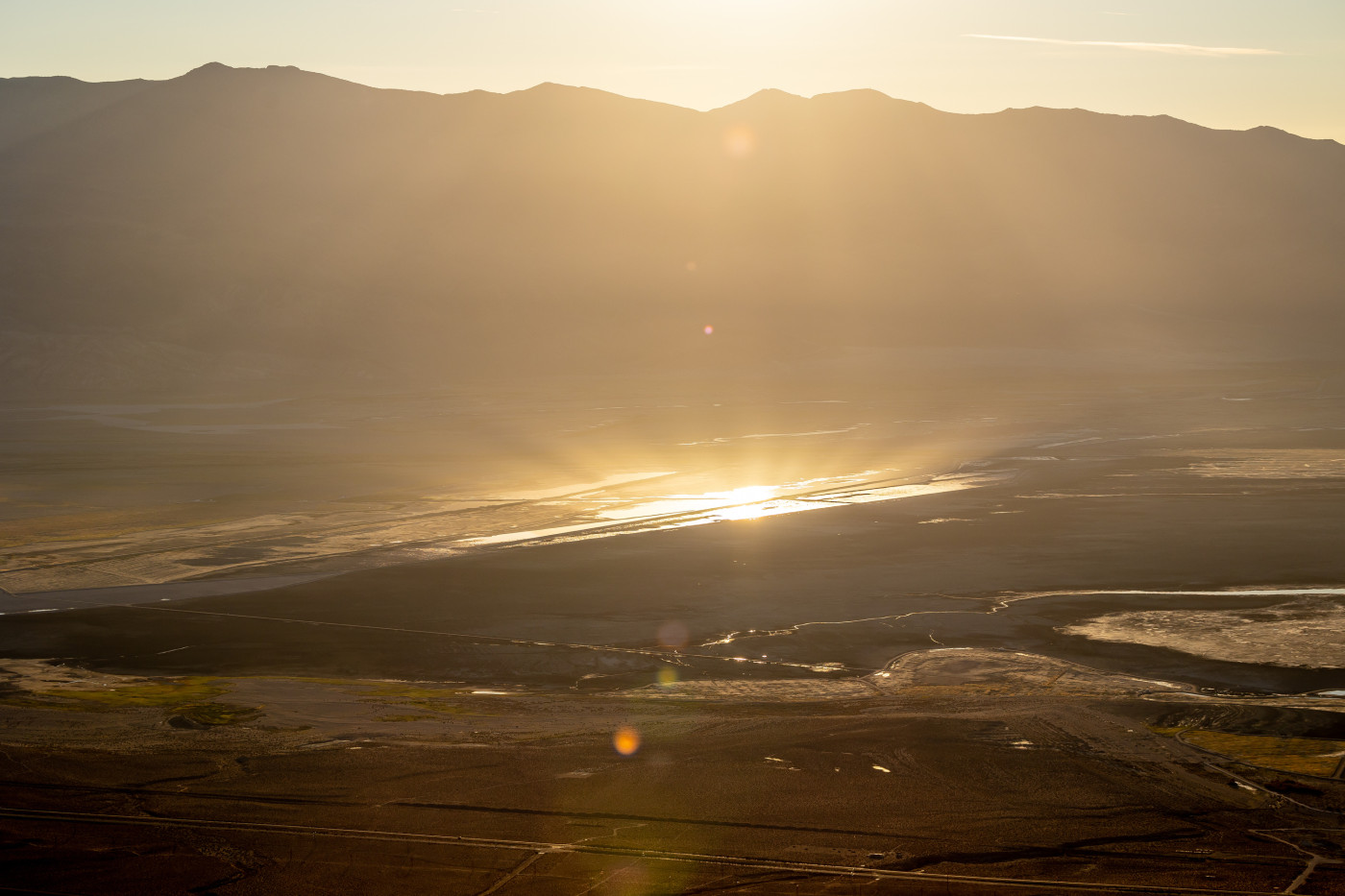
The rising sun reflects off of pools of water and brine that are part of the Owens Lake dust mitigation program on the mostly dry lakebed in Inyo County, California on Friday Aug. 12, 2022. (Spenser Heaps, Deseret News)
(Spenser Heaps, Deseret News)
This article is published through the Great Salt Lake Collaborative, a solutions journalism initiative that partners news, education, and media organizations to help inform people about the plight of the Great Salt Lake.
The Great Salt Lake is a time capsule. It can tell us where the Earth has been, and where it is going.
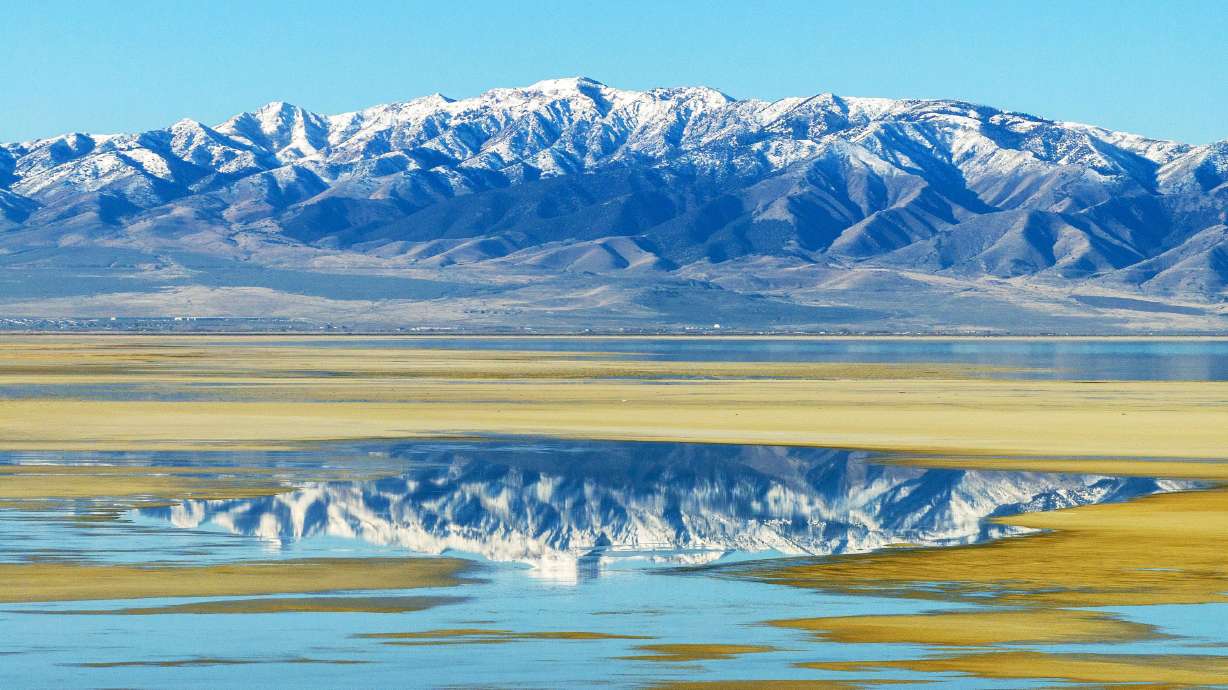
Like its “sister” lakes in the sprawling Great Basin, Utah’s Great Salt Lake appears to be on a collision course with nature plagued by diversions, drought and climate change.It has lost close to half its volume, and more than 800 square miles of lakebed are now exposed, vulnerable to wind-whipped storms that spread toxic dust along the Wasatch Front.
“These lakes are relics of the past, and they hold a lot of answers to the way Mother Earth changes,” said Kyle Roerink, executive director of the Great Basin Water Network, “and I think we need to use them as a barometer about the future — where we have been and where we are now.”
These saline lakes in the Great Basin are terminal, meaning they are fed by rivers and are a hydrologic end point. When the rivers start to dry up or are diverted, the lakes’ levels of salinity increase.
The saline lakes of the Great Basin are remnants of the ice age and are echoes of Lake Bonneville and Lake Lahontan, another large endorheic Pleistocene lake that covered modern northwestern Nevada and extended into northeastern California and southern Oregon.
These lakes like the Great Salt Lake, Pyramid Lake and Walker Lake are part of a system of enclosed basins, said David O’Leary, a hydrologist with the U.S. Geological Survey Utah Water Science Center in Salt Lake City.
“These lakes tend to be what are called terminal discharge points where water, either surface or groundwater, that is the end of the flow path. Typically the only way for water to leave is through evaporation, and that leads to the saline buildup,” he said. “There is a concern for the long-term viability of these lakes.”
That concern, O’Leary added, is what is leading to a multitude of studies to better understand the hydrological challenges faced by these systems. There is modeling that is focused on groundwater and surface water.
“There are limited resources and money that go into these decisions, but those decisions will involve these lakes that affect people’s livelihoods and communities,” he said. “The hope is that with the science, we can make informed, intelligent decisions moving forward.”
To better understand these sprawling saline lake systems in the Great Basin, a bipartisan effort is underway in Congress to launch more research.
The Saline Lake Ecosystems in the Great Basin States Program Act, sponsored by Rep. Blake Moore, R-Utah, and introduced with Rep. Jared Huffman, D-California, directs the U.S. Geological Survey to prioritize and study saline lake systems in the Great Basin, including the Great Salt Lake.
The bill, which has passed the House, authorizes $5 million a year over five years to study 20 saline lakes in the Great Basin, with eight of those lakes prioritized.
“We know a lot already. We’ve seen what happened with Owens Lake. We know that dust is a huge problem. We know that there’s a high level of arsenic that could be put into our air along the Wasatch Front, and we don’t want that,” Moore said. “It’s a matter of really pinpointing the severity of it. We want to use the study to help do that and then take best practices and come up with new innovative ideas on how to address the issue.”
O’Leary, who is part of a USGS team to assess and monitor the saline lakes in the Great Basin, said science will help drive answers.
“I’m really excited because it will allow us to look at these common themes and common issues and while the focus of work has been the Great Salt Lake, now we are starting to collaborate with hydrologists and ecologists throughout the western United States.”
Twenty saline lakes across California, Nevada, Oregon and Utah were identified by the U.S. Geological Survey and its partners as priority ecosystems. They include: Eagle Lake, Honey Lake, Mono Lake and Owens Lake in California; the Great Salt Lake and Sevier Lake in Utah; Carson Lake, Carson Sink, Franklin Lake, Pyramid Lake, Ruby Lake, Walker Lake and Winnemucca Lake in Nevada; Lake Abert, Harney Lake, Malheur Lake, Silver Lake, Summer Lake and the Warner Lakes in Oregon; and Goose Lake in California/Oregon.
Roerink lauded the federal efforts to study saline lake systems, the wildlife they support and the communities that depend on them.
“We need to be looking at these systems as a barometer that will help guide our decision- making,” he said. “You can look at the Great Salt Lake as a bellwether of what types of environmental harms we will see if we don’t take better care of these systems, and fast.”
Related reading:
- Great Salt Lake so low, a water level measurement system no longer works
- Utah drought update: how did we fare this summer?
- Utah leaders ask businesses to contribute to water conservation amid Colorado River shortage