Utah golf courses say they’re reducing water use. Some can prove it.
Apr 11, 2023, 6:59 AM | Updated: 7:04 am

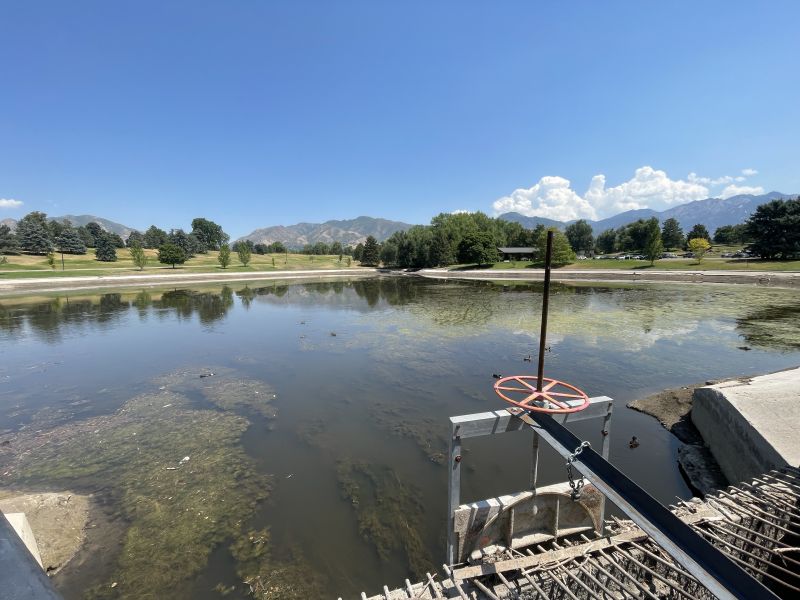
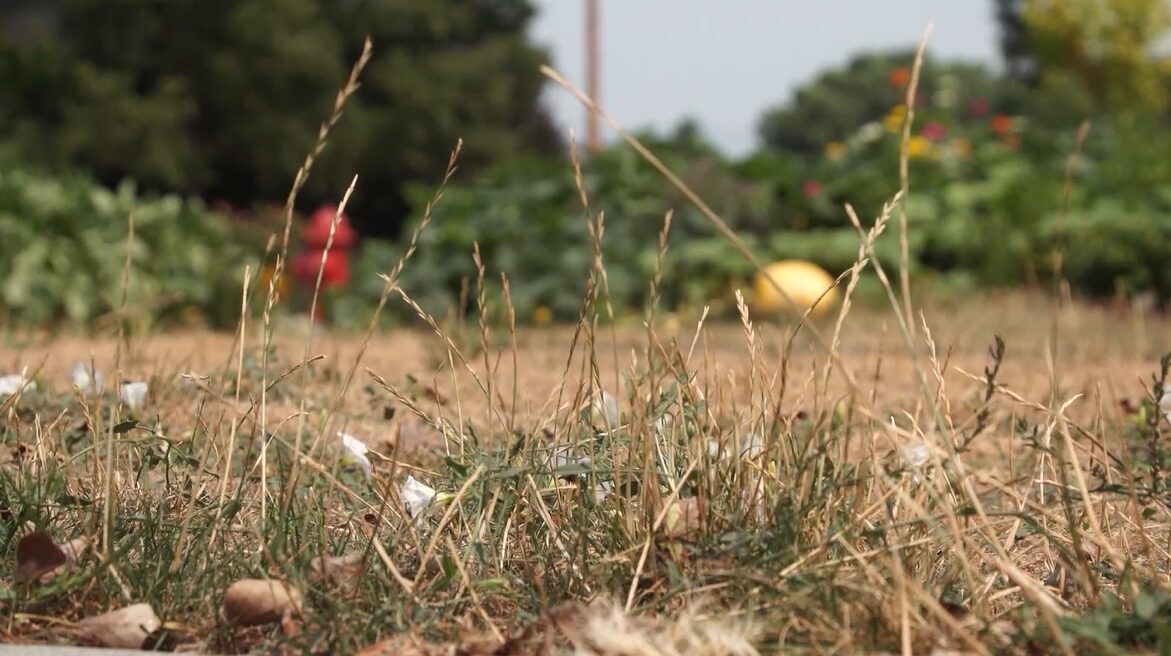
(Trent Nelson | The Salt Lake Tribune) Murray Parkway Golf Course on Saturday, April 1, 2023.
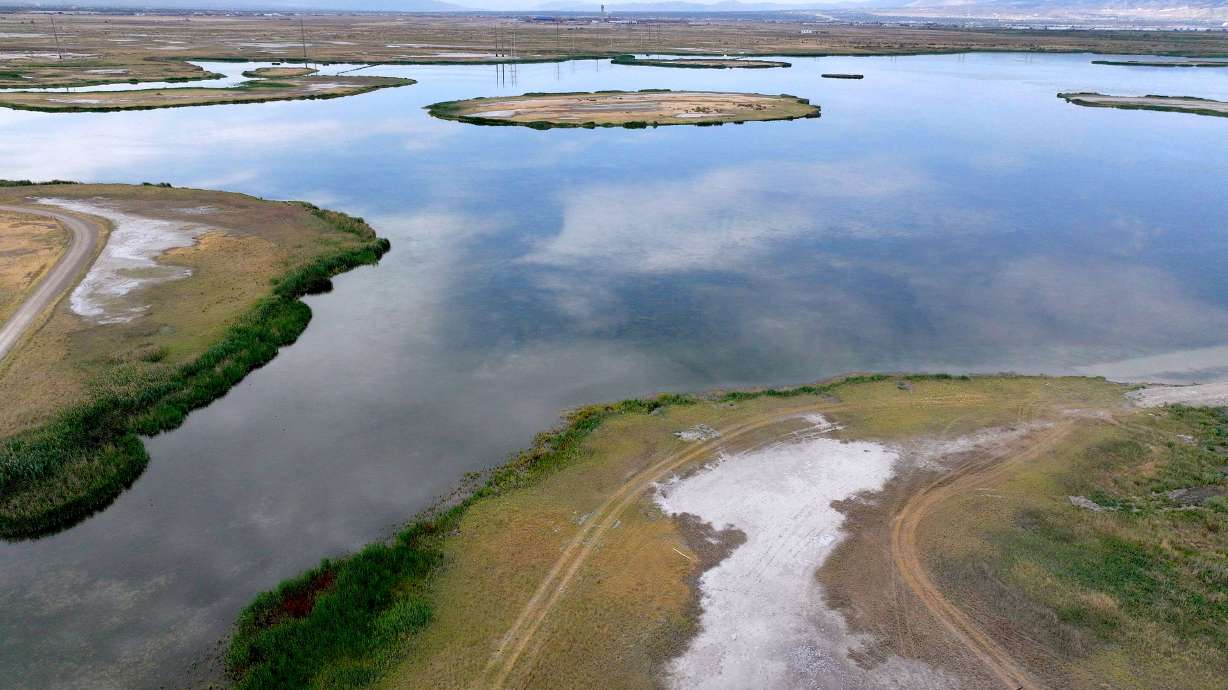
(Trent Nelson | The Salt Lake Tribune)
This article is published through the Great Salt Lake Collaborative, a solutions journalism initiative that partners news, education and media organizations to help inform people about the plight of the Great Salt Lake—and what can be done to make a difference before it is too late. All of the stories are available on the Great Salt Lake Collaborative website.
SALT LAKE CITY — Golfers say their sport gets a bad rap. Water use data shows some courses conserve better than others.
Utahns rallied in recent years to rip out their lawns or let their turf go brown, motivated by drought, a disappearing Great Salt Lake and dwindling water supplies in the Colorado River Basin.
So when some residents drove past verdant green golf courses, still lush in the thick of summer heat, it stoked their ire. And when a lawmaker floated the idea of requiring golf courses to report their use this year, only to have his bill squashed in committee, it caused some to wonder whether the properties have something to hide. Even John Oliver questioned the logic of Utahns irrigating greens in their dry, desert environment.
Alan Davis, a spokesperson with the Utah Golf Course Superintendent Association, bristles at making golf courses a boogeyman.
“Golf courses were the hero of the pandemic, which I was glad to see,” he said. “It brought record numbers to the game.”
In Salt Lake City alone, golf participation grew by 25% in 2020.
The records received show at least 40 of Utah’s golf courses cut use between 2021 and 2022, despite bone-dry weather conditions. Several courses increased their irrigation — some by millions of gallons.
A private golf course’s perspective
Justin Woodland, superintendent of The Barn Golf Course in Pleasant View, is one of the private property managers who opted not to disclose water use, but he highlighted efforts to conserve.
“We figure we need to be the example in the industry, and we can be,” he said. “We’ve abandoned the driving range. That’s five acres we don’t water at all. We figure if you don’t hit a golf ball off it, we don’t care what it looks like.”
He’s experimenting with hybrid grass species and changing the irrigation system to water a smaller footprint. In 2021, he told the Standard-Examiner he reduced watering by 30-35%.
“We’re spending a lot more money to make the course look a lot worse,” Woodland said.
Dying trees and drying ponds at public courses
Murray Parkway is one of the municipal-owned golf courses that doesn’t track its water use, but it irrigates in a novel way — by collecting water runoff from Interstate 215 along with the groundwater construction of the freeway displaced.
“We get a lot of salts, we get a lot of oils, we get a lot of diesel fuel in the water that isn’t really healthy, especially for ornamentals on the golf course,” golf course superintendent David Carruth said. “That’s a problem we’re willing to take because it saves us a ton of money on water.”
Running all that water through the golf course helps filter out pollutants before they reach the Jordan River, Carruth added.
“It’s surprising how much water it does not take to keep turf alive,” he said. “… And properly maintained turf has a tremendous cooling effect in the summertime.”
Managers of Davis Park and Valley View golf courses, both owned by Davis County, have stopped filling ponds on the golf course and paused irrigation in the roughs, so much so that it’s starting to kill dozens of the courses’ trees, according to golf director Dustin Volk.
“We’re being responsible like the rest of the public,” Volk said, “but that’s been a sacrifice.”
No one has asked for water use data in the 30 years Volk has worked at the county’s golf courses, he said, and it’s not something they follow or track. But information the county and Weber Basin Water Conservancy District provided in a records request show irrigation dropped at Valley View from 137 acre-feet in 2020 to 105 acre-feet last year. Valley View, which covers 183.5 acres, had some of the lowest water applied per acre among the state’s golf courses in 2022. Only Salt Lake City’s Forest Dale and Mountain Dell courses and the Outlaw Golf Club in Hideout used less.
Davis Park, too, has seen significant reductions, using 176 acre-feet in 2022 versus 208 acre-feet in 2021 to water 128 acres.
Asked whether this is the new normal for golf courses, or whether Davis County will return to old irrigation practices now that Utah has seen record-breaking snowpack, Volk said he’ll follow whatever restrictions water managers like Weber Basin impose.
“We clearly want to water enough so trees don’t die,” Volk said.
Making green in Utah’s sunny southwest
In warm Washington County, golf courses use significantly more water than those up north because they operate year-round.
The city of St. George owns four golf courses and provides water to four private ones, though its data is incomplete for the Bloomington Country Club. All its public courses managed to reduce water use in recent years or at least keep it the same, despite worsening drought conditions. The city-owned Sunbrook Golf Club went from using 945 acre-feet in 2020 to 889 in 2021 to 665 last year.
Most of the private golf courses with available data, however, increased their use from 2021 to 2022. Entrada at Snow Canyon County Club used 513 acre-feet in 2022, compared to 376 the year before. That’s because the club’s golf course underwent a major renovation starting in 2020, according to interim general manager Jim Cleary.
“We weren’t running a lot of irrigation,” Cleary said, “… 2021 is a difficult year to use as a comparison.”
The property’s modifications included modern sprinkling and layout systems, which Cleary said will mean “more effective use” of water at the property.
Colby Cowan, director of golf operations for St. George, says the city has also adopted more efficient practices.
“It’s not kicking on water and letting it go wall to wall,” Cowan said. “… We try to be waterwise the best we can, while also making it playable.”
They’ve planted Bermudagrass, a warm-season species with deep roots that tolerate less water. When the grass goes dormant in the winter, Cowan only overseeds the fairways and tee-boxes so they water a smaller area.
“Golf courses, for whatever reason, have had a bad rap on water use,” Cowan said. But he pointed out some of their benefits.
Washington County’s mild weather and golfing greens have lured tourists since the 1960s, St. George News reports. And golf generated a $90 million economic windfall for the county in 2021 alone, according to the Greater Zion Convention and Tourism Office.
“It’s such an economic driver for us down here,” Cowan said.
Who benefits?
There’s no denying golf moves money through Utah’s economy. The Golf Alliance of Utah commissioned a study in 2012, finding golf facilities generated $386 million in economic benefits for the state and created more than 5,000 jobs. It also brought in money through tourism spending, tournaments, capital investments and elevated real estate values for a total economic impact of $806 million.
That was a decade ago. It’s unclear how much more the sport chips in today, given inflation and the boost in participation seen during the pandemic. But all those millions of dollars generated and hundreds of acres irrigated don’t exactly benefit everyone.
Only 250,000 people participated in golf at Utah’s courses in 2021, the Deseret News reported, about 8% of the state’s population. Meanwhile, cities and towns across the state face water shortages, even after a banner snow season.
“If what is happening with respect to tourism is not also equally beneficial to the community that is hosting the tourism, it is not sustainable long term,” said Kelly Bricker, a professor and director of the Hainan-Arizona State University Joint International Tourism College.
For the vast amount of land they cover — 144 acres is the average size of a Utah golf course — only a limited amount of people can be on the properties at any given time.
“You can’t access [golf courses] for other activities like you can parks,” Bricker said, noting she was not speaking on behalf of Arizona State University. “It’s really a very narrow use of that land.”
Golf has also historically been an expensive sport with a high cost of entry. The surge of participation in recent years has improved the diversity of the industry’s participants, but only one in four golfers are women. Only one in five are people of color.
“We’ve talked a lot about … changing the use of golf courses” to be more equitable and inclusive, Bricker said. “Even at night, for stargazing, because they’re in open spaces that typically don’t have light around them. It would be cool, reshaping the perception of what and who they are for.”
In her conversations, however, it’s difficult to get golfers on board with those changes. And it doesn’t solve the environmental concerns golf courses generate, like fertilizers, weed killers and pesticides that wash into streams and lakes. It also doesn’t reduce the resources they consume.
“The amount of water golf courses use typically is horrendous,” Bricker said. “And it does feel very wasteful.”
About 79% of Utah’s available water goes to agriculture, while 9% goes to cities and towns, according to Utah State University. That makes golf courses a relative drop in the context of the state’s water use. But with dwindling supplies leading to a shriveling Great Salt Lake, groundwater depletions and interstate conflict on the Colorado River, conservation of water in cities and golf courses can still go a long way, especially as the population grows.
About 25% of Utah’s 111 operational golf courses either didn’t track their water use or did not share their data. The ones that did provide information collectively used enough water to support up to 50,000 households in Utah a year. That’s more than the number of households in Logan and St. George combined.
“At some point, our environments should dictate to us what it is possible to support — activities, quality of life, all of it,” Bricker said. “I’m sure for some individuals, golf adds to quality of life. But is it something that benefits the entire community and increases quality of life for all?”
For Davis, with the Utah Golf Course Superintendent Association, the pandemic made clear the public benefits of golf courses.
“[Remember] what it provides to a community, what it provides to mental health,” Davis said. “It’s an open space in the middle of the city.”
Great Salt Lake Collaborative intern Emma Keddington contributed to this report.
More from the Great Salt Lake Collaborative
- Good news for the Great Salt Lake, Utah’s snowpack now 201% of normal
- Dear Legislature: Here’s what you can do in 2023 to save the Great Salt Lake
- How a change in Utah water law will help Great Salt Lake