What role can history play in saving the Great Salt Lake, solving Utah’s water woes?
Nov 16, 2022, 1:03 PM | Updated: Oct 26, 2023, 2:06 pm
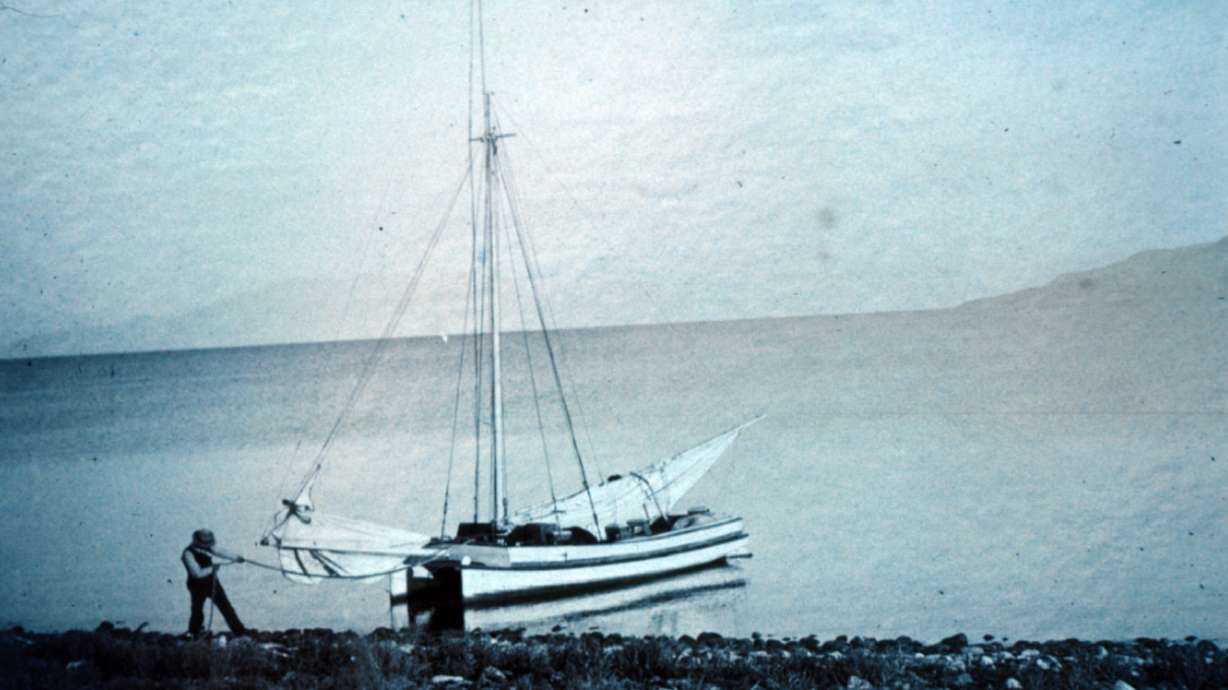
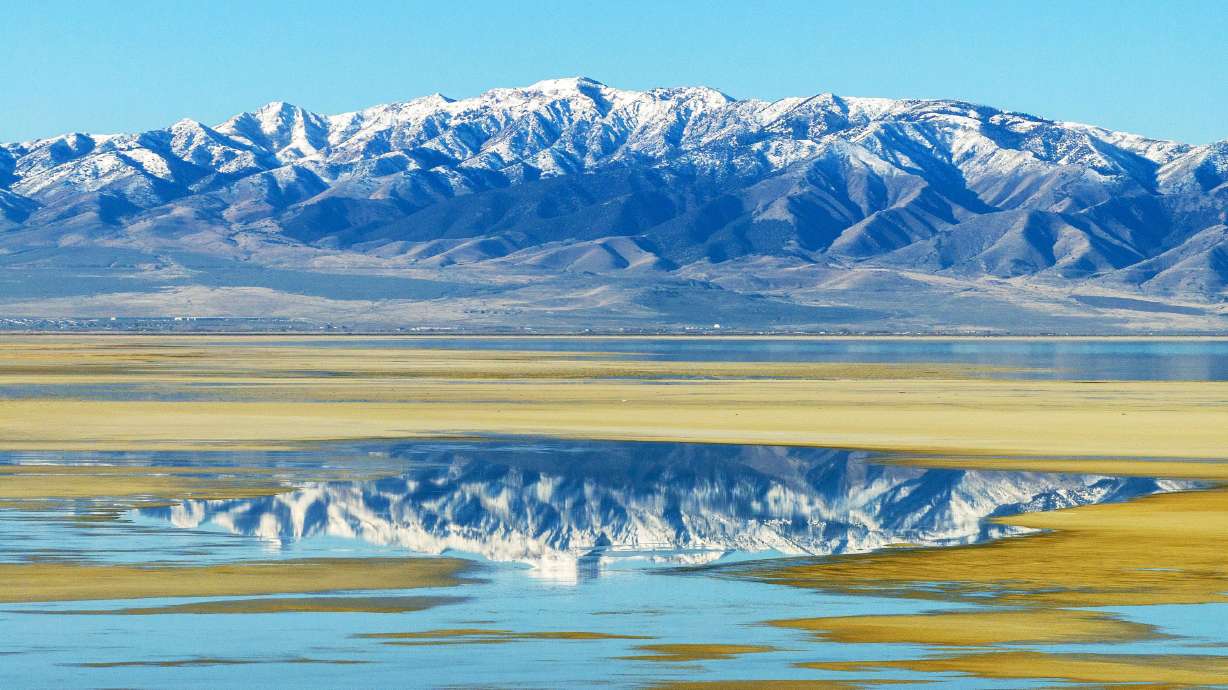
FILE: A sail boat is launched at the Great Salt Lake sometime in the 1870s. The Great Salt Lake and Utah's Water History were the primary focus of the 70th annual Utah State Historical Society Conference held in Provo. (Utah State History)
(Utah State History)
This article is published through the Great Salt Lake Collaborative, a solutions journalism initiative that partners news, education, and media organizations to help inform people about the history and the plight of the Great Salt Lake.
PROVO, Utah — John Wesley Powell offered a poignant message for Western U.S. communities when he was the featured speaker in a room full of developers and government leaders at a major irrigation conference held in Los Angeles in October 1893.
Powell, then director of the U.S. Geological Survey, started off strong, receiving applause from those listening to him, noted Greg Smoak, a professor of history and director of the American West Center at the University of Utah. The mood quickly shifted to “downright hostility” as Powell began to caution his audience about the water limitations in the West, Smoak notes.
“There is not enough water to irrigate all the lands … There is but a small portion of the irrigable land which can be irrigated when all the water, every drop of water, is utilized,” Powell warned the crowd, adding that he foresaw a future filled with battles over water rights.
Water message falls on deaf ears
This wound up being the last time Powell ever spoke on the issue in such a public setting. As Smoak points out, the room quickly turned on the legendary explorer and 19th-century figure. His words were drowned with jeers and hisses. He stepped down from the job the following year.
William Mulholland was among those in the crowd protesting Powell’s message, retorting that 500,000 inches of water in California’s Owens Valley “went to waste” by not going toward irrigation that summer. Mulholland would go on to oversee Los Angeles’ water projects, designing the Los Angeles Aqueduct that drained Owens Lake dry and created an environmental situation California is still handling nearly a century later.
His career ultimately ended when one of his projects, the St. Francis Dam, collapsed in 1928, causing a flood that killed hundreds of people.
This anecdote isn’t a recipe for success
While this cautionary tale may resonate today as the West deals with a 1,200-year-old “megadrought,” Smoak contends that his historical anecdote shouldn’t be viewed as the perfect game plan for how to tackle the situation now.
“History can never provide an absolute roadmap. Every situation is going to have particular facets that you can’t just look in the past and say, ‘Here’s a perfectly meaningful example that tells us exactly what we’re going to do,'” Smoak says. “On the other hand, human beings have encountered similar situations in the past in American history and other places and so on.”
This context can be very important when coming up with solutions to any situation, such as helping the struggling Great Salt Lake, adds Jennifer Ortiz, executive director at the Utah Division of State History. That’s why, as Utah continues through one of its worst droughts in recent history and legislators spend more time dwelling on conservation than ever, the division opted to make water the primary focus of its 70th annual history conference Wednesday.
How stories from the past help
State historians made water and the Great Salt Lake the primary focus of the event because of the topic’s relevance today amid the drought.
“It became a really important issue for us to address in a historical lens,” Ortiz said. “Having the opportunity to bring people together — water managers, historians — it was just an amazing opportunity to focus on water history and water challenges in our state.”
This year’s conference featured a wide-ranging view of water history in and around Utah, from previous efforts to corral water in the West to the impact of water battles and projects on Native American land. Some presentations also offered an outlook of the future based on other examples from the past, including Owens Lake, while others looked at the cultural significance of the Great Salt Lake in history.
Smoak served as the keynote speaker, providing a broader overview of Utah’s and the West’s water challenges since the pioneer settlement. The point of these presentations was to “enlighten” both old and new residents through a deeper review of the state’s water history.
Though history is imperfect and can’t provide a correct answer as to what does and doesn’t work, it can provide plenty of context. Ortiz said the main goal is to showcase context for residents and state leaders as they ponder solutions to the drought and the Great Salt Lake. She believes history has the power to provide this for all sorts of issues.
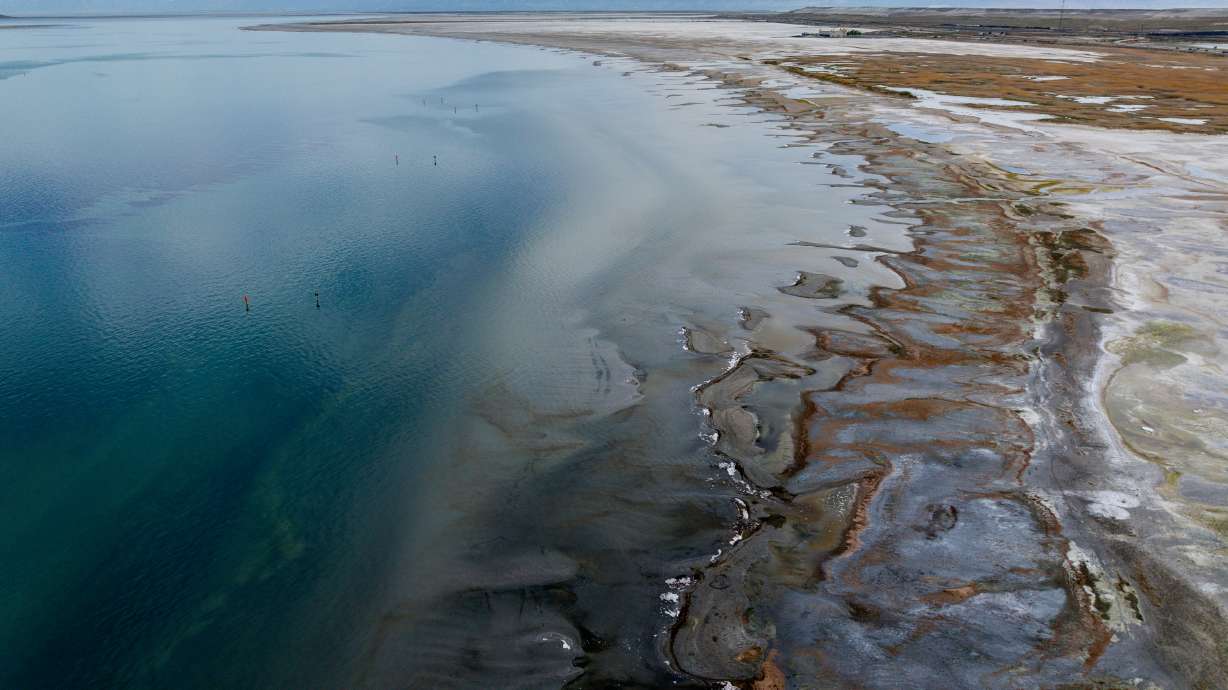
“Maybe we can’t solve the issue of affordable housing or water scarcity, but we sure can provide the historical context for how we got here today,” she said. “We have the primary resources, maps that show us the decline of water of the Great Salt Lake or how water rights have shifted over time. We have those sources to provide.”
What history can teach about water and the Great Salt Lake
Owens Lake seemed to be the historic example that reappeared throughout the day. The lake, located on the eastern side of the Sierra Nevada range, may serve as the prime example of what can happen to the Great Salt Lake even if Smoak acknowledges it’s not “absolutely” the same situation.
It’s a terminal saline lake much like the Great Salt Lake but mostly dried out by the 1920s as a result of water diverted to the Los Angeles area. The lake’s drying ultimately created “the nation’s worst source of PM10 pollution, leading to federal regulatory controls and an extensive monitoring system,” the Deseret News reported, as communities by the lake were exposed to similar toxic dust that the drying Great Salt Lake lakebed holds.
The biggest difference is the number of people by the lakes — about 40,000 near Lake Owens compared to 2.6 million by the Great Salt Lake. Therein lies one of the elements that change the situation, making it less absolute but also impactful to more people. The cause is also different, as the diversions of the Great Salt Lake are coming from communities by the lake and not from an outsider creating a large aqueduct system.
However, there’s a lot to pull from this example, too. Mulholland’s job was to address the massively growing Los Angeles population. And that required large engineering solutions to address the sheer number of people flocking to the city. It’s similar to the growth of the Wasatch Front now, which is possible through projects that pull from the Colorado River and divert water from entering the Great Salt Lake.
If we don’t actually think critically about (the problems), we’re not going to get anywhere. We’re just going to repeat the same stories.
–Greg Smoak, professor of history and director of the American West Center at the University of Utah
So what’s Smoak’s takeaway from this? He believes shaking off a belief that governments can engineer themselves out of every obstacle is the biggest challenge moving forward. Los Angeles engineered several other water systems after draining Owens Lake. But it’s still not enough to “answer the demand” as it also struggles from the drought today, Smoak points out.
Zeroing in on smaller solutions to help the Great Salt Lake
With large-scale ideas thrown around for the Great Salt Lake, like a pipeline from the Pacific Ocean to the Great Salt Lake, he sees some of the same engineering rhetoric today. There are many other projects in the state in the pipeline aimed at addressing water needs across Utah, as well.
It’s why Smoak returns back to the message Powell delivered back in 1893. His speech may not provide a perfect roadmap either because so much has changed in the West since then. And, it’s hard to deny the benefits of the existing engineering projects — like having water to pull from in a drought. But the speech can offer context into finding solutions today.
There are cities in the West starting to find ways to be more efficient with their water by understanding their constraints. Las Vegas, for instance, banned any “nonfunctional” grass and mega-pools, and began investing in ways to recycle water, CNN reported last month. It’s an unlikely place for change but a hopeful example when it comes to harking Powell’s final water message, Smoak says.
Smaller solutions for Utah
In Utah’s case, he believes ideas like removing turf grass, amending water laws and finding ways to be efficient with the available water are among countless possibilities that can balance the state’s growth and address problems like the drying Great Salt Lake. These can help potentially avoid repeating the story of Owens Lake.
“Instead of looking to technology, we have to look at curbing appetites. We have to look at cultural change where we have to accept the limitations of where we live,” he adds. “Maybe we don’t have to look at them as limitations. Just accept where we live. And accept that Utah and the American West are different, and we can’t always engineer our way out of the problems we face and make more water.
“If we don’t actually think critically about (the problems), we’re not going to get anywhere. We’re just going to repeat the same stories.”
Previous reporting
- Gov. Cox feels optimistic about the future of The Great Salt Lake, air quality and job growth
- Your Diet Coke can could be in jeopardy if the Great Salt Lake dries up
- How a change in Utah water law will help Great Salt Lake
- Great Salt Lake sinking levels could impact bird migration