State wildlife officials say ‘it takes a village’ to protect animals from dangerous fences
Apr 23, 2026, 6:24 PM
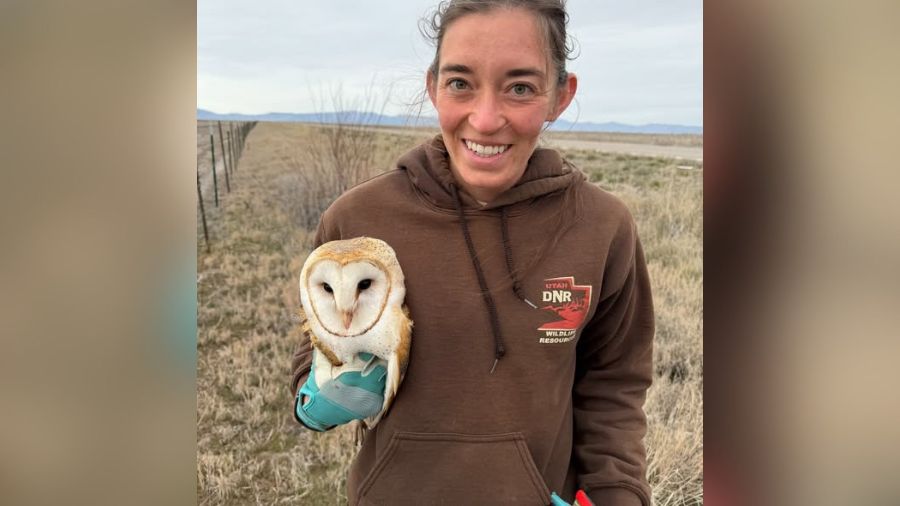
Division of Wildlife Resources employee Hailey Larsen with a barn owl that she rescued from a fence in Box Elder County. (Photo credit: Mark and Liz Hadfield)
(Photo credit: Mark and Liz Hadfield)

SALT LAKE CITY — State wildlife officials are thanking two Utahns for helping rescue a barn owl that got stuck in a metal fence in Box Elder County.
On Facebook, the Division of Wildlife Resources said one of their biologists rescued the owl after two Utahns found the bird and called them for help.
The DWR thanked Mark and Liz Hadfield – who found the bird – writing that “it takes a village to protect Utah’s wildlife.”
The biologist who freed the bird from the spikes on the metal fence was wildlife technician Hailey Larsen.

Division of Wildlife Resources biologist Hailey Larsen helps free a barn owl from mental fencing in Box Elder County. (Photo credit: Mark and Liz Hadfield)
“Its wing was stuck in the fence, so I kinda had to clip around a little bit of its feathers to get it freed,” Larsen said. “It was conscious. It was still moving a little bit, but I think it was pretty tired from trying to get out on its own.”
She took the owl back to her truck and transported it to the Wildlife Rehabilitation Center of Northern Utah.
Larsen isn’t entirely sure how the owl got stuck there but she said it’s common for birds to get stuck on fences like that when they’re hunting for their next meal.
“When they see prey, they’re going to dive and get it,” she explained. “And if they don’t see the fence … that’s when they get caught in the fence.”
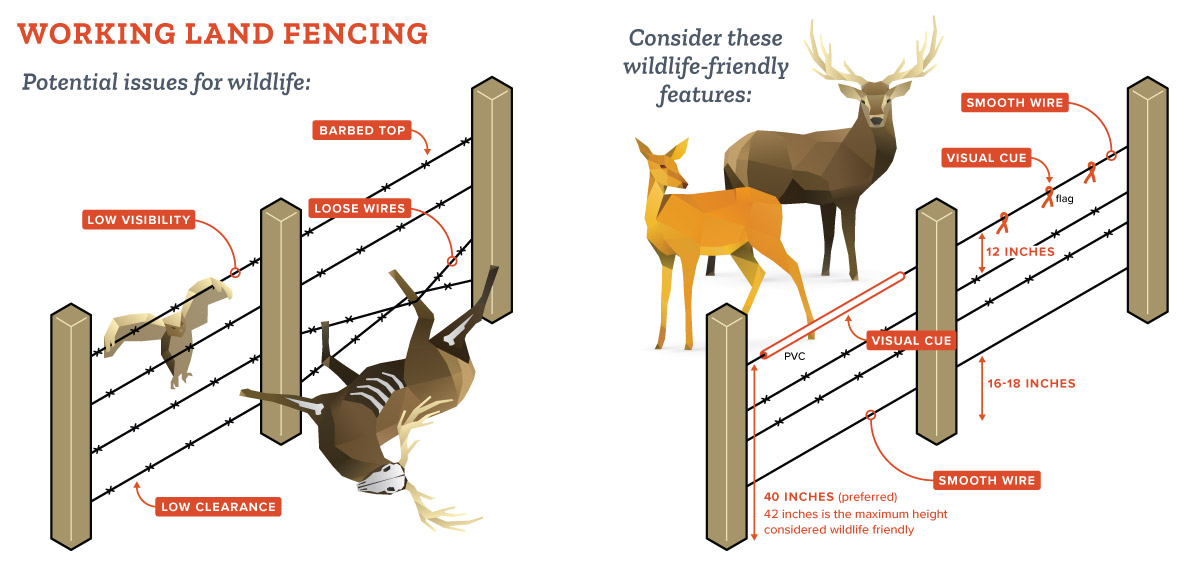
She said an easy way for landowners to help wildlife — both birds and big game — from getting stuck and injured in fencing is to make the fencing more visible.
(Graphic courtesy: Utah Division of Wildlife Resources)
DWR recommends wildlife-friendly fences
In addition to adding visibility markers to fences, the DWR also recommends several other steps landowners can take to make their fences more friendly for animals.
“Fences can be designed to encourage historical migration patterns and wildlife movement on both a large and small scale,” Division officials published on their website. “Whether on an expansive ranch or in an urban backyard, adaptive fencing can keep wildlife safe and meet the goals of landowners.”
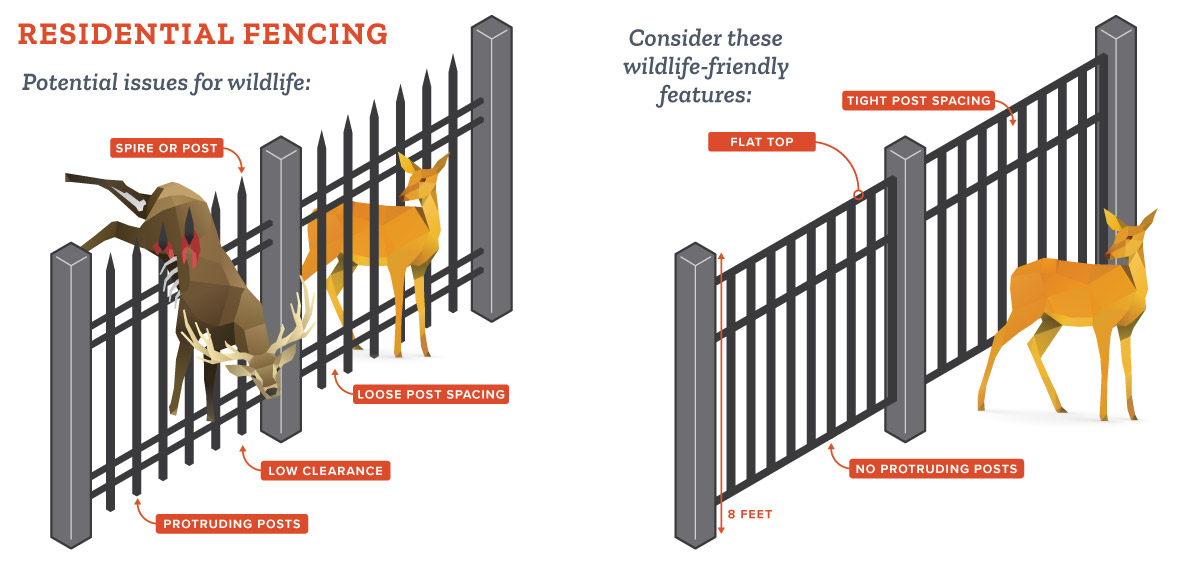
For residential properties in the wildland-urban interface, DWR recommends homeowners:
- Build the fence to at least 8 feet tall
- Include a flat top
- Add the posts so there’s not enough room for an animal to pass through
- Avoid protruding posts.
They say that having things like low clearances at the bottom and spikes on the top can create real harm for animals.
(Graphic courtesy: Utah Division of Wildlife Resources)
They also recommend that homeowners only fence the portions of the property that need protecting — like a play yard or a garden — instead of the entire property.
For working land – like pastures or farms – DWR recommends that landowners:
- add smooth wire; not wire with spikes or barbs,
- add visual cues like flags or PVC pipe to the wires,
- make sure the fence is 40 inches tall, and
- place the lowest wire 16-18 inches off the ground so small animals like rabbits and foxes can still pass through.


The DWR also recommends that each wire sits roughly 12 inches apart so that animals passing through have less chance of tangling a leg or hoof.
If an animal does become trapped in one of your fences, Larsen says it’s important to call the nearest DWR location for a trained wildlife professional to help the stuck animal or bird.
Related reading: An owl fell into a concrete mixer in southern Utah. Thanks to caregivers, its future is bright