Why some of your recyclables wind up dumped in landfills
Jul 22, 2021, 9:52 AM
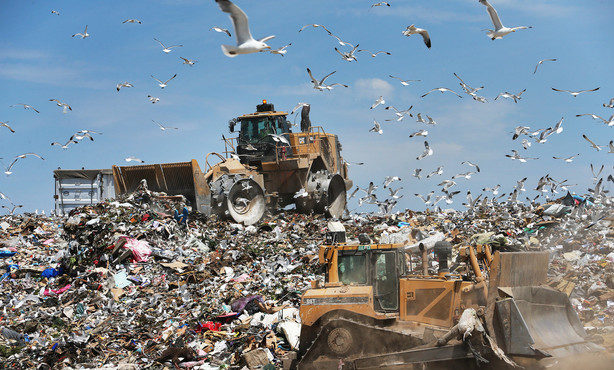

SALT LAKE CITY — When China banned imported recyclables, the United States was suddenly left with an abundance of recyclables that no one seemed to want — so the leftovers were dumped in landfills or incinerated.
China banned importing much of the world’s plastic and paper on Jan. 1. 2018, announcing that it no longer wanted to import yang laji or “foreign garbage.” After all, Beijing continues to fight its own pollution problems at home.
China’s stringent contamination standard is now 99.5 percent pure, wamu.org reported.
America increasingly dumps recyclables in landfills
In 2017, Stamford, Conn., made $95,000 by selling recyclables. However, just a year later, it paid $700,000 to have them removed. Bakersfield, Calif., once earned $65 a ton from its recyclables, but after 2018, it paid $25 a ton to get rid of them, according to The Columbia Climate School.
Beginning in 2018, China only imports recyclables considered clean and unmixed. Most US cities find that too high a bar to meet. Recyclers often reject plastic for contamination with other materials. Six times more plastic waste winds up incinerated rather than recycled, said The Columbia Climate School.
No particular place to go
As a result, many companies and individuals need new markets to take their recycling materials. Some municipalities find themselves forced to send to landfills or incinerate materials to relieve the excessive processing costs and buildup of materials. Burning trash releases pollutants, nitrogen oxides, sulfur dioxides and particulate matter, which are tiny, burnt debris fragments.
“All of a sudden, material being collected on the street doesn’t have a place to go,” said Pete Keller, vice president of recycling and sustainability at Republic Services, one of the largest waste managers in the country, as quoted by The New York Times.
Since China’s ban, about 200 tons a day of recycling material winds up at the Covanta incinerator in Chester City, Pa., just outside Philadelphia.
It is “virtually impossible to meet the stringent contamination standards established in China,” said a spokesperson for the city of Philadelphia, who added that the cost of recycling has become a “major impact on the city’s budget,” according to Wired.
Ship it out, but where?
So where do these hundreds of million of tons of excess, unwanted recycling materials go?
After the China ban, the US sent its recyclable plastic to Vietnam, Malaysia and Thailand in 2018. But when those countries rejected imported plastics, the US turned to countries with cheap labor and lax environmental rules. They include Cambodia, Bangladesh, Ghana, Laos, Ethiopia, Kenya and Senegal.
Today, the average American generates about 4.5 pounds of waste each day, of that, 1.5 pounds is recycled — about 33%, according to wamu.org.
According to the EPA, of the 267.8 million tons of municipal solid waste generated by Americans in 2017, only 94.2 million tons wound up either recycled or composted. That adds up to about 35%.
People tend to optimistically place many items in recycling bins that do not qualify for recycling. They include plastic straws and bags (plastic bags tangle and clog recycling sorting machines), utensils, yogurt and takeout containers. They end up burned, dumped in landfills or washed out to sea.
Related:
- What? That’s not recyclable? But I thought . . . You thought wrong
- Glass recycling comes to southern Davis County in form of monthly pickup