Flip Your Strip: How to make your park strip a water-wise wonderland
Jun 3, 2026, 6:14 PM | Updated: 6:18 pm

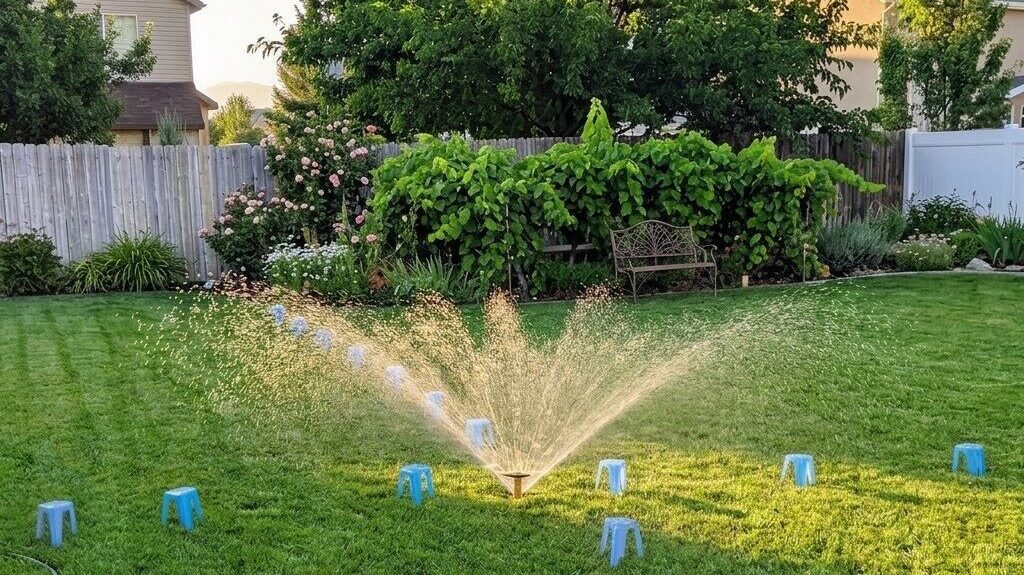
With concerns about the Great Salt Lake at an all-time high, Utah Water Savers is on a mission to help grow the flow to Utah's lakes by slowing the flow to homeowners' lawns. (David Een, KSL)
(David Een, KSL)

SALT LAKE CITY — With concerns about the Great Salt Lake at an all-time high, Utah Water Savers is on a mission to help grow the flow to Utah’s lakes by slowing the flow to homeowners’ lawns.
Did you know that up to 70% of residential water use comes from lawn irrigation? By replacing their park strip with water-wise landscaping, homeowners can save 50-66% of the water they use in their lawn. Utah Water Savers and the Slow the Flow program can help homeowners save money and water by assisting in replacing their grass with water-wise landscaping.
“Park strips are one of the hardest areas of our yards to keep looking good. They’re hot, narrow, and hard to water,” JVWCD’s Flip Your Strip program’s website states. “When lawn is used in a park strip it is difficult to keep green and looking good. With overhead spray, we often end up watering the sidewalk and street more than the park strip! Rather than fight a losing battle, ‘Flip Your Strip’ into something more manageable and water thrifty.”
The Flip the Strip program does not encourage replacing lawns in parking strips with gravel, since that contributes to urban heating. Instead, the program encourages planting things like cat mint, monardas, whirling butterflies, hummingbird mint, rondo penstemon, and other plants to help cool, beautify and attract pollinators to lawns and gardens.
To be eligible for the program:
-
The applicant must live in a qualifying city. Click here to see eligible cities.
-
Lawn removal projects must have living, maintained grass at the time of the applying for the program and for the first project inspection. Dormant lawn is eligible, neglected lawn is not.
-
Work on the landscaping project must not start until after the conservation technician has conducted an in-person or virtual inspection of the project. This inspection is arranged through the submission of the application.
As homeowners work though the project, they should make sure to keep track of the expenses of the replacement so that Utah Water Savers can reimburse them accordingly.
As homeowners “flip their strips,” they are slowing the flow to their yards and helping grow the flow to the Great Salt Lake.
Related: ‘This is our water’: Hundreds of Utahns rally against proposed Box Elder data center