Know your fertilizer!
Oct 4, 2025, 10:11 PM | Updated: Apr 22, 2026, 3:14 pm
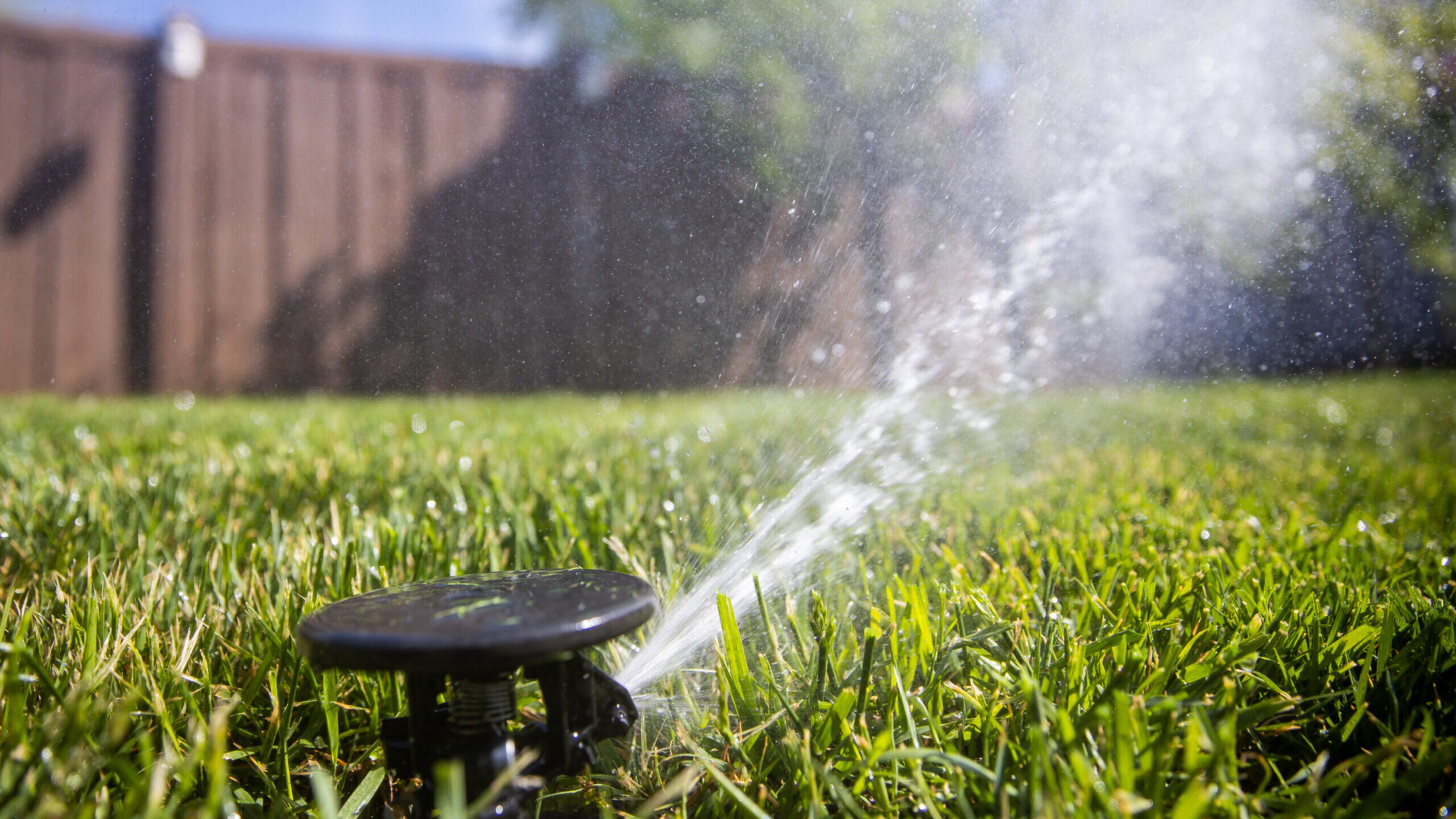
Sprinklers water a lawn in Salt Lake City on Friday, May 7, 2021. (Spenser Heaps/Deseret News)
(Spenser Heaps/Deseret News)

SALT LAKE CITY — When you go out and buy a big bag of fertilizer, you may notice a series of numbers written on the front, like 15-15-15 or 25-5-10. These numbers aren’t just secret plant code, they’re the percentages of nitrogen, phosphorus and potassium! These are the big three elements that help your plants grow.
Nitrogen:
Nitrogen is the most important of the three, plants use it to create energy and move nutrients throughout their system. The two most common sources of nitrogen in store-bought fertilizers are Urea in liquid fertilizers and Ammonium sulfate in granular types. Urea, which can also be present in granular fertilizer, absorbs quickly and is more concentrated, making it very easy to overapply. Ammonium Sulfate releases more steadily and remains in the soil for a bit longer. The best choice between the two depends on your plants and how quickly you want results.
Phosphorous:
Phosphorus is all about roots and flowers. It helps plants establish strong root systems and is a key element to setting buds, flowers and fruits.
Potassium:
Potassium is important for overall plant health. It enhances disease resistance, improves water use efficiency and fortifies the plant against stresses such as heat and drought.
What’s Inside?
Now that we know what all the elements do, let’s look at a 20 lb. bag of 15-15-15, for example. 15% of 20 lbs. is 3 lbs., which means there are 3 lbs. of Nitrogen, phosphorus, and Potassium each. Obviously, that doesn’t even come close to 20 lbs., so what makes up the other 11? That’s molecules! Oxygen, Carbon, Hydrogen, and a smattering of different elements make up the rest of the bag.
How much should I apply?
Generally, the amount is measured only by the amount of nitrogen being applied. For lawns, the recommended amount is approximately one pound of Nitrogen per 1,000 square feet of lawn per application. If you have a bag of 15-15-15, with three pounds of Nitrogen, that means it will cover 3,000 square feet of lawn. To ensure proper application and optimal results, take a moment to measure the area of turfgrass in your yard. Additionally, if your spreader is listed in the instructions that came with the bag you purchased, it will specify the setting on the spreader to use for application.
Let’s have a look at another example. If you bought a 20-lb bag of 25-5-10, some quick math will tell us that this bag contains 5 lbs. of Nitrogen. Using the recommended amount in 1,000 square feet, we would have about 5,000 square feet to work with.
Your yard, your fertilizer:
There is no single fertilizer that is perfect for every lawn, because every lawn is different. The key to knowing the right fertilizer for you is testing your soil. Don’t worry, you can put your lab coat and beakers away. Utah State University, BYU, and some private labs will tell you exactly how much phosphorus and potassium are in your soil. Additionally, whether you’re buying national or store-brand fertilizer, as long as the numbers are the same or similar, they will all match your needs. Some of the pricier fertilizers might even have a slow-release coating that makes them last longer.
Interestingly, numerous soil tests in Utah consistently show that our soil often already has the right amount of phosphorus and potassium. This means that a nitrogen-only fertilizer like a 20-0-0 will do just fine, but you can’t know for sure until you’ve had your soil tested.
How often should I fertilize?
For most lawns, twice a year, once in spring and once in fall, will be fine. But lawns that receive heavy use need three or even four throughout the growing season. Other areas of the garden, like flower beds, however, typically only need one. Trees and shrubs usually only require fertilizer in the spring if they appear unhealthy or are growing very slowly. If you’re growing veggies, USU Extension has crop-specific fact sheets and tips, including fertilization, to help you maximize your harvest. You can access those for free, anytime, online.