The most adorable formidable predator: Hogle Zoo welcomes new sand cat kitten
Jul 14, 2026, 10:07 AM | Updated: 3:10 pm
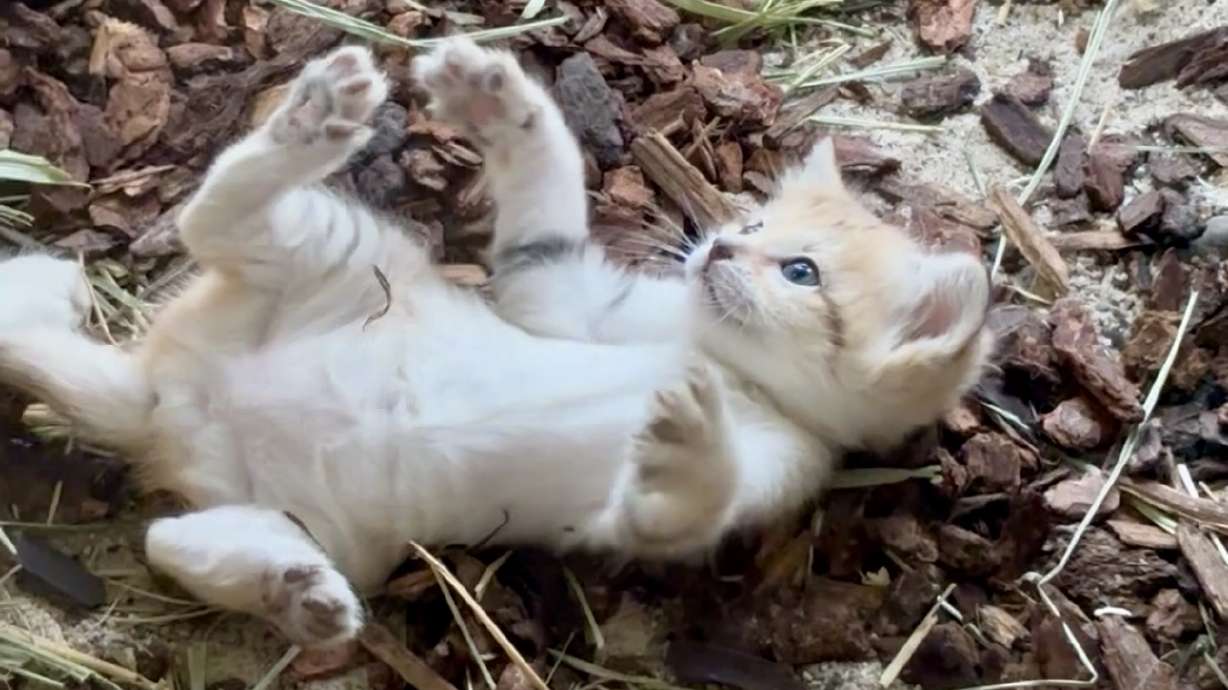
Utah's Hogle Zoo announced its sand cat Cleo gave birth to a healthy kitten in June. (Utah's Hogle Zoo)
(Utah's Hogle Zoo)
SALT LAKE CITY — The newest resident at Utah’s Hogle Zoo is sure to steal the hearts of many with its adorably fuzzy appearance.
Sand cats Cleo and Asim became first-time parents on June 2 when Cleo gave birth to a healthy kitten. The kitten hasn’t been named yet as animal caretakers are still determining whether it is a boy or girl.
Other animal news: Great Pyrenees dies of heat exhaustion while hiking in Kane County
Sand cats have “incredibly sensitive ears” they use to detect underground movements of potential prey. Because of this, the zoo is asking guests to speak in lower voices when they visit the cats that are now available to see in their habitat in the small animal building.
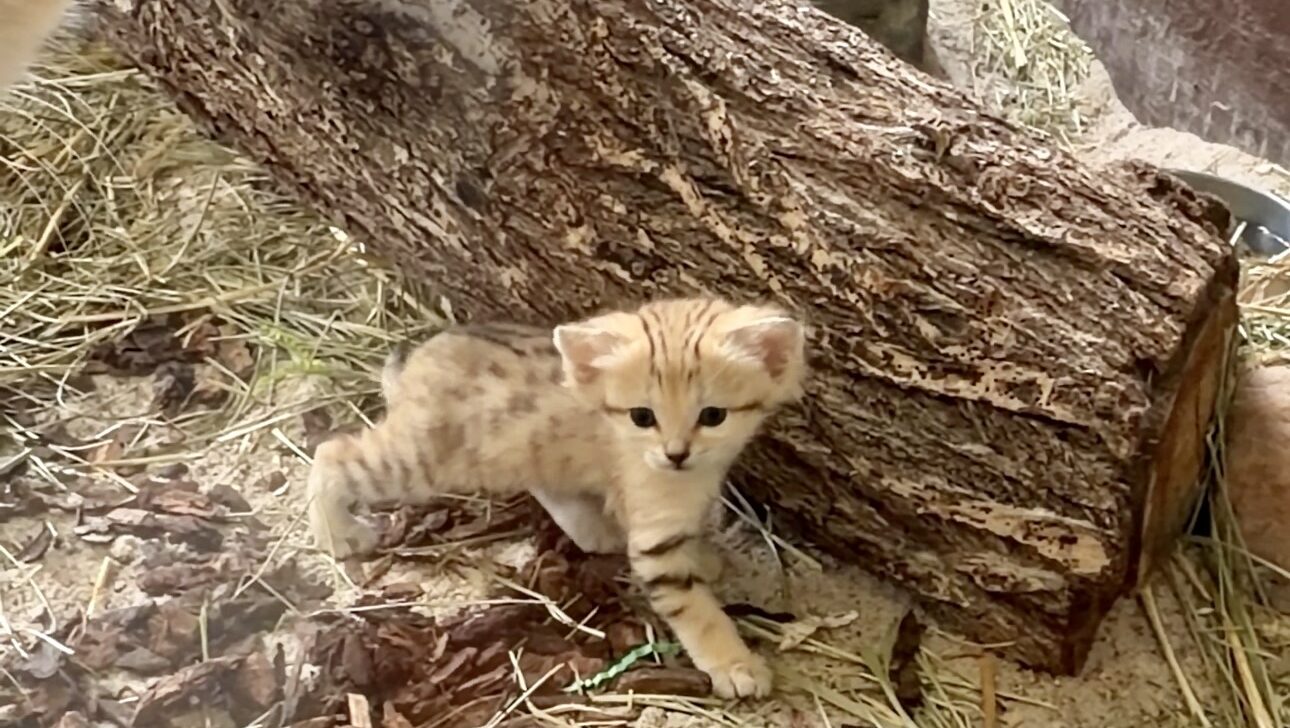
Utah’s Hogle Zoo announced its sand cat, Cleo, gave birth to a healthy kitten in June. (Photo credit: Utah’s Hogle Zoo)
“Please channel your inner desert cat and speak in a quiet whisper when you visit. Your soft, respectful voices are the perfect gift to help Cleo and her kitten feel safe, cozy and right at home,” the zoo said.
Cleo arrived at the Hogle Zoo in May 2025 on a breeding recommending from the Association of Zoos and Aquariums.
“Cleo is a fairly laid-back sand cat who loves to play and enjoys a good nap spot. She’s curious and seems content to go with the flow,” animal care supervisor Brittany Wildman said. “Her laid-back approach has served her well as a first-time mom, helping her navigate the unknowns of parenthood. She is a very attentive mother and can frequently be seen grooming her kitten and closely supervising playtime.”
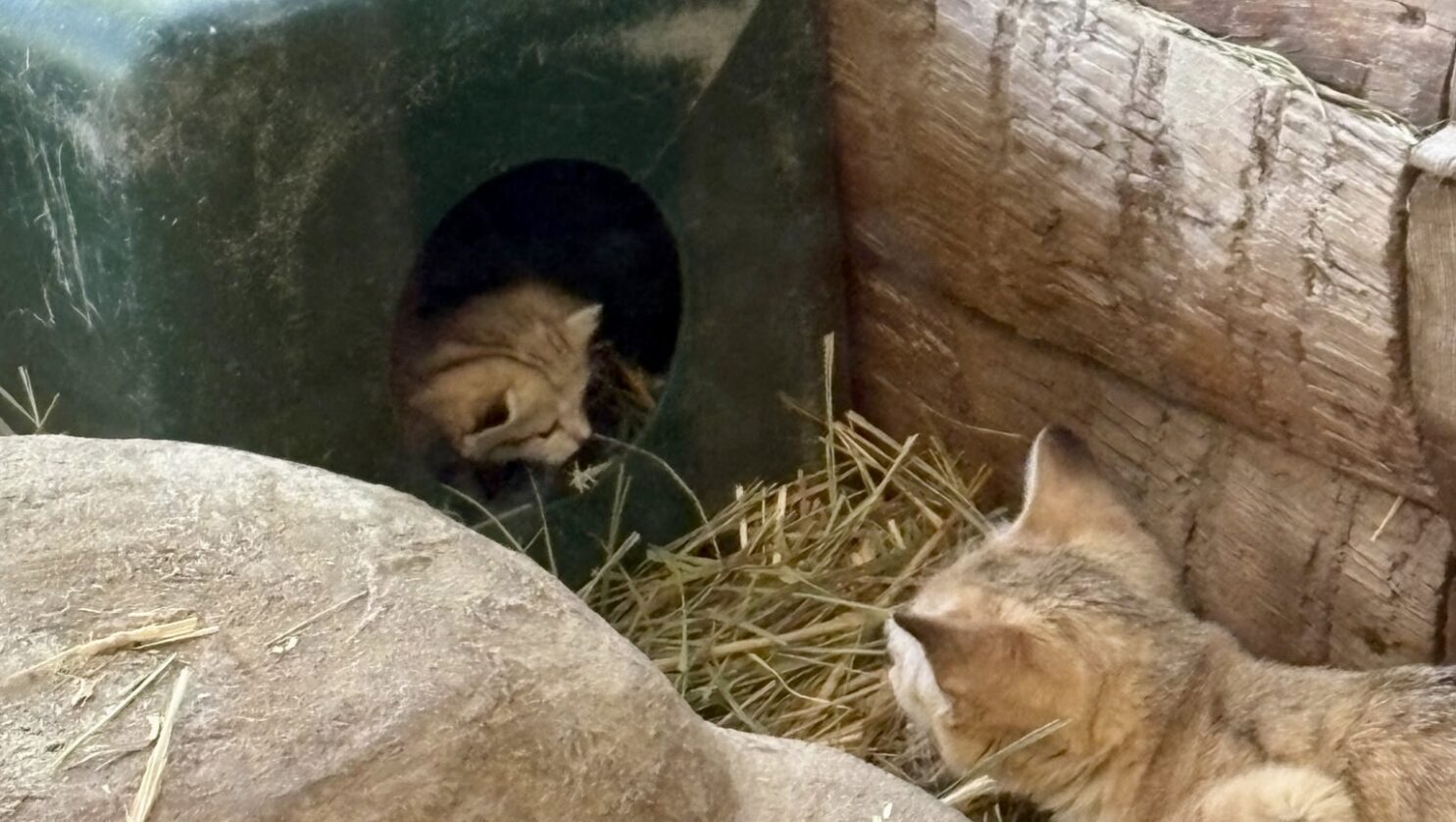
Cleo the sand cat with her kitten at Utah’s Hogle Zoo. (Photo credit: Utah’s Hogle Zoo)
Sand cats are adapted for life in dry, arid regions and are commonly found in Africa’s Sahara Desert, the Arabian Peninsula and parts of central Asia.
Sand cats are one of the desert’s most formidable predators, the zoo said. The fearless hunters routinely capture and eat small rodents, birds, reptiles and even venomous snakes.
“These small but resilient cats are built for extremes. In their natural habitat, daytime surface temperatures can soar to 124 degrees and drop to near freezing at night. Sand cats avoid these extremes by retreating to burrows during the hottest parts of the day and emerging at night to hunt,” the zoo said.