Judge orders Legislature to redraw Utah’s congressional maps before next year’s midterms
Aug 25, 2025, 8:40 PM | Updated: Aug 27, 2025, 7:10 pm
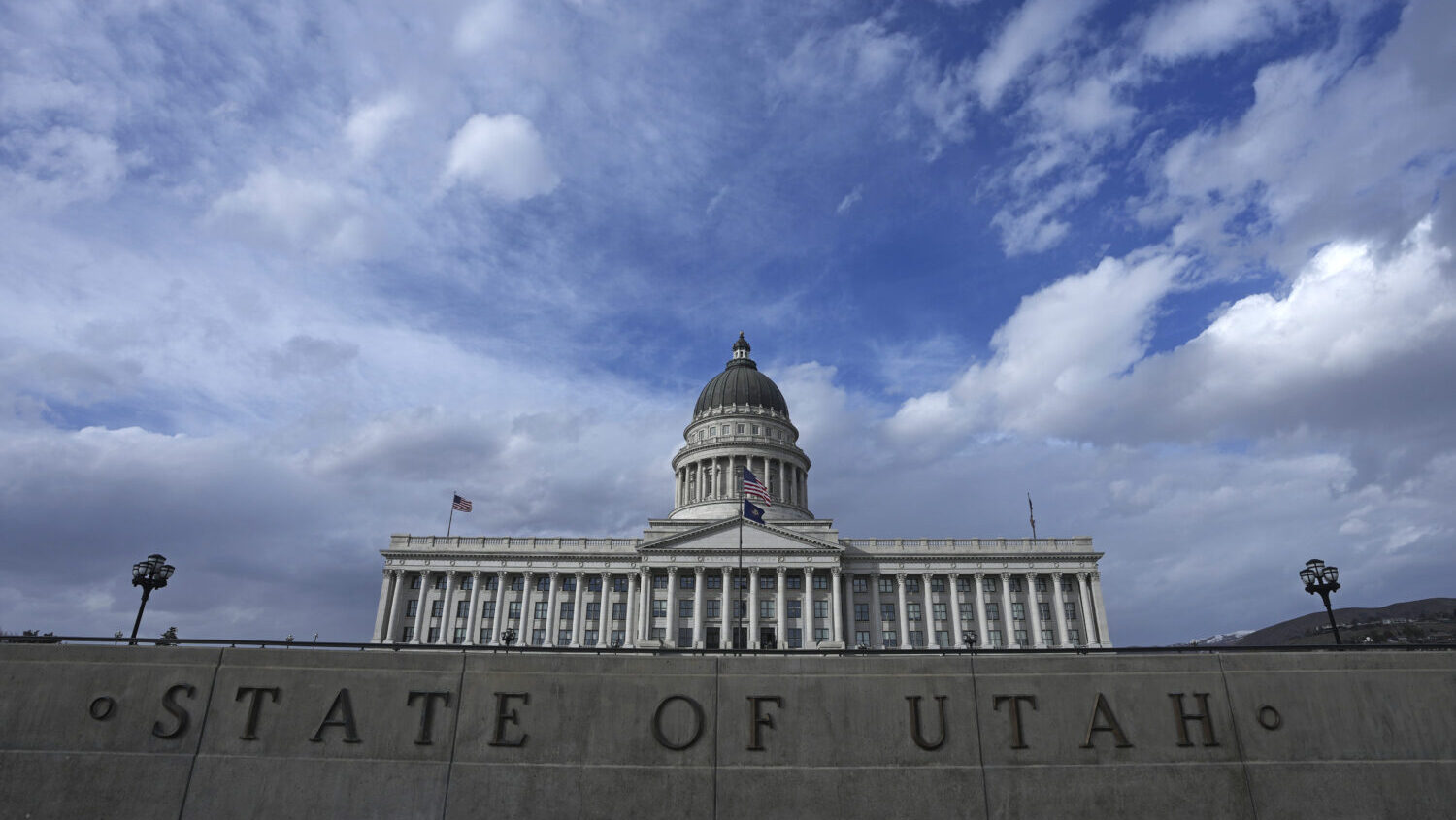
FILE - The Utah State Capitol is viewed during the final day of the Utah Legislature, March 1, 2024, in Salt Lake City. (Rick Bowmer/Associated Press)
(Rick Bowmer/Associated Press)
SALT LAKE CITY — More than a year after the Utah Supreme Court said lawmakers overreached by changing a ballot initiative on redistricting, a lower court judge ruled Monday that the current maps can’t be used “in any future elections” and gave lawmakers 30 days to enact new political boundaries that comply with the initiative creating an independent redistricting commission.
The decision comes amid an ongoing national debate about gerrymandering, as Texas Republicans are poised to redraw the state’s maps in an effort to pick up more Republican seats going into the 2026 midterms, and California has taken steps to retaliate.
In a 76-page ruling issued Monday evening, Third District Judge Dianna Gibson wrote that Proposition 4 is the law of the land in Utah, despite a 2021 law altering it.
“Here, allowing HB2004, the product of an unconstitutional act, to be used in the upcoming 2026 election is harm that is irreparable,” Gibson wrote, referring to the law that created the current political boundaries. “There is no other remedy, monetary or otherwise, that could rectify the violation of the people’s fundamental right to alter or reform their government. In fact, by not enjoining it, this court would be sanctioning it.”
Gibson sided with plaintiffs, including several voters along with the League of Women Voters of Utah and Mormon Women for Ethical Government, who had argued that changing the initiative violated the rights of Utah voters. The judge issued a permanent injunction on the maps, without which she wrote: “another election cycle will proceed in defiance of the will of the people, as expressed in Proposition 4.”
“An injunction against HB2004 is in the public interest because it is the only remedy that will enforce Proposition 4 going forward and prevent the continued violation of the people’s constitutional rights,” she wrote.
The decision is years in the making: Plaintiffs first sued the Legislature in 2022, alleging that lawmakers violated Utahn’s rights to participate in free elections by ignoring voting maps recommended by an independent redistricting commission. That commission was created through the voter-approved Proposition 4 in 2018, but the Legislature watered down the commission’s role to an advisory one two years later and adopted its own set of maps in 2021.
The current map splits Salt Lake County, the state’s most populous county, between Utah’s four congressional districts, eliminating what was a somewhat competitive district in favor of four districts that each skew heavily Republican.
Because the state Constitution gives “the people of the state of Utah” equal lawmaking power to the state Legislature, the plaintiffs said, the Legislature acted unconstitutionally when it changed the proposition.
The state Supreme Court ruled last summer that lawmakers overreached by changing the initiative, with Justice Paige Petersen writing that “constitutional provisions limit the Legislature’s authority to amend or repeal an initiative that reforms the government.”
She later added that the Alter or Reform Clause of the Utah Constitution “demonstrates that the people’s exercise of their right to reform the government through an initiative is constitutionally protected from government infringement, including legislative amendment or repeal that impairs the intended reform.”
The high court didn’t rule on the merits of the case, however, instead sending it back down to the 3rd District for litigation. Monday’s ruling is likely to be appealed and could end up in front of the Supreme Court before all is said and done.
This story is breaking and will be updated.