Hitting Utah’s waters? Your paddleboard could cost you if it’s not certified
Jul 8, 2025, 11:01 AM | Updated: Jul 9, 2025, 12:26 pm
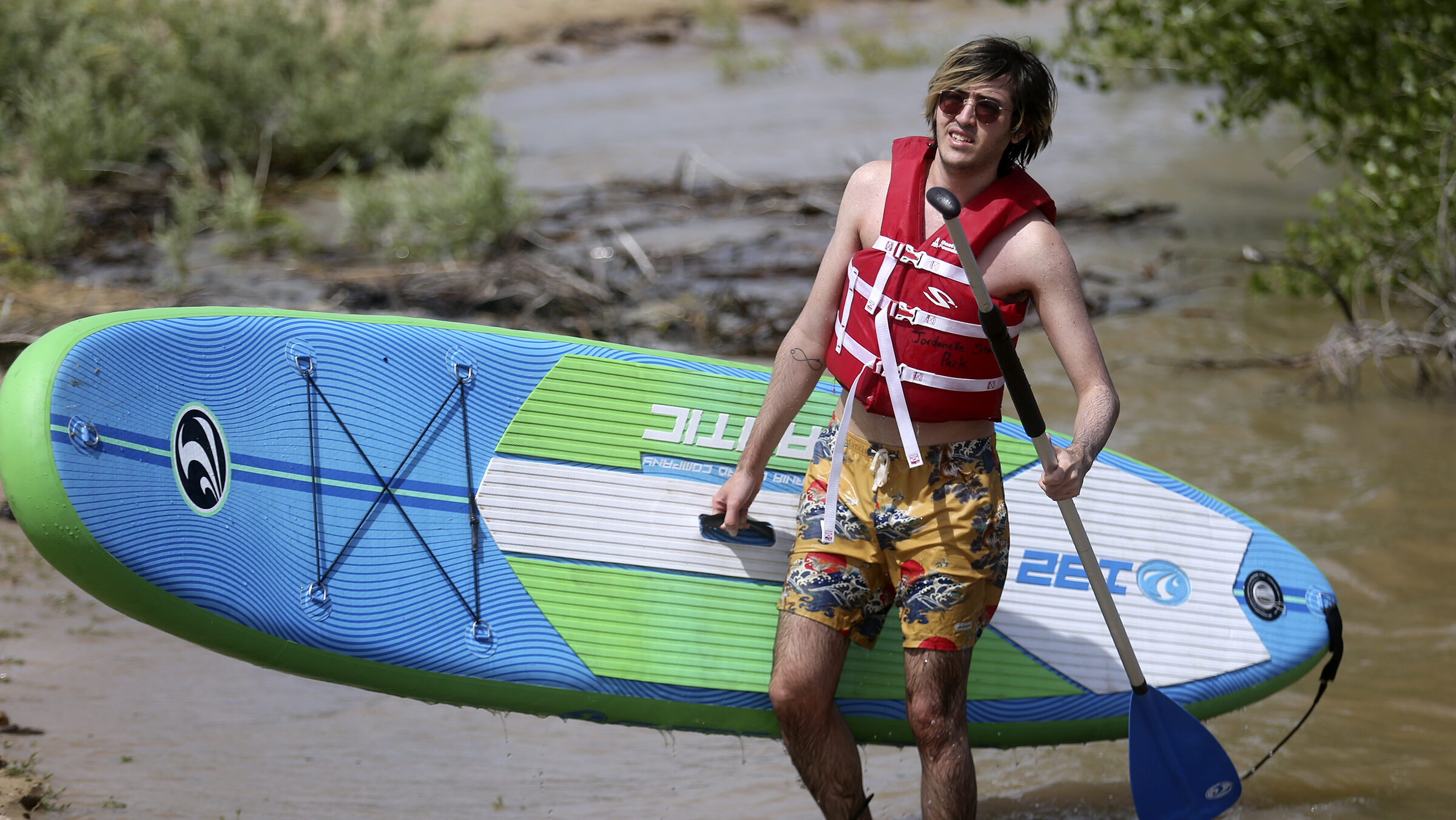
Brady Fernando carries a paddleboard after using it at Jordanelle State Park on Wednesday, June 26, 2019. (Kristin Murphy/Deseret News)
(Kristin Murphy/Deseret News)

SALT LAKE CITY — Each year, the Utah Division of Wildlife Resources requires boaters to take the mussel-aware boater course.
“That applies to all the watercraft; paddleboards, kayaks, canoes,” said Utah Department of Natural Resources Law Enforcement Aquatic Invasive Species Statewide Operations, Lt. Bruce Johnson.
Related: Algal blooms have started growing in Utah’s bodies of water, here’s how to stay safe
The boater course is free and takes about 30 minutes. Once completed, boaters must keep their certificate of completion on hand. It can be a physical copy or even a screenshot. Failure to show their certificate could result in a ticket.
Paddleboards are watercraft
This is all in an effort to prevent invasive species. Most people only think about motorized boats spreading invasive species, but any watercraft can carry them. The DWR’s saying is: “If it floats, it’s a boat.”
“It can lead up to, potentially, a citation and a fine,” Johnson said.
Johnson says the fine is usually less than a typical traffic ticket, but said most people think any amount is too much to have to pay. Plus, it’s an inconvenience to deal with.
“Our citations go to the court system, similar to if you received a traffic citation,” Johnson said.
How is the search for invasive species going?
When it comes to invasive species, inspections show Utah is heading in the right direction. Over the Fourth of July weekend, the DWR inspected 10,301 boats. Out of those inspected, they only had to perform 256 decontaminations. According to Johnson, that’s less than he was expecting.
“I think we’re doing good because our boaters are doing such a good job of paying attention and looking to protect their resources. That’s our number 1 goal,” Johnson said.
Invasive species like quagga mussels and Eurasian Watermilfoil can negatively affect aquatic ecosystems, clog boat engines and irrigation pipes, and are very expensive to remove.