400-foot buildings on the west side? What the Miller Company wants in Fairpark
Oct 29, 2024, 8:00 PM

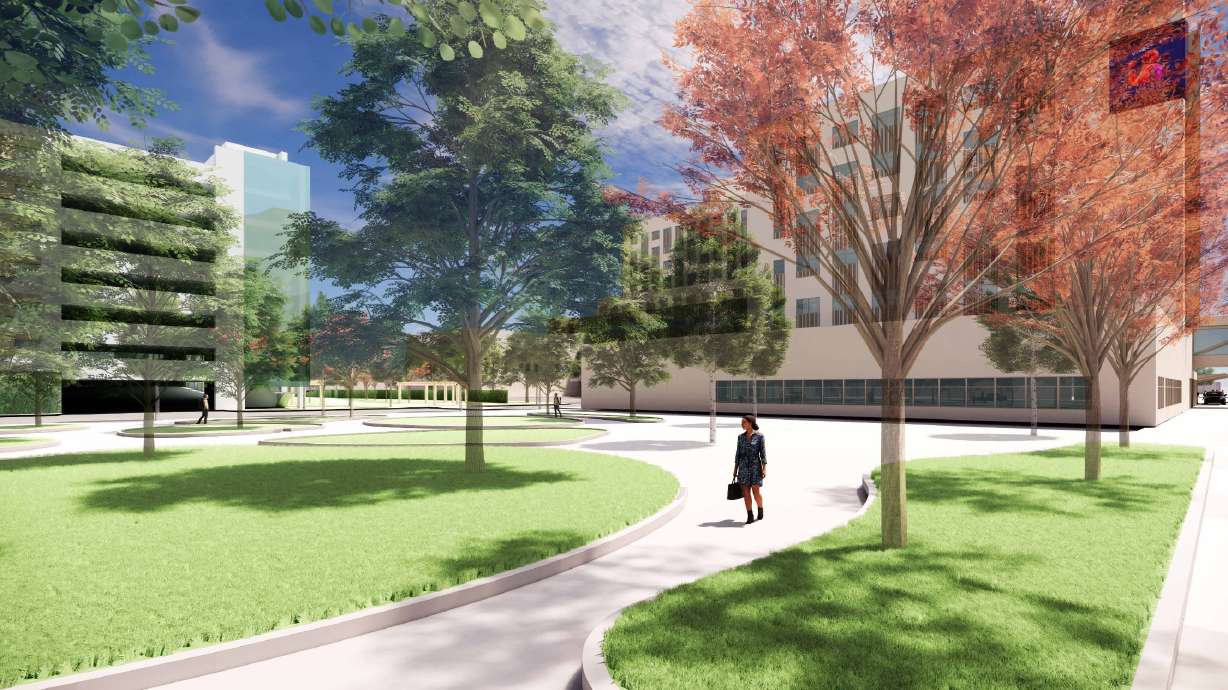
A rendering of the Power District that the Larry H. Miller Company and Miller family unveiled on Feb. 15. The company is seeking a rezoning of 93 acres in the Fairpark neighborhood, but not everyone is a fan of the idea. (Larry H. Miller Company)
(Larry H. Miller Company)
SALT LAKE CITY — Major changes to downtown Salt Lake City could start taking shape as early as next year after city leaders approved a complex plan tied to Smith Entertainment Group’s acquisition of a National Hockey League franchise.
However, city leaders are now tasked with reaching similar agreements for plans that would drastically change its west side and potentially draw in Major League Baseball.
Related: West Jordan’s 8600 S. bridge opening delayed until early next year
The Salt Lake City Planning Commission voted 7-1 last week to offer a positive recommendation of the latest plan, but not before it sifted through arguments and concerns that prompted the board to offer a negative recommendation of downtown revitalization rezoning plans earlier this year.
A major land change
Utah Gov. Spencer Cox signed HB562 in March, creating the Utah Fairpark Area Investment and Restoration District, similar to the downtown revitalization zone surrounding the Delta Center. It quickly took a back seat to the downtown plans when Utah landed an NHL team shortly after the legislative session wrapped.
The Larry H. Miller Company, which has acquired a large chunk of land in the area and advocated for the bill, submitted a zoning application to Salt Lake City that would create the Jordan River Fairpark District within the forthcoming Power District.
The zone would cover 93 acres between the Jordan River and Redwood Road and North Temple to I-15, where past Rocky Mountain Power power operations existed. Buildings up to 400 feet in height would be allowed in the zone as long as they follow proper airspace mitigations included in a study expected to be completed next month.
“Ultimately, building height will end up being dictated by the FAA (Federal Aviation Administration),” said Amanda Roman, an urban planner for Salt Lake City, during a presentation before the vote.
Read the full story from KSL.com here.