New study questions the effectiveness of colonoscopies
Oct 10, 2022, 11:53 AM
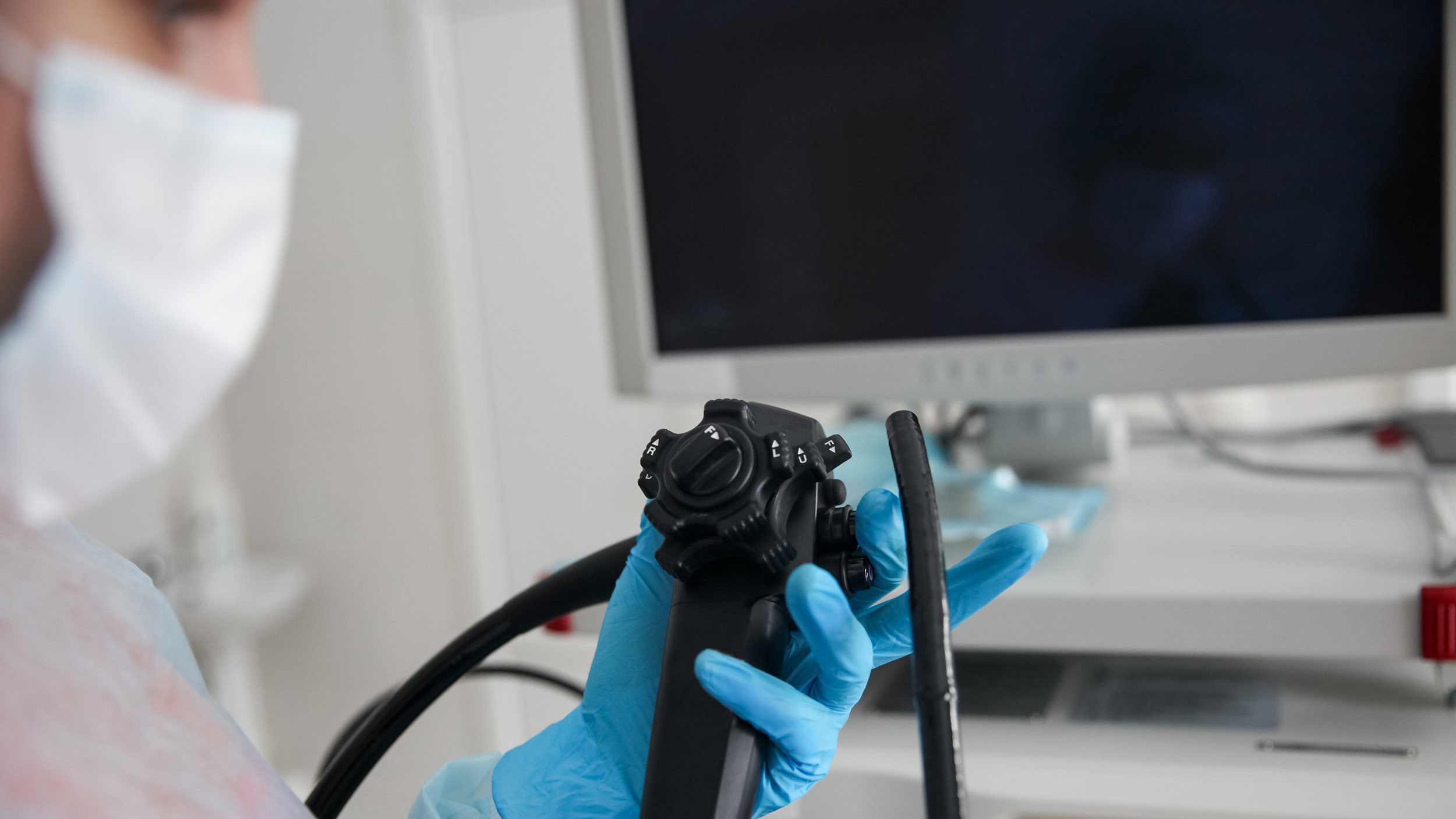
A new study questions the effectiveness of colonoscopies for cancer screening. Pictured is an endoscopist with an endoscope in his hands. (Adobe Stock)
(Adobe Stock)
(CNN) — Colonoscopies are a dreaded rite of passage for many middle-age adults. The promise has been that if you endure the awkwardness and invasiveness of having a camera travel the length of your large intestine once every decade after age 45, you have the best chance of catching — and perhaps preventing — colorectal cancer. It’s the second most common cause of cancer death in the United States. Some 15 million colonoscopies are performed in the US each year.
Now, a landmark study suggests the benefits of colonoscopies for cancer screening may be overestimated.
The study marks the first time colonoscopies have been compared head-to-head to no cancer screening in a randomized trial. The study found only meager benefits for the group of people invited to get the procedure: an 18% lower risk of getting colorectal cancer, and no significant reduction in the risk of cancer death. It was published Sunday in The New England Journal of Medicine.
Study researcher Dr. Michael Bretthauer, a gastroenterologist who leads the clinical effectiveness group at the University of Oslo in Norway, said he found the results disappointing.
But as a researcher, he has to follow the science, “so I think we have to embrace it,” he said. “And we may have oversold the message for the last 10 years or so, and we have to wind it back a little.”
Other experts say that as good as this study was, it has important limitations, and these results shouldn’t deter people from getting colonoscopies.
“I think it’s just hard to know the value of a screening test when the majority of people in the screening didn’t get it done,” said Dr. William Dahut, chief scientific officer at the American Cancer Society, who was not involved in the study.
Less than half of people invited to get a colonoscopy in the study — just 42% — actually got one.
When the study authors restricted the results to the people who actually received colonoscopies — about 12,000 out of the more than 28,000 who were invited to do so — the procedure was found to be more effective. It reduced the risk of colorectal cancer by 31% and cut the risk of dying of that cancer by 50%.
Bretthauer said the true benefits of colonoscopy probably lie somewhere in the middle. He said he thinks of the results of the full study — including people who did and didn’t get colonoscopies after they were invited — as the minimum amount of benefit colonoscopies provide to a screened population. He thinks of the results from the subset of people who actually got the test as the maximum benefit people could expect from the procedure.
Based on his results, then, he expects that screening colonoscopy probably reduces a person’s chances of colorectal cancer by 18% to 31%, and their risk of death from 0% to as much as 50%.
But, he said, even 50% is “on the low end of what I think everybody thought it would be.”
Other studies have estimated larger benefits for colonoscopies, reporting that these procedures could reduce the risk of dying of colorectal cancer by as much as 68%.
The first randomized trial of colonoscopy
The NordICC study, which stands for Northern-European Initiative on Colon Cancer, included more 84,000 men and women ages 55 to 64 from Poland, Norway and Sweden. None had gotten a colonoscopy before. The participants were randomly invited to have a screening colonoscopy between June 2009 and June 2014, or they were followed for the study without getting screened.
In the 10 years after enrollment, the group invited to get colonoscopies had an 18% lower risk of colorectal cancers than the group that wasn’t screened. Overall, the group invited to screening also had a small reduction in their risk of death from colorectal cancer, but that difference was not statistically significant — meaning it could simply be due to chance.
Before the NordiCC trial, the benefits of colonoscopies had been measured by observational studies that looked back in time to compare how often colorectal cancer is diagnosed in people who received colonoscopies versus those who did not.
These studies can be subject to bias, however, so scientists look to randomized trials that blindly sort people into two groups: those who are assigned to get an intervention and those who are not. These studies then follow both groups forward in time to see if there are differences. Those studies have been difficult to do for colon cancer, which can be slow-growing and may take years to be diagnosed.
The researchers say they’re going to continue to follow participants for another five years. It could be that because colon cancers can be slow-growing, more time will help refine their results and may show bigger benefits for colonoscopy screening.
Results need careful interpretation
Normally, those kinds of disappointing results from such a large, strong study would be considered definitive enough to change medical practice.
But this study has some limitations that experts say need to be sorted out before doctors and patients give up on colonoscopies for cancer screening.
“I don’t think anyone should be canceling their colonoscopy,” said Dr. Jason Dominitz, the national director of gastroenterology for the Veterans Health Administration.
“We know that colon cancer screening works,” said Dominitiz, who also co-authored an editorial that ran alongside the study.
There are several options for colorectal cancer screening. Those include stool tests that check for blood or cancer cells and a test called sigmoidoscopy, which looks only at the lower part of the colon. Both have been shown to reduce both cancer incidence and colorectal cancer deaths.
“Those other tests work through colonoscopy,” Dominitz said. “They identify people at high risk who would benefit from colonoscopy, then the colonoscopy is done and removes polyps, for example, that prevents the individual from getting colon cancer in the first place, or it identifies colon cancer at a treatable stage.”
Polyps are benign growths that can turn into cancers. They are typically removed when identified during a screening colonoscopy, which can lower a person’s risk of colorectal cancer in the future.
Studies are underway in Spain and the US testing colonoscopy head-to-head against stool tests to see which is most effective.
The best way to screen for colorectal cancer
Dominitz said this randomized controlled trial was a test of advice as much as it was a test of the value of colonoscopy.
“If you ask the population to do something, how much of an impact will it have?” he said.
Overall, the study found that just inviting people to get a colonoscopy didn’t have a large beneficial impact across these countries, partly because so many people didn’t do it.
Dominitz thinks the low participation can be partly explained by the study’s setting. Colonoscopies are not as common in the countries involved in the study as they are in the United States. In Norway, he said, official colorectal cancer screening recommendations didn’t come until this past year.
“They don’t see the public service announcements. They don’t hear Katie Couric talking about getting screened for colon cancer. They don’t see the billboards in the airport and whatnot,” he said. “So an invitation to be screened in Europe is, I think, likely to be somewhat different than an invitation to be screened in the US.”
In the US, according to data from the US Centers for Disease Control and Prevention, about 1 in 5 adults between the ages of 50 and 75 have never been screened for colorectal cancer.
If you feel squeamish about getting a colonoscopy, the US Preventive Services Task Force says a variety of methods and regimens work to detect colorectal cancer. It recommends screening with tests that check for blood and/or cancer cells in stool every one to three years, a CT scan of the colon every five years, a flexible sigmoidoscopy every five years, a flexible sigmoidoscopy every 10 years paired with stool tests to check for blood annually, or a colonoscopy every 10 years.
In 2021, the task force lowered the recommended age to start routine screening for colorectal cancer from 50 to 45 because the cancer is becoming more common in younger adults.
When it comes to colorectal cancer, Dominitz said, tests can only be effective if people are willing to do them.
As proof, he points to early results from a large randomized trial from Sweden that’s testing colonoscopy, FIT testing and no screening at all.
Results collected from more than 278,000 people enrolled between March 2014 and the end of 2020 found that 35% of the group assigned to get a colonoscopy actually got one, compared with 55% who were assigned to the stool test group.
To date, slightly more cancers have been detected in the group assigned to stool testing than in the group assigned to get a colonoscopy — “so participation with screening really is key!” Dominitz said.
The-CNN-Wire
™ & © 2022 Cable News Network, Inc., a Warner Bros. Discovery Company. All rights reserved.
Related: University of Utah Health app MyChart now available in Spanish