Fall weeds: What pops up and how to get rid of them
Oct 11, 2024, 9:00 AM | Updated: Oct 14, 2024, 4:46 pm

Fall is a great time to start taking control of most perennial weeds that have been popping up in your yards. (Taun Beddes/KSL Greenhouse)
(Taun Beddes/KSL Greenhouse)
SALT LAKE CITY — As we head into fall, it’s a great time to take control of most perennial weeds that have been troubling our yards. Since lawns comprise a significant portion of most yards, keeping your lawn healthy is crucial, and you play an important role in this.
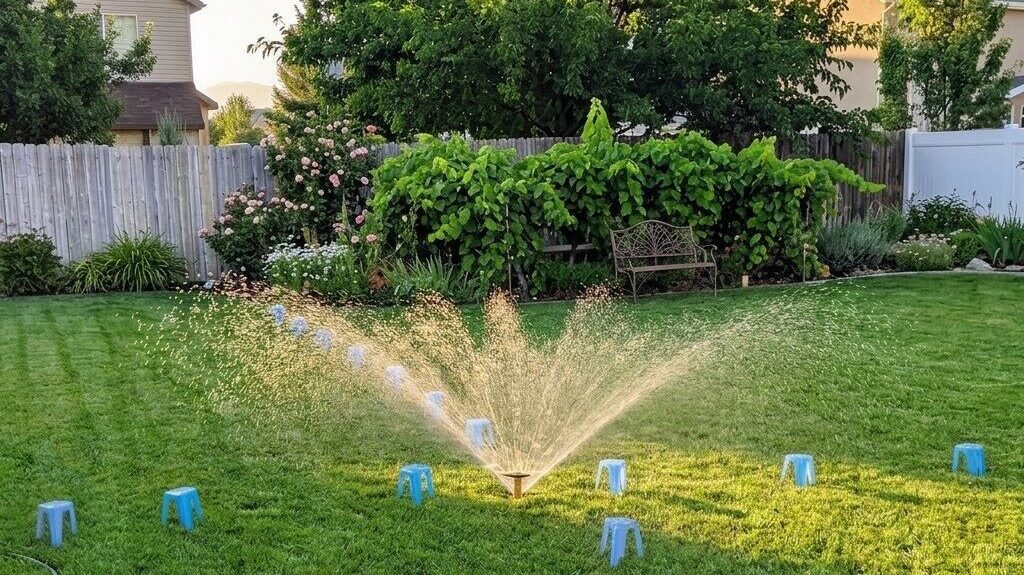
Most weeds are unable to outcompete healthy turf. In lawns, where weeds are prevalent, you should investigate why the weeds are there. Explore whether the irrigation system works well by checking for leaks and clogged sprinkler heads.
Under-fertilized lawns are more prone to weed infestations, so it would help if you fertilize it once or twice a year. Also, make sure to set your lawn mower’s mowing height to 2.5 to 3 inches high.
Field bindweed (morning glory)
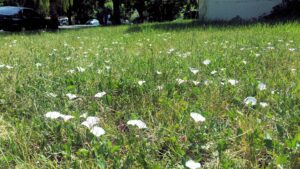
Bindweed is quite drought-hardy. Fortunately, Quinclorac, a highly effective weed control agent, is effective in controlling bindweed. Lawn weed killers labeled to kill crabgrass have Quinclorac in them. Do not use lawn weed killers in your flowerbeds or garden.
Reference the KSL Greenhouse Show’s YouTube channel for further tips on controlling bindweed in flowerbeds.
Common mallow
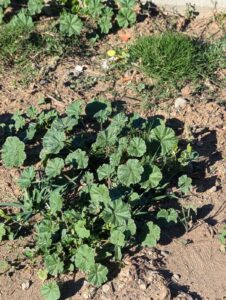
Common mallow is found in lawns, flowerbeds, and vegetable gardens. Its deep taproot allows it to thrive in areas that receive a diminished amount of water.
Younger plants can be killed by hand pulling, and older plants can be killed by severing the taproot with a dandelion digger or a Japanese gardening knife 3 to 4 inches below the soil surface. Glyphosate and lawn weed killers also control it.
Dandelions
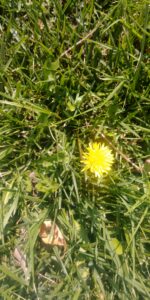
Dandelions are often considered a weed but can be tolerated at low levels in lawns. In the spring, they are a valuable food source for pollinators and are edible for humans.
A dandelion digger easily kills it by severing the taproot. Otherwise, any liquid lawn weed killer will do the job. Even though we commonly spray them in the spring, it is better to spray them in the fall.
Whitetop (hoary cress)
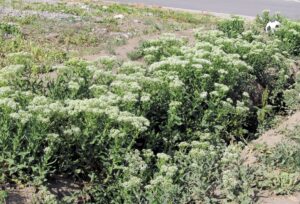
Whitetop is noticed in the spring, with its white flowers. It spreads copiously from seed and underground runners called rhizomes. One plant can spawn dozens more from runners in one season, and a patch can spread several feet in one season.
It commonly grows in fallow fields, in the home landscape where turf is unhealthy, and in flowerbeds. Lawn weed killers containing Dicamba and 2,4-D should eliminate it from the lawn. Where appropriate, glyphosate will also control it in areas where other desirable plants are absent.
Virginia creeper
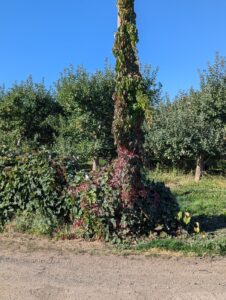
Woody vines such as seedling grapes, Boston ivy, Virginia creeper, and English ivy are used ornamentally but often overgrow the areas where they were planted. It is also common for birds to spread seeds from these, germinating and growing in places where they were not intended to. These vines can cement themselves to masonry and walls and climb almost anything.
Unfortunately, it is not easy to get rid of them. When growing along the ground, they can be sprayed with glyphosate or a good lawn weed killer. When climbing desirable plants such as other trees or walls, cut the vines near the ground and, using an inexpensive watercolor paint brush, dab concentrated weed killer on the freshly cut vines so that the herbicide can work its way into the roots. Do this in the fall, and it will likely need repeating.
Read more from the KSL Greenhouse show:
- Got green tomatoes? Here’s how you can ripen them
- Getting your garden ready for next spring
- A horticulturist’s guide to storing your fruits and vegetables
The KSL Greenhouse Show airs Saturdays from 8 to 11 a.m. Follow the show on Facebook, Instagram and YouTube.