Container gardening: A space-efficient way to grow
Feb 14, 2025, 8:00 AM

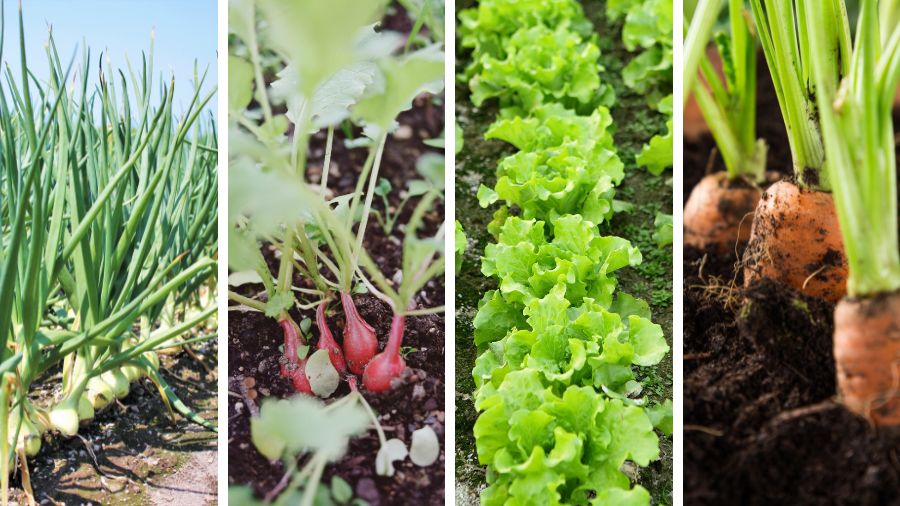
A variety of lettuce growing in a small container in Rogers Gardens. (Larry Sagers)
(Larry Sagers)

SALT LAKE CITY — If you don’t have the space for an actual garden but still want to grow your own vegetables, then container gardening is the way to go.
Container gardening is simply a method of growing plants and vegetables in pots instead of in the ground. Not only is it versatile, it’s also fairly easy.
Where to start
“The first thing to think about is your exposure,” said horticulturist Liz Hamilton. “So if you have a south-facing area, that would be great.”
For areas with full sun, there are unlimited options for flowers and vegetables you can grow. If you only have partial sun, however, you will need to choose your plants more wisely.
Container gardening in areas with full shade will be difficult. However, it’s not impossible. In full shade containers, Hamilton suggested growing more flowers and less vegetables. Vegetable options for full shade include lettuce and cruciferous vegetables such as kale.
“They still don’t like a lot of heat, so you’d have to put a lot of water on them and a little bit of fertilizer, but they’ll eventually come around.”
What size pot to use
When choosing the size of your pots, it helps to go for bigger pots instead of smaller ones. Hamilton said this especially applies to tomatoes.
“Tomatoes actually have a true taproot, and so when you pick your size of pot, anticipate the end size that your plant will be at the end of the season, which is why buying container-specific plants can be very important.”
Planting a full-size tomato in a small container will negatively affect the yield as well as the overall health of the plant.
Watering
“Every time you water, you want to be watering all the way through that entire volume of soil until you see water run out the bottom,” Hamilton said.
If you’re in an area that’s really hot, you may need to water multiple times during the day. If there is any sign of wilting or flagging during the summer, that means it’s lacking water.
While flagging can be normal in the middle of the day, Hamilton said water is what keeps the leaves turgid and drives fruit formation.
“So if you’re not getting enough water to the leaves, you’re certainly not getting enough water to the fruit, and that can result in bitter, mealy fruit or sour fruit.”
A drip system that runs on an automated timer can help water your pots throughout the day if you aren’t home.
Thrillers, fillers and spillers
Those are the three things you should have in your pots. Hamilton said she chooses the spiller first.
“If I have a Tumbling Tom tomato, which is a tomato that grows down instead of up, that’s going to be my spiller, right? Because it’s going to fall to the ground.”
The fillers will be about the size of a mid-shrub in your pot, and the thrillers will usually be something that can add some height.
“So my thriller in a pot like that might be a grass—an ornamental grass—and then my filler might be zinnias, or like a profusion zinnia that’s going to get shrubby and not tall and leggy.”
Another way you can arrange your pot is by planting trailing petunias for the spiller, habaneros for the filler, and chamomile or Sol Dancer daisy for the thriller.
“I try to pick one of the three and then figure out what it is that I really want to grow in that pot,” Hamilton said. “And then I add the other two back behind it.”
To learn more about growing vegetables in containers, watch the video below.
Read more from the KSL Greenhouse show:
- Planning on starting seeds this spring? You’ll need these 3 things
- Extending your gardening season with high tunnels
- Beginner’s guide to growing cut flowers
KSL Greenhouse is on every Saturday from 8 a.m. to 11 a.m. Follow the show on Facebook, Instagram, and YouTube. You can also find more gardening info at our linktr.ee.