Arsenic, lead, zinc found in urban dust along Wasatch Front
Apr 7, 2025, 8:00 AM

High winds and dust in Salt Lake City on Monday, June 17, 2024. (Scott G Winterton/Deseret News)
(Scott G Winterton/Deseret News)
SALT LAKE CITY — Harmful pollutants like arsenic, zinc and lead are being found in airborne dust along the Wasatch Front.
Natural dust from areas like the Great Salt Lake and Bonneville Salt Flats is mixing with city pollutants, making the local dust more dangerous to residents, according to a recently published study from the University of Utah.
“What [we] wanted to do was look at the composition of dust in the urban areas, in upwind areas, and in downwind areas to basically see how dust might be altered as it moves from the natural sources through the urban corridor and into the mountains,” said U of U atmospheric sciences professor Kevin Perry.
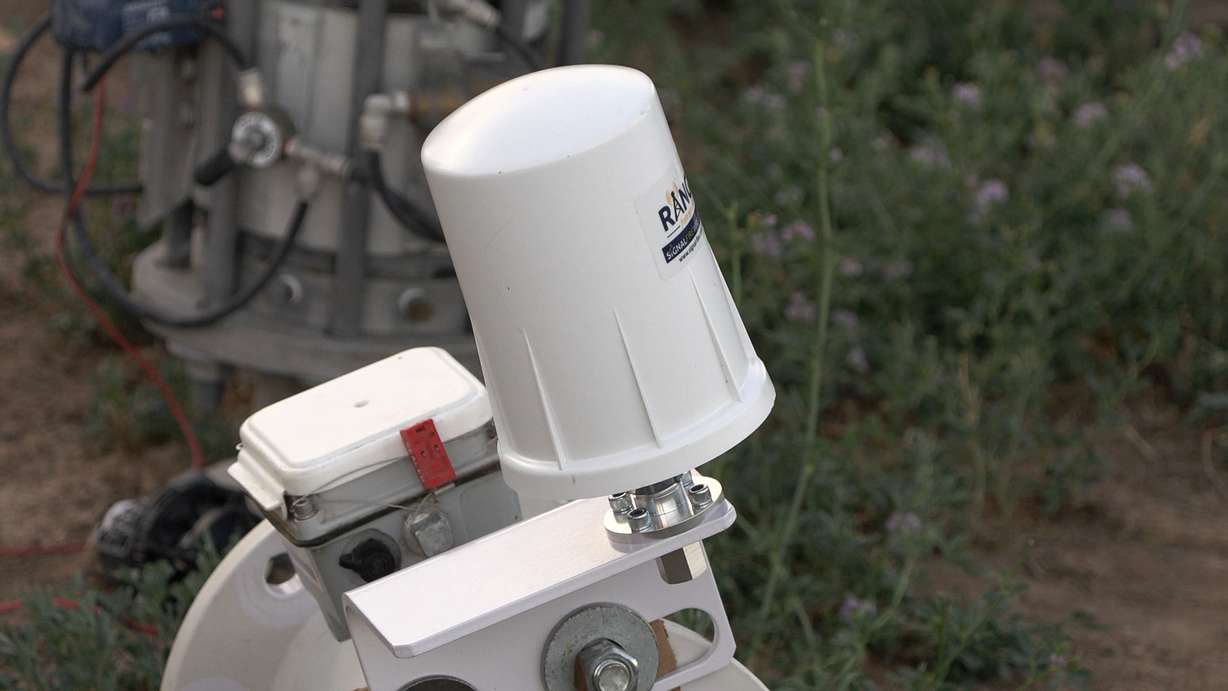
From 2020 to 2022, the team placed trays along the Wasatch Front that were filled with marbles. The marbles would trap dust, and after a period of time, scientists would wash them off, collecting the dust to analyze.
They found that upwind, natural dust sources from Utah and Nevada have chemical compositions that are different from what was measured in urban areas. Indicating that pollutants are being added in the cities.
Pollutants found in urban dust
“We had elevated concentrations of several different metals,” Perry said. “Lead and arsenic were two of the ones that were elevated in the samples that we were taking in the urban areas relative to some of the upwind areas.”
Study results also found high concentrations of zinc, calcium, molybdenum, cadmium, copper and cobalt.
The arsenic and cobalt concentrations found exceed the U.S. Environmental Protection Agency’s Regional Screening Levels.
Where urban dust pollutants are coming from
Many of the urban pollutants are coming from industrial sources along the Wasatch Front.
“We have mining activities in the Salt Lake Valley that produce lead, arsenic, zinc, and other metals,” Perry said. “Arsenic is also used in pesticides. And zinc, copper, and some of the other metals that we saw are actually present in brake motors, so when cars are breaking, they are putting metals into the atmosphere.”
Overall, Perry said these results didn’t shock them.
“The urban environment is pretty dirty relative to upwind areas,” Perry said. “So it’s not surprising that the metals that we put into the atmosphere in the urban areas end up in the dust.”
Ways to reduce dust statewide
While dust from the Great Salt Lake is often discussed, it is not where most Utah dust originates.
“The Great Salt Lake is not a big source of dust compared to other locations in Utah, like the Sevier dry lake or the West Desert. But it’s right on our doorstep. So it delivers dust more efficiently to the surrounding communities,” Perry said. “That’s one of the reasons we’re concerned about Great Salt Lake dust.
He continued, “Once that dust is mixed with the urban metals, it’s potentially even more problematic from a health perspective.”
Because the Great Salt Lake impacts more communities than other sources like the Bonneville Salt Flats or the Great Basin, an ideal way to stop urban dust along the Wasatch Front is through water conservation.
“The best way to reduce our dust emissions from the Great Salt Lake is to do what we call a nature-based solution,” he said. “Which is to just put water back in the lake. If we put water back in the lake then we cover up these dust hot spots that are causing these potential health risks.”
Perry also suggested reducing emissions to lessen local pollution.
Unanswered questions, insufficient monitoring and what’s next
While this study helped researchers identify what kind of pollutants can be found in urban dust, Perry said a lot of questions remain unanswered because they do not currently have sufficient dust monitoring networks in the state.
“Our main takeaway is that urban dust is likely to have a bigger impact on human health than naturally occurring dust,” Perry said. “But, honestly, we don’t have enough data to even identify the risks associated with the natural dust, let alone the additional risks associated with the additional metals that are in our urban dust.”
Most dust monitors can be found in the Salt Lake area, leaving many unmonitored areas north of the Great Salt Lake.
“People want to know, ‘How often does the Great Salt Lake dust blow?’ And we don’t know the answer to that because the monitoring network is not well situated to be able to answer that type of question,” Perry said. “They also want to know, ‘What are the concentrations of arsenic and other metals in the communities that are most impacted by the dust?’ And we also don’t have that information because of the inadequate monitoring network.”
Using computer models, researchers assume most dust from the Great Salt Lake is blowing to the north and east, heavily affecting communities like Syracuse, Layton, Ogden and Brigham City.
Other researchers, including some at Brigham Young University and Utah State University, are working to further this research by looking into how metals carried in the dust are affecting mountain ecosystems, snowpack, and spring runoff.
Read more:
- Tornadoes, wildfires and blinding dust sweep across US as massive storm leaves at least 35 dead
- New study finds air pollution can increase risk of blood clots
- Air pollution linked to increased risk of head and neck cancer, says study