A kidney donor from Utah is getting ready to stand on top of the world — again
Mar 2, 2026, 5:00 AM | Updated: Mar 4, 2026, 3:29 pm
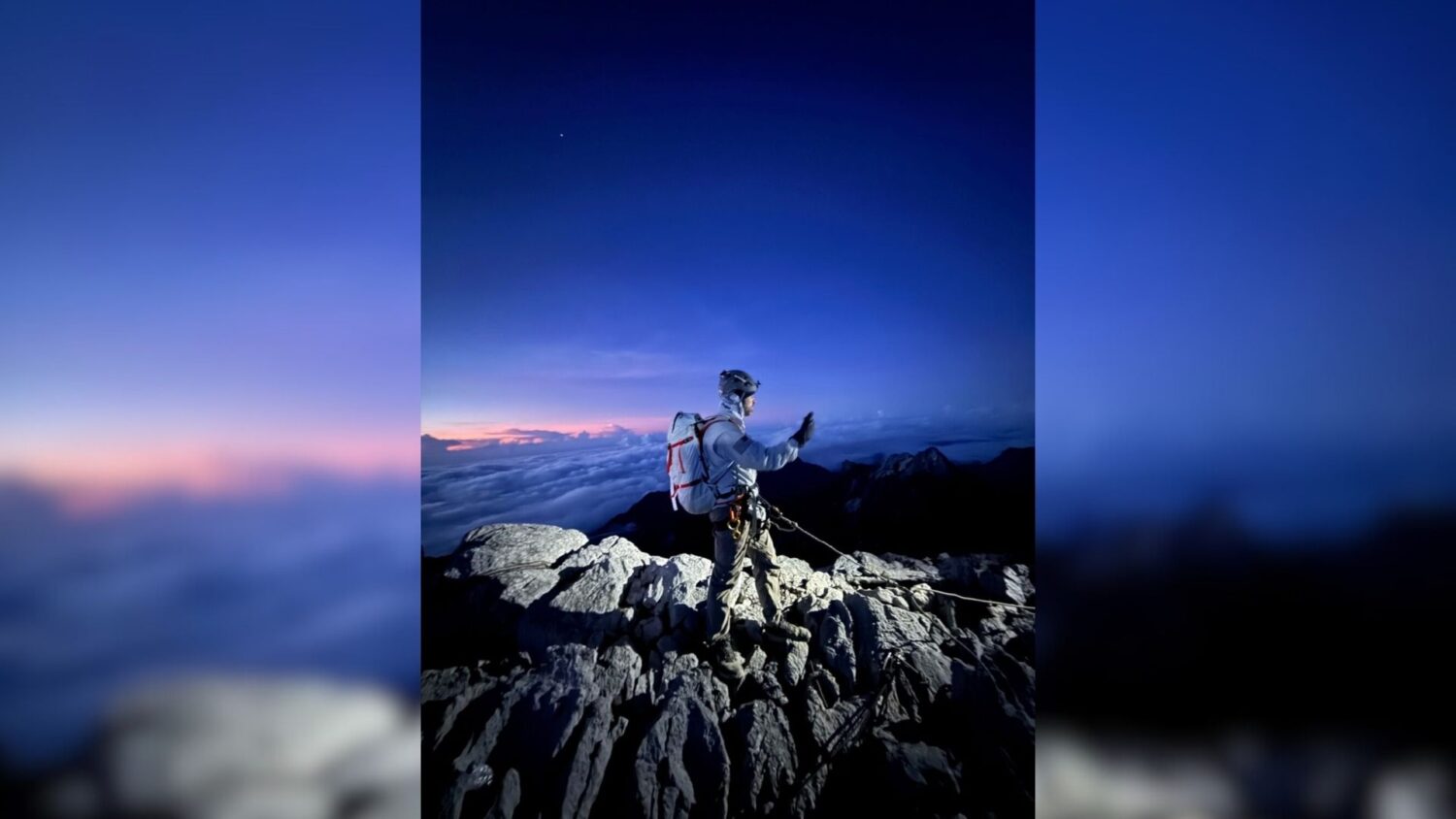
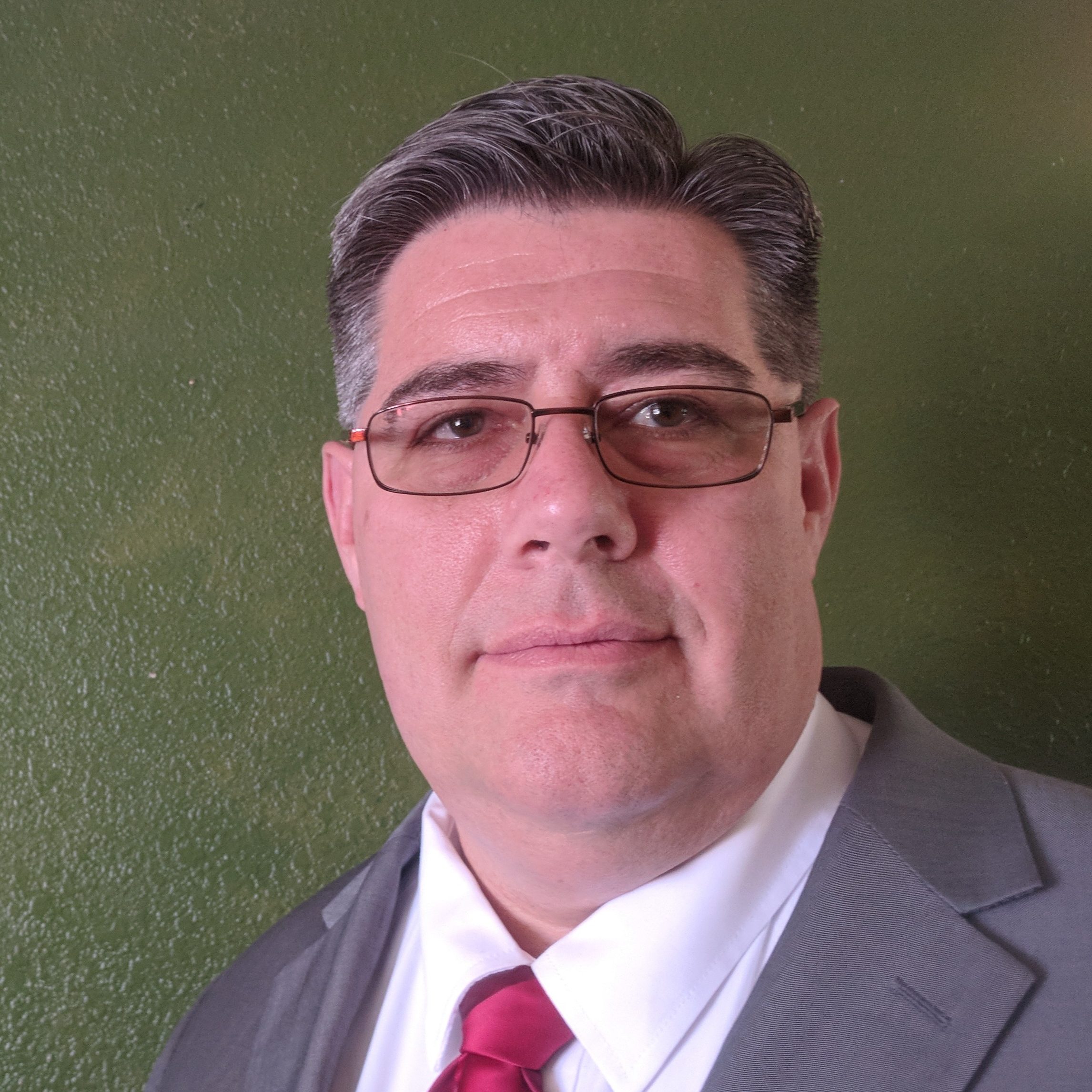
SALT LAKE CITY — David Ashley has conquered many mountains in his life.
He’s topped Mount Everest, South America’s Aconcagua, North America’s Denali, Africa’s Kilimanjaro — In fact, he’s been at the top of the highest mountains on all seven continents.
His mountain climbing has led him to breaking records too. He traveled to the top of the highest peaks in all 50 states, completing the challenge in under 42 days.
“I actually broke a Guinness World Record when I did that about 2 1/2 years ago,” Ashley said.
While his achievements are remarkable, an added twist gave him additional bragging rights — Ashley did it all with only one kidney.
The decision to donate
Ashley became a living kidney donor in 2017, while he was working at the Pentagon in Washington D.C. as a colonel.
He said he felt “kind of at the top of my career and starting to reflect on life and what I could give back.”
During that time, Ashley received a Facebook message from a classmate from West Point. A second classmate had been on blood dialysis for over a year after his kidneys had failed.
“‘He’s been too shy to ask for help, but no one in his family can qualify it to be a donor for his kidney,'” Ashley said, recalling the message. “‘He contracted sepsis and almost died and they’re looking for people to volunteer to be tested.'”
Ashley said he didn’t plan on donating his kidney, but he decided to get tested to see if he would be a genetic match. If he didn’t match, then he could at least “feel like [he] tried to help a classmate.”
After being tested in Washington D.C., doctors requested that he travel to Boston to get tested there. That was when Ashley decided to tell his family about what he might do.
Ashley said his wife was a little hesitant for him to go through with the procedure. She brought up their own children, considering what would happen if they or someone else in the family needed a kidney in the future.
“The more she thought about it and realized we’re all healthy,” Ashley said, “… it dawned on her pretty quickly that yeah, that was the right thing to do.”
Post-kidney climbs
After donating his kidney, Ashley said it took him a year to fully recover. After his recovery, another veteran approached Ashley with a proposition.
“He ran a non-profit that helped combat wounded veterans climb big mountains,” Ashley said. “And he was looking for senior mentors to pair up with them, get them away from their phone and their life and be able to really reflect on, ‘Hey, how are your finances? How’s your love life? How’s your health?’”
Ashley decided to give it a try, hiking Kilimanjaro with an army veteran. Soon after his first mountain, he hiked Denali with a Marine Corp Veteran. He said he got “so much” out of his experience traveling, hiking and doing “these epic climbs.”
“That’s what really got me hooked,” Ashley said.
Living organ donations
That’s when Ashley started climbing mountains, in part to bring awareness about living organ donations.
“There’s not limit to what you can do being a living kidney donor,” Ashley said. “I think there’s a lot of people like me that are athletic, or that are veterans or even active duty that want to help people, but they don’t know … ‘If I do this, am I somehow going to be handicapped for the rest of my life? Am I going to be limited physically with my endurance or my strength?’
Ashley said he’s trying to show the world that those fears are just not true.
“These are the ideal candidates. You can save someone’s life by donating a kidney. And if you’re healthy and fit, you’re the kind of person we’re looking for to step forward and get tested and see if it’s something you can do.”
Ashley said donating a kidney allows someone with kidney disease or kidney failure to live longer, visit their family and be with their children, all without impacting the donor’s life much at all.
#1KBE
Ashley is getting ready to leave on his next epic climb; he’s hoping to be the first kidney donor to reach the summit of Nepal’s Makulu, the fifth highest mountain in the world.
He shared his plans to acclimatize and prepare to summit the mountain.
“We’ll fly out to Nepal in March,” he said. “My partner, Shelley Johannesen, my climbing partner and life partner, we’re going to do a trek. I own a small company called DASH Adventures. So we’ve got several clients we’re going to do a trek [with] in the Annapurna region called the Annapurna Circuit Trek.”
In mountain climbing, altitude levels are defined as high (8,000 – 12,000 ft), very high (12,000 – 18,000 ft), and extremely high (18,000 ft+). But no matter the height, a climber must acclimate first.
“We’re going to climb up to around 18,400 ft during that (Annapurna Circuit) trek … Then we’ll head out on the 5th to base camp from Makalu. So we’re going to start on the 5th of April. We’ll get to a base camp in about 9 or 10 days. And then we basically have a month of what we call the mountaineering climbing high and sleeping low … We’ll repeat that process over a period of about three weeks until our bodies are fully ready to deal with the high elevation.”
Ashley said “once your body’s ready and acclimatized, you go back down to base camp for one more good rest, a good meal, you cross your fingers, you’re looking for about 48 hours of good weather to go up there and then try to tag the summit and get down safely.”
Ashley’s message is actually pretty simple. “Athletes, veterans, don’t hesitate to reach out to me. Ask me questions personally about my experience and what life has been like afterward.
“And I guarantee you the joy that you’ll bring not only to the kidney recipient, but their family is worth, in spades, the amount of discomfort that you’re going to go through with the surgery and the recovery.”
“I’m on Facebook and Instagram. I’ve also got a page on Facebook for the climb. The hashtag we’re going for on this one is #1KBE – that’s one kidney beyond Everest.”