Caring for peach trees to ensure heavy crop
Apr 9, 2026, 4:59 PM | Updated: Apr 10, 2026, 10:36 am

Peaches are a popular fruit for Utahns to grow, but they need a lot of care. (Taun Beddes)
(Taun Beddes)
SALT LAKE CITY — Peaches are likely the most popular fruit tree in Utah. From my experience working in nurseries, peach trees consistently outsold all other fruit trees, and that still seems to hold true today.
With that popularity, though, comes a common challenge—peach trees require more care than many people expect. They need as much, or even more, spraying than other fruit trees. The upside? There are dozens of excellent varieties that are great for fresh eating, canning, and preserving.
A situation I see all too often is a homeowner who finally gets their peach tree to produce a heavy crop, only to have the tree decline or collapse due to unintentional improper care. Most often, this comes down to pruning mistakes or a lack of pest and disease management.
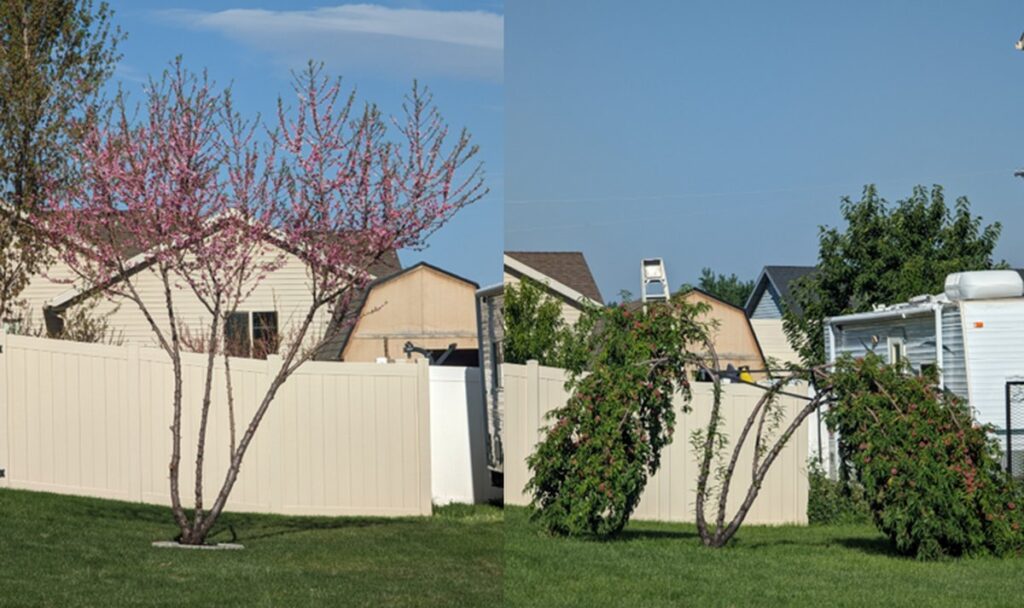
Improper pruning can lead peach trees to produce less fruit and even damage the trees. (Taun Beddes)
Getting started right begins with proper planting. Location matters. Avoid planting at the bottom of a slope, where cold air settles, increasing the risk of frost damage. Peach trees also need at least eight hours of full sun each day. If possible, plant trees in a designated orchard area rather than directly in the lawn, although they can still grow in turf with proper care.
Pruning is another area where many people feel unsure. It can be intimidating to make cuts on a tree you care about. The good news is that Utah State University offers free, easy-to-follow pruning videos on YouTube, along with fact sheets that walk you through the process step by step.
When it comes to pests, one thing is certain—if you grow peaches, you will need to spray. Many people are hesitant about pesticides, but even organic peach production requires regular applications. Not spraying doesn’t make a grower organic—it often means becoming a source of pests and diseases for your neighbors.
The most destructive insect pest in our area is the greater peach tree borer. Adult moths lay eggs on the trunk from late spring through early fall. Once the eggs hatch, the larvae bore into the trunk, where they are protected and cannot be effectively controlled. That’s why preventative spraying is so important. Conventional insecticides, such as pyrethroids, are labeled for control and must be applied every 2 to 4 weeks during the egg-laying period. Organic options, such as Spinosad, can also be effective but require more frequent applications.
Peach trees are also susceptible to diseases like cytospora canker and coryneum blight (commonly called shot hole fungus), which can further reduce tree health and productivity.
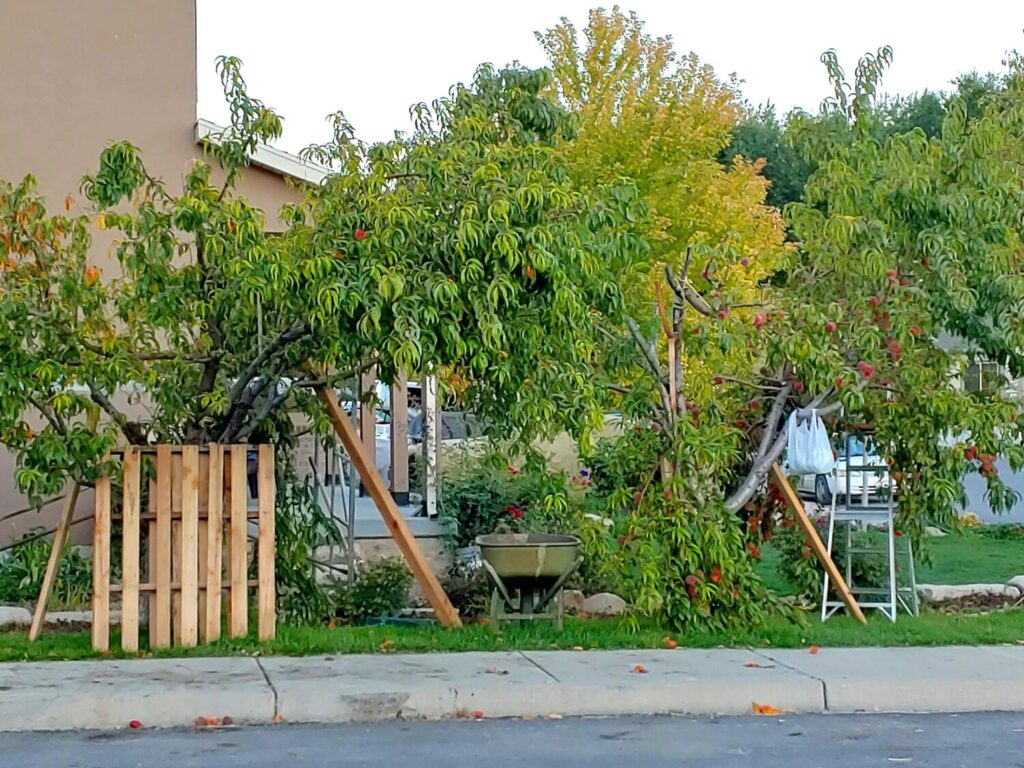
Improper pruning can lead peach trees to produce less fruit and even damage the trees. (Taun Beddes)
Choosing the right variety depends on your goals and taste preferences—there is no single “perfect” peach. Locally, ‘Redhaven’ is often considered the first good fresh-eating peach of the season, ripening in late July or early August. ‘Early Elberta’ and ‘Elberta’ are well known for canning.
If you live in a colder area, varieties like ‘Contender,’ ‘Intrepid,’ and ‘Reliance’ are more cold-hardy. White-fleshed peaches, often labeled with names like “Arctic” or “Polar”, are especially sweet. Flat, or doughnut-style, peaches such as ‘Saturn’ and ‘Jupiter’ have also become popular. One of the last peaches to ripen along the Wasatch Front is ‘Oh Henry.’ It’s sweet, juicy, and worth the wait.
These are just a few examples—there are wide, excellent varieties available. The key is to choose ones that will ripen before early October in your area.
For timely information on managing peach pests, consider subscribing to the free USU Pest Lab Fruit Tree Updates. The university does not share your information.
Utah State University also offers a wide range of free fact sheets covering peach tree care, pests, and diseases.