Dealing with skunks in Utah
Mar 14, 2026, 1:42 PM
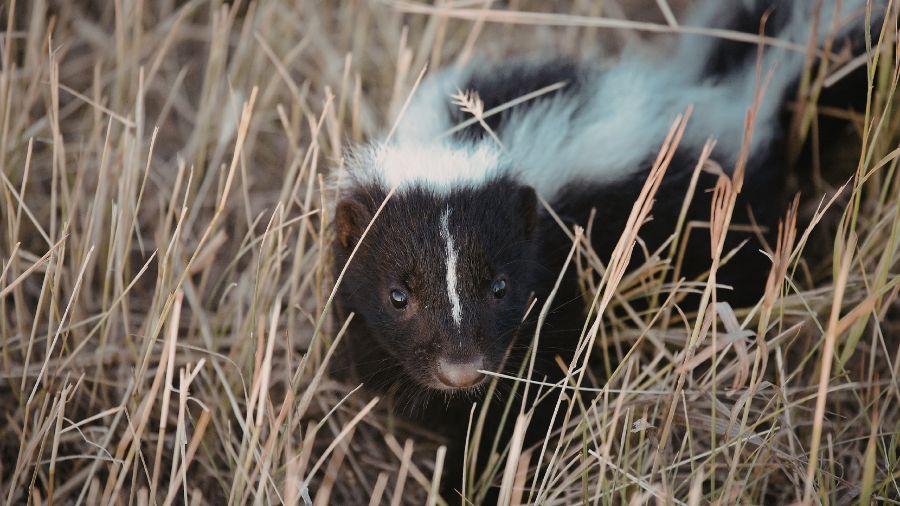
A striped skunk seen peeking through tall grass. (Canva)
(Canva)
SALT LAKE CITY — At times described as “Stinky Raccoons,” skunks are often smelled instead of seen due to their nocturnal and reclusive nature. Though, people who live near Utah’s mountains and canyons may find their garden picked through, and lawns pockmarked from the small weasels.
Skunks are about the size of a housecat and have a distinctive black and white fur coat. In Utah people can find three different species of Skunk: striped skunk, hog-nosed skunk, and western spotted skunk. Though all these skunk species spray odors, the smaller western spotted skunk are especially excitable and their stench is even more pungent than their striped counterparts.
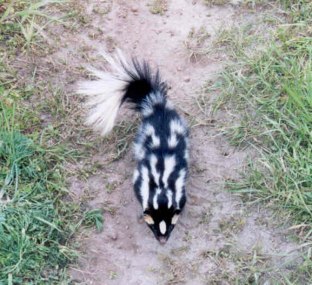
Western spotted skunk. (USU Extension)
In March, Utahns are right in the middle of breeding season for skunks. This is the time of year where skunks tend to extend their home range, so they may be coming to yards looking for food.
Skunks, like raccoons, are omnivorous foragers who will eat anything: berries, fruits, vegetables, insects, small rodents, reptiles, eggs and even young birds. It is important for people to stay away from skunks if they are seen on a person’s property.
According to the Centers for Disease Control and Prevention, skunks are known carriers of rabies, totaling 17% of reported rabies cases. If bitten by a skunk, wash the wound with soap and water, call animal control, and most importantly, seek medical attention as soon as possible.
Unless surprised suddenly, a skunk will give obvious warning signals before it sprays. It will arch its back, stamp its front feet, and shuffle backwards. If you did not heed its warnings, it will then raise its tail, bend its body and release its musk.
The musk from a skunk can be nauseating and cause itchiness when sprayed by a skunk. If the sulfur-alcohol compound gets in a person’s eyes it may cause severe burning, tears and even temporary blindness.

Striped skunk (USU Extension)
Homemade skunk anti-odor for pets
Ingredients:
1 quart 3% hydrogen peroxide
¼ cup baking soda
1 tsp liquid soap or baby shampoo
Instructions:
- Mix ingredients together in a bowl
- Lather mixture onto your pet
- Let sit for 5 minutes
- Rinse out
- Repeat as necessary
If you are sprayed, take a hot shower and with enough scrubbing and willpower, the smell will come out. Unfortunately, the old tale of using tomato juice to rid yourself of the smell is nothing more than a myth.

Damage on a lawn caused by a skunk. (USU Extension)
Skunks on your property
If you do find evidence of skunks on your property, Colorado State University said the best thing to do is adjust your property to eliminate their habitat:
- Remove lumber and junk piles
- Store garbage in tightly sealed cans
- Clean up pet foods
- Use insecticides to control grubs in turf
- Install fencing (even electric fences) that extends 1 to 2 feet below ground
- Seal foundation openings to prevent skunks from denning under buildings
It is legal to trap and kill striped skunks year-round without a license (firearm discharge may be restricted in metropolitan areas).
According to Wild Aware Utah, the western spotted skunk is a protected species and is “classed as (a furbearer) and are managed with regulated trapping seasons.”
If you wish to catch and release, there are many different live traps you can use next to dens on your property. Simply fill the trap with cat food, eggs or food scraps. If you manage to trap a skunk, call your local animal control.
Just make sure you don’t accidentally snag your neighbor’s cat.
Listen as the KSL Greenhouse Show shares more on skunks in Utah 👇
Other stories:
The KSL Greenhouse Show’s plant of the week: Butterfly bush