The dos and don’ts when planting trees in your yard
Apr 18, 2025, 4:15 PM
(Canva)
(Canva)

SALT LAKE CITY — It’s that time of the year to start planting trees as they are rolling into the local nurseries and garden centers.
According to KSL Greenhouse Host Taun Beddes, one of the biggest mistakes people make when planting trees is not paying attention to the planting method. Planting trees correctly is what increases their chances of survival.
So, then, what is the correct planting method? Here are some dos and don’ts to keep in mind.
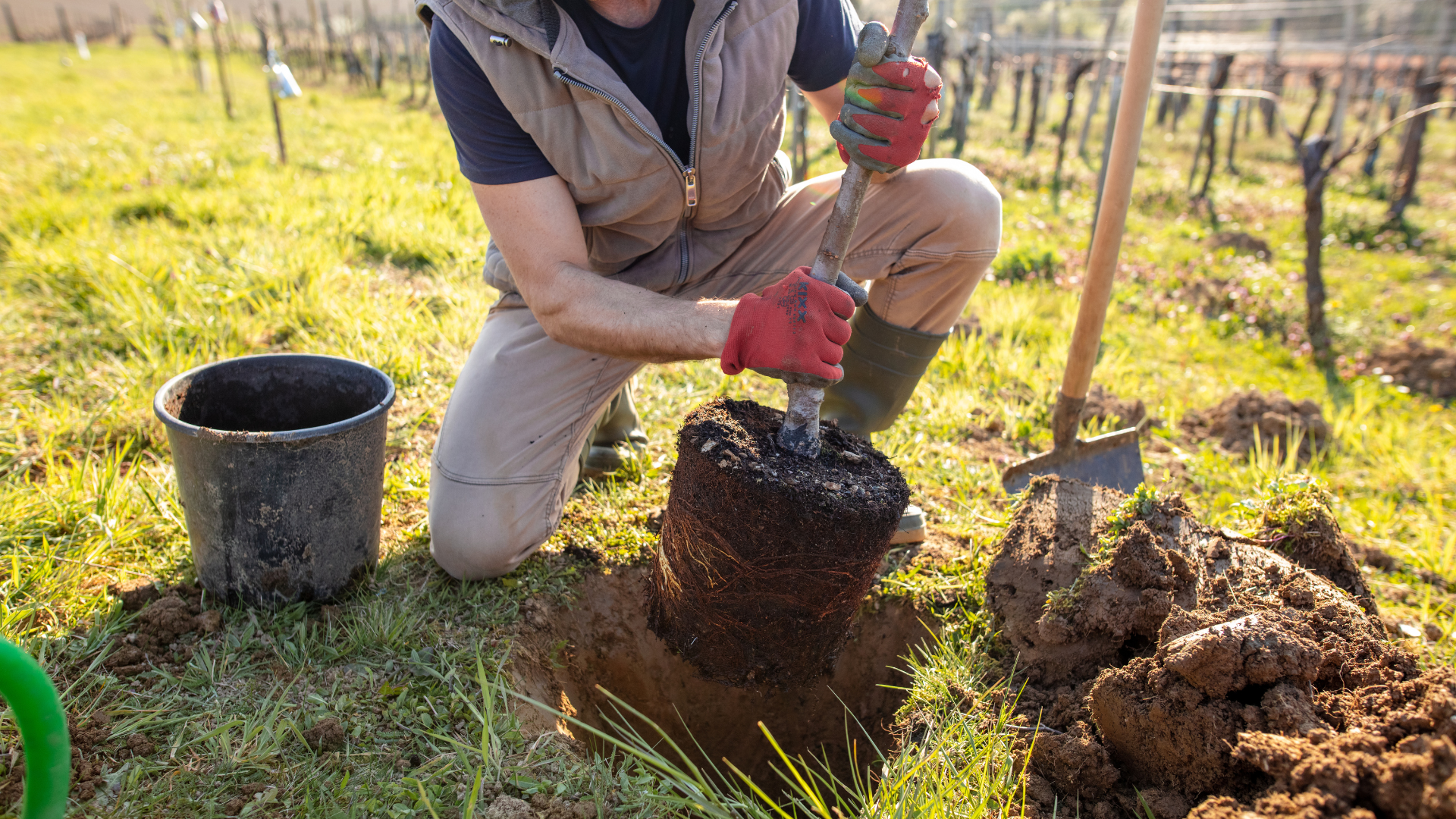
Almost every tree you plant is grafted, so you will often find a bud or a graft union a few inches above the ground on a younger tree.
“That graft union has to be above ground,” Beddes said. “… Right below that graft union just a couple inches down is what’s called the root flare, and that’s where, from the trunk, the roots start to grow. And that root flare where the roots are reaching out into the soil needs to be right at ground level.”
DON’T plant too deeply
It’s better to plant a tree a bit shallow than a bit deep, Beddes said. When you plant too deeply, the tree could get crown rot at the base, increasing the likelihood of the trunk rotting.
“In addition to that, with those roots deeper in the soil, there’s less oxygen, and those roots absolutely need oxygen from the atmosphere. And so when you plant even two or three inches too deep, the percentage of oxygen is reduced.”
Another reason Beddes suggested not planting too deeply is because it can disturb the soil.
“When you water the tree, you have a tendency for all the water to flow to the bottom of the hole and stay there, and it rots the roots.”
DON’T plant too close to the grass
If you’re planting trees in your lawn, it’s important to not put the turf back around them.
Beddes said having a ring that’s two to three feet wide without soil around the trees could actually double their growth rate. If the trees aren’t surrounded by grass, then it won’t have to compete for water and nutrients.
“You might have to go in there once a month and dig the grass out, or you can wrap the tree in cardboard—the trunk—and spray it out with Roundup or something. You need to read your labels and make sure that you’re using the correct stuff, but that bare soil is important.”
DON’T fertilize the first year
According to Beddes, the rule is to not fertilize a tree until a year after it was planted.
“If you fertilize, it will keep the roots really close to the trunk because all the nutrients it needs are right there.”
DO water frequently if it’s hot
Although you don’t need to water too often during this time of the year, if you planted a tree in late June and the temperatures are frequently between 90 to 105 degrees Fahrenheit, you may need to water every day.
“You don’t water a lot, but you cannot let the soil dry out, and you don’t want to drown the tree.”
If the temperatures are between 50 to 80 degrees Fahrenheit, water once or twice a week. In the 80s, water two or three times a week.
If they’re above the 90s, you should water four to seven times a week for the first 60 days. Beddes said to take into consideration the type of soil you have.
“A clay soil will hold more water, a sandy soil won’t. But especially in sandy soil, for a good 60 days, you may have to water almost every day during the summer.”
DO stake the trees if they’re top-heavy
Staking is a practice used to support newly planted trees. It’s necessary to help the trees stand, especially if the top carries a lot of weight.
You can do this for about a year, but it’s not recommended for any longer than that because then the tree will rely too much on the stakes, which will prevent it from growing roots that can actually support it later on.
“What you can do is go in in the spring if it’s super top-heavy and remove some of the limbs to lighten it up a little bit,” Beddes said.
DO put mulch around the base
While you don’t necessarily have to, you can put two to three inches of mulch around the base of the tree. However, it’s important to keep it at least six inches away from the trunk for two big reasons.
First, you don’t want the trunk to rot. Second, you don’t want the rodents coming for it.
“Because of that bare ground between the mulch and the trunk when there’s no snow cover, they are far more likely to stay away from nibbling on the trunk of the tree if there’s that bare soil,” Beddes said.
Read more from the KSL Greenhouse show:
- Everything you should know about pre-emergent weed killers
- Vegetables suited to a short growing season
- KSL Greenhouse Show: Controlling pocket gophers
KSL Greenhouse is live on Saturdays from 8 a.m. to 11 a.m. Follow the show on Facebook, Instagram, and YouTube. You can also find more gardening info on our linktr.ee.