
Writer discusses separating fact from fiction in today’s news
Jan 26, 2022, 3:40 PM
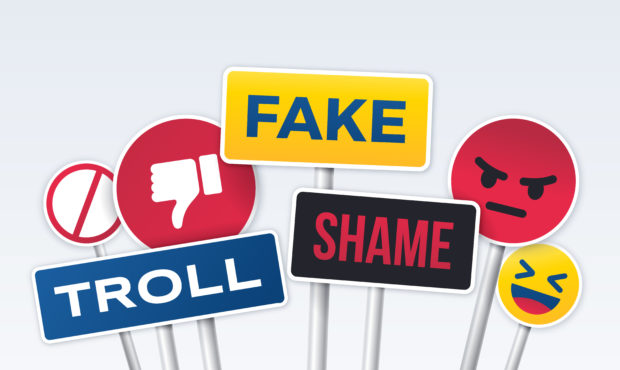
Fake news, otherwise known as stories based on false information, have the potential to influence politics, researchers say. (Image credit: Getty images)
(Image credit: Getty images)

We are bombarded by information. It comes from thousands of news sources. How does a reader separate fact from fiction? On a recent episode of Inside Sources on KSL NewsRadio, a writer discussed her research into identifying accurate news and trustworthy sources, as well as recognizing the biases you bring along.
In her new piece for Y Magazine, “DisInfoMania: In the battle over facts and fakes, insights and hot takes, how can you become a savvier consumer of information?” freelance writer Melody Warnick spoke with news media experts to come up with a list of do’s and don’ts to help readers successfully navigate the news media landscape.
Warnick outlined the three strategies for thinking critically about media information and sources.
Read laterally
“There was a 2018 study out of Stanford that found that most people when they go to a website, they read vertically. Meaning, they stay on the page, they go up and down the page,” Warnick said.
But lateral reading, she said, helps the reader determine an author’s credibility, intent, and biases. It involves searching for articles on the same topic by other writers (to compare their coverage) and for other articles by the author you’re checking. That’s what professional fact-checkers do, according to the New Literacy Project.
“[Fact-checkers] go to Wikipedia or other organizations, even Googling turned out to be valuable. You would get other outside perspectives on whether this is a website [or] a new site that you can actually trust,” said Warnick.
Go upstream
Warnick said reading upstream means getting off the page you are reading and clicking on the article’s links.
“When we go upstream, that means you’re actually going to click on the links and see where they take you. And maybe you’re going to Google some of the experts that are quoted and see whether these people are reliable,” she said.
Most of what you read on the web is not original content. It is copied from another source most of the time. Check the original source and compare it to what lies downstream.
Acknowledge your bias
“Studies have shown that we’re twice as likely to gravitate toward information that supports what we already believe,” Warnick said.
Readers don’t need to abandon their values and beliefs. But they should be aware of them while they read.
Warnick referred to a study in which students were asked to read an article about birth control for teens, which included scientific research from obstetricians and gynecologists.
“People were more likely than they thought to just respond in an emotional way based on their own biases. Such as: ‘I don’t support birth control for teenagers, therefore, this whole article is bad,'” she said.
- the tendency to interpret new evidence as confirmation of one’s existing beliefs or theories.
People may read a headline or article they agree with to confirm that what they read must be true (confirmation bias) thus validating their beliefs or values on the subject.
Test your theory
Before Einstein came up with his general theory of relativity, the common assumption was that the universe was static — neither expanding nor contracting. Einstein’s equations allowed for a dynamic universe. But his audience rejected his idea.
Later, Edwin Hubble would show that the universe is expanding.
Related: Inside Sources: Talking about confirmation bias and social-media manipulation
Inside Sources with Boyd Matheson can be heard weekdays from 1 p.m. to 3 p.m. on KSL NewsRadio. Users can find the show on the KSL NewsRadio website and app.






